
Quick Answer
What Should I Do After a Basement Flood?
After a basement flood, prioritize safety first: turn off electricity from a dry location, avoid standing water near outlets, and never enter sewage-contaminated water. Document everything with photos before cleanup, call your insurance company immediately, then call a professional restoration company for emergency water extraction and structural drying. Mold can start growing within 24–48 hours.
- ✓Turn off electricity at the breaker panel from a dry location
- ✓Document all damage with photos and video before touching anything
- ✓Call your insurance company — get a claim number immediately
- ✓Call a professional for emergency water extraction & structural drying
- ✓Mold grows within 24–48 hours — speed is critical
- ✓Don't use a regular vacuum — use a wet/dry vac only
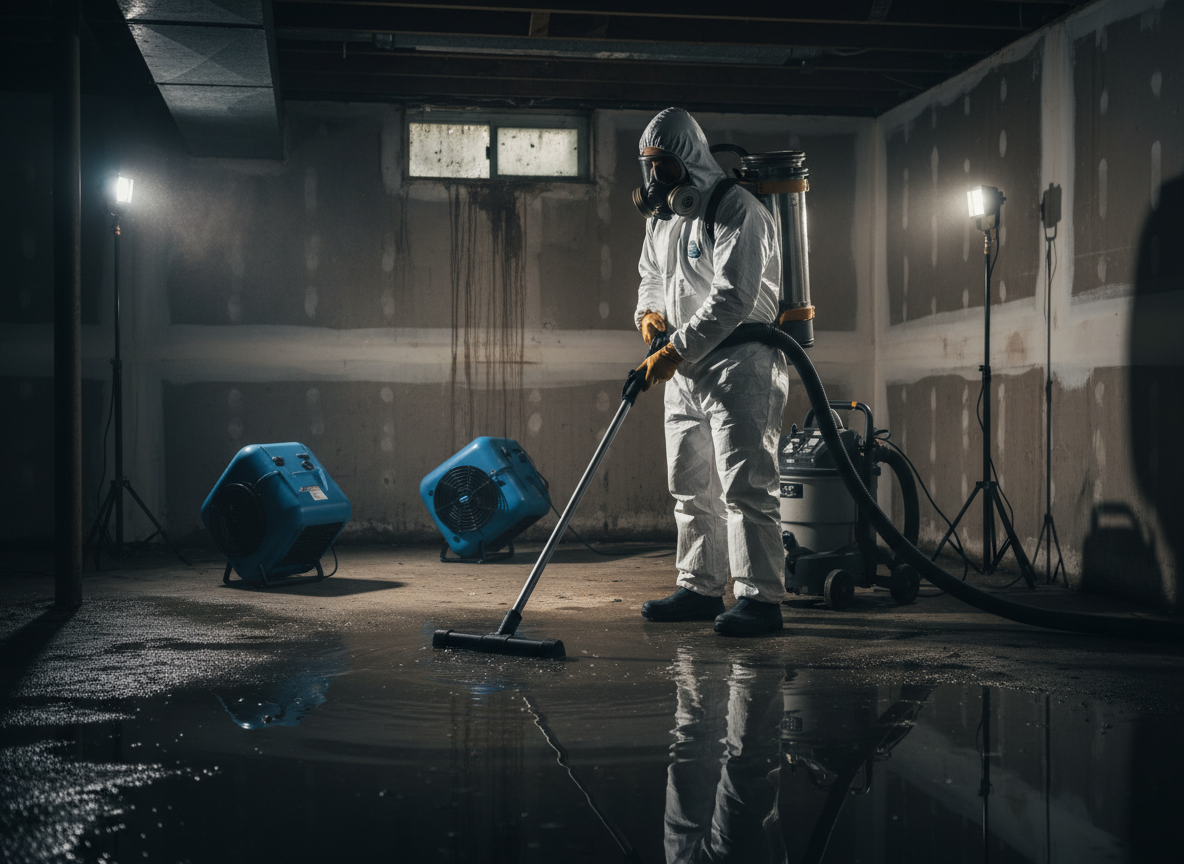
A flooded basement is one of the most stressful things a homeowner can face. Whether it's from a burst pipe, heavy rain, sump pump failure, or a backed-up sewer — what you do in the first 24 hours can mean the difference between a manageable cleanup and a full-blown mold infestation.
Step 1: Stay Safe First
Before you go anywhere near standing water, make sure it's safe to enter. Water and electricity are a deadly combination.
- Turn off the electricity to your basement at the breaker panel — from a dry location
- If you're not sure whether the water has reached electrical outlets, don't enter — call a professional
- If the flooding is from a sewage backup, treat it as a biohazard
- If there's a gas smell, leave immediately and call your gas company
Step 2: Call Your Insurance Company
Before you start cleaning up, document everything and call your insurance company. Take photos and video of all standing water, damaged items, and affected areas. Don't throw anything away until your adjuster has seen it.
💡 Pro Tip
Most standard homeowner policies cover sudden water damage (burst pipes, appliance failures) but NOT flooding from outside (storm surge, rising groundwater). Flood coverage requires a separate NFIP policy.
Step 3: Stop the Source (If Possible)
- Burst pipe: Shut off your main water supply valve
- Sump pump failure: Check if it's unplugged or tripped a breaker
- Sewage backup: Don't use any drains or toilets — call a professional immediately
Step 4: Call a Professional Water Damage Company
This is not a DIY situation. Mold grows within 24-48 hours of water exposure — professional drying equipment works far faster than fans and dehumidifiers from the hardware store. Professionals use thermal imaging and moisture meters to find hidden moisture behind walls and under floors.
Step 5: Remove What You Can Safely
While waiting for professionals, move furniture, boxes, and valuables to a dry area if it's safe to enter. Do NOT use a regular household vacuum to remove water — use a wet/dry vac only.
Step 6: Watch for Mold in the Days After
Even after professional drying, monitor your basement: musty odors, visible discoloration, warping or buckling, and unexplained respiratory symptoms are all signs of hidden mold growth.
The Bottom Line
Speed is everything with water damage. The faster you act, the less damage occurs. Call My Water Damage Hero at 610-228-7440. We respond 24/7.
