Quick Answer
Char & Ash Testing After a Fire in Southeastern PA
My Water Damage Hero provides certified char and ash testing after house fires across Montgomery, Chester, Delaware, Bucks & Berks County, PA. Fire debris contains hidden hazards — lead, asbestos, heavy metals, and carcinogens. Our Industrial Hygienist tests before cleanup begins so nothing dangerous gets missed.
- ✓Tests for: lead, asbestos, heavy metals, PAHs, VOCs in fire debris
- ✓Who tests: In-house Industrial Hygienist (not subcontracted)
- ✓When: Before any cleanup or restoration begins
- ✓Lab: Independent accredited laboratory — results delivered to you
- ✓Insurance: We work directly with your insurance company
- ✓Service area: Montgomery, Chester, Delaware, Bucks & Berks County PA
Post-Fire Environmental Testing
Char & Ash Testing Know What's in the Debris
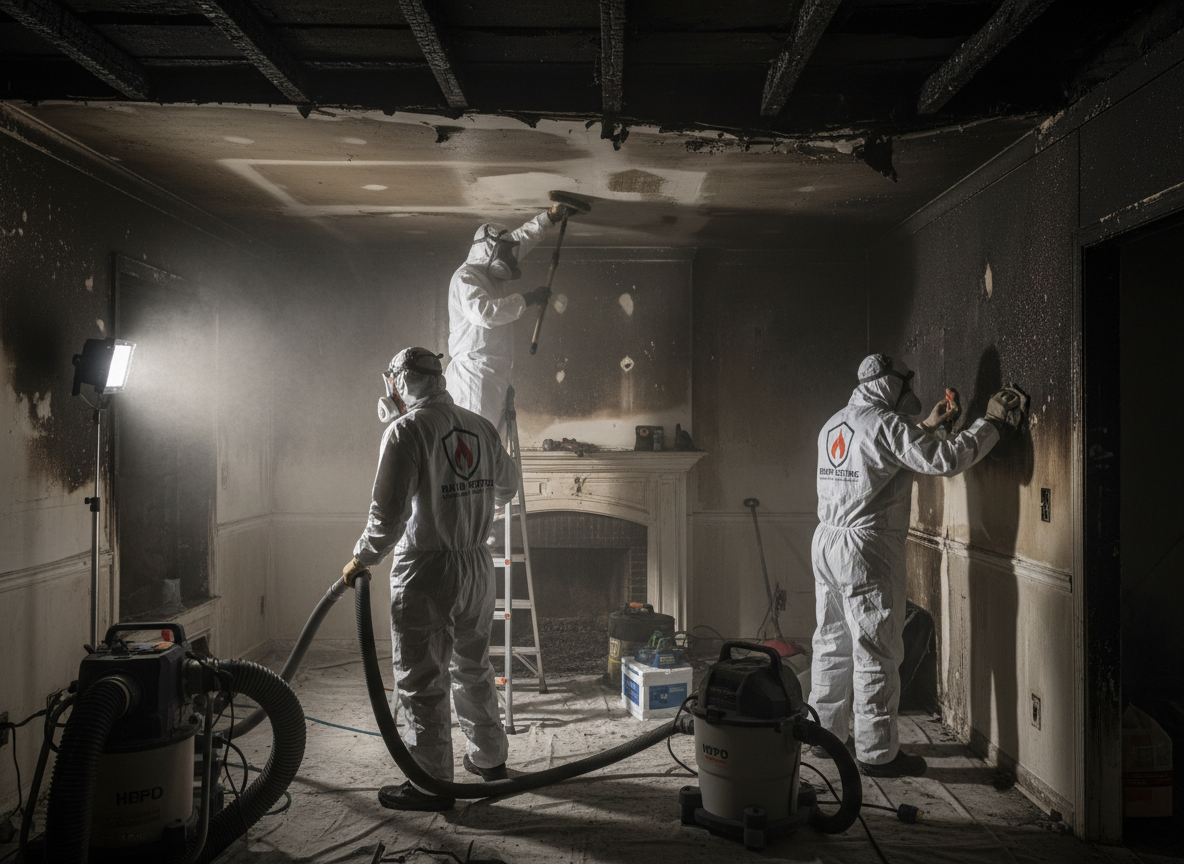
After a fire, the visible damage is only part of the story. The ash and char left behind can contain asbestos fibers, lead dust, heavy metals, and carcinogens — invisible hazards that put your family and cleanup crews at serious risk. Our Industrial Hygienist tests before anyone starts cleaning up.
Why Test Before You Clean Up
⚠️ Critical Warning
Never disturb fire ash without testing first. Ash from a house fire can contain asbestos fibers, lead dust, heavy metals, and carcinogenic PAHs. Disturbing ash without knowing what's in it puts everyone at risk.
Asbestos in Fire Debris
Homes built before 1980 often contain asbestos in insulation, floor tiles, ceiling tiles, and pipe wrap. Fire can release asbestos fibers that are invisible to the naked eye and extremely hazardous when inhaled.
Lead Dust from Paint
Pre-1978 homes contain lead paint. Fire and heat cause lead paint to vaporize and settle as fine lead dust throughout the debris — a serious hazard especially for children.
Heavy Metals
Electronics, treated lumber, batteries, and certain building materials release arsenic, cadmium, chromium, and other heavy metals when burned.
Carcinogenic PAHs
Polycyclic aromatic hydrocarbons (PAHs) are produced by incomplete combustion of organic materials. Many are known carcinogens that persist in char and ash.
VOCs & Toxic Gases
Volatile organic compounds from burned plastics, adhesives, and synthetic materials can off-gas from char and ash for weeks after a fire.
Mold Risk After Firefighting
Water used to fight the fire soaks into structural materials. Combined with ash and debris, this creates ideal conditions for rapid mold growth.
Our Testing Process
What Char & Ash Testing Includes
Site Assessment
Our Industrial Hygienist evaluates the fire scene, identifies areas of concern, and determines the appropriate sampling strategy.
Bulk Ash Sampling
Samples of char and ash are collected from key areas and sent to an accredited independent laboratory for comprehensive analysis.
Air Quality Testing
Air sampling detects airborne particles, asbestos fibers, and VOCs that may still be present in the structure.
Surface Wipe Sampling
Wipe samples identify lead dust, heavy metals, and other hazardous residues that have settled beyond the immediate fire zone.
Independent Lab Analysis
All samples are analyzed by an accredited third-party laboratory. You receive the results directly.
Detailed Report
A comprehensive report with findings, lab results, photos, and clear recommendations for safe cleanup protocols.
FAQ
Char & Ash Testing Questions
Had a Fire? Test Before You Clean.
Protect your family and your cleanup crew. Know what's in the debris.
