Quick Answer
How Do I Know If I Have Mold in My Home?
The most common signs of mold include a persistent musty odor (especially in basements), visible discoloration on walls or ceilings, water stains, warping or peeling surfaces, unexplained allergy-like symptoms that improve when you leave the house, recent water damage, and consistently high indoor humidity above 60%.
- ✓Musty smell that won't go away = active mold growth nearby
- ✓Black, green, or gray spots on walls/ceilings = visible mold (more is hidden)
- ✓Water stains = past moisture intrusion creating mold conditions
- ✓Allergy symptoms that improve when you leave home = possible mold exposure
- ✓Mold grows within 24–48 hours of any water event
- ✓Professional air sampling detects hidden mold you can't see
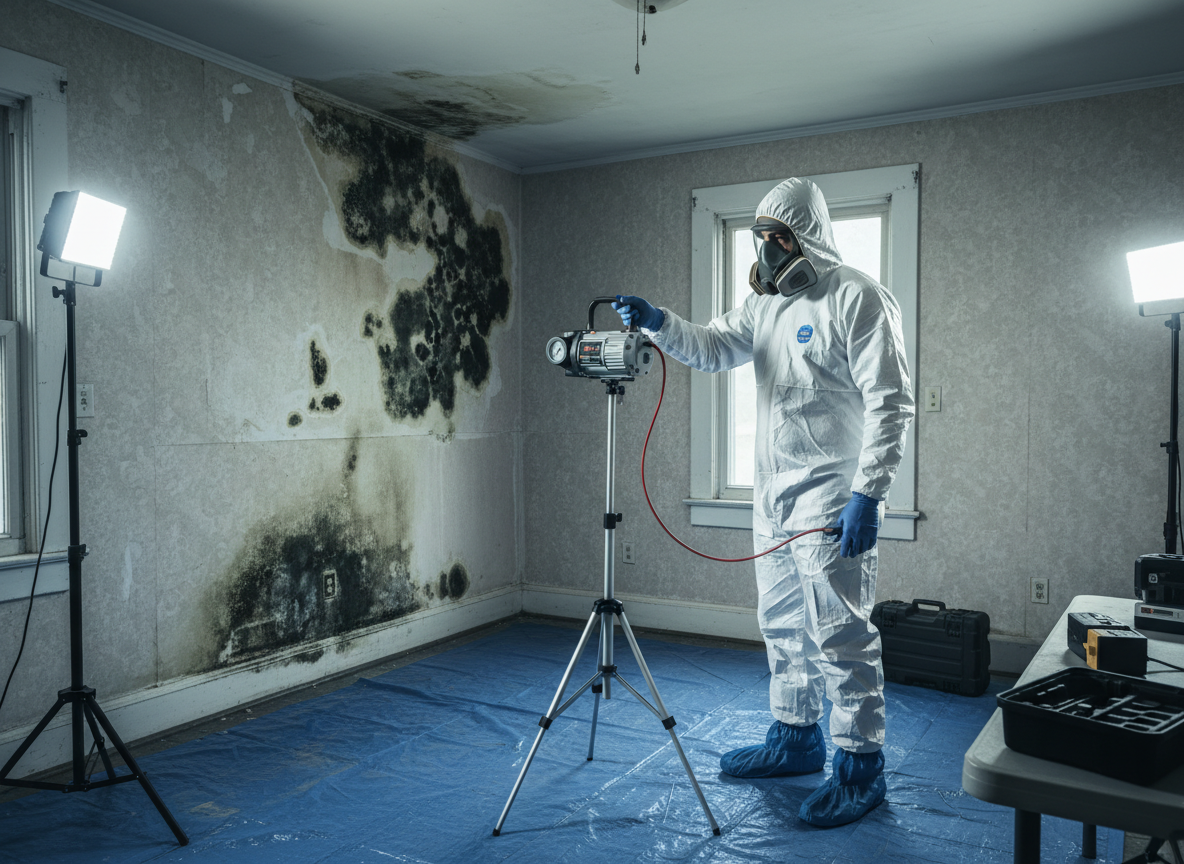
Mold doesn't always announce itself with obvious black spots. The most dangerous mold is often completely hidden — growing inside walls, under flooring, and in HVAC systems. Here are the 7 warning signs every homeowner should know.
Persistent Musty or Earthy Odor
The most common sign of hidden mold is a musty, earthy smell — especially in basements, crawl spaces, or bathrooms. The smell comes from microbial volatile organic compounds (MVOCs) released by active mold colonies.
Visible Discoloration on Walls, Ceilings, or Floors
Mold can appear as black, green, white, or gray spots. It often looks like dirt or soot at first. Visible mold is almost always accompanied by much more hidden mold behind the surface.
Water Stains or Discoloration
Yellow, brown, or rust-colored stains on walls or ceilings indicate past or ongoing water intrusion — which creates ideal conditions for mold.
Warping, Bubbling, or Peeling Surfaces
Drywall that's warping, paint that's peeling, or flooring that's buckling are all signs of moisture behind the surface. Where there's persistent moisture, there's almost always mold.
Unexplained Health Symptoms
Chronic coughing, sneezing, runny nose, itchy eyes, skin irritation, headaches, and fatigue. If symptoms improve when you leave the house, mold may be the culprit.
Recent Water Damage or Flooding
If your home has experienced water damage, mold can begin growing within 24-48 hours — even if the water was cleaned up quickly.
High Humidity Levels
Mold thrives in humidity above 60%. If your home consistently feels damp, you're creating ideal conditions for mold growth even without visible water damage.
What to Do If You Spot These Signs
The right first step is professional mold testing — not remediation. Testing tells you exactly what type of mold you have, where it is, and how extensive the problem is. Call 610-228-7440.
