
What Does Radon Testing Involve? A Homeowner's Guide
Radon is the second leading cause of lung cancer in the United States — responsible for about 21,000 deaths per year. The only way to know if your home has elevated radon levels is to test. Here's exactly what professional radon testing involves, step by step.
📊 Key Fact
Approximately 40% of Pennsylvania homes have radon levels above the EPA action level of 4.0 pCi/L. All 5 counties we serve — Montgomery, Chester, Delaware, Bucks, and Berks — are in EPA Zone 1 or Zone 2 (highest risk areas).
What Is Radon and Why Does It Matter?
Radon is a naturally occurring radioactive gas produced by the decay of uranium in soil and rock. It seeps into homes through cracks in foundations, gaps around pipes, and sump pits. Once inside, it can accumulate to dangerous levels — especially in basements and lower floors where ventilation is limited.
You can't see it, smell it, or taste it. The only way to know your radon level is to test.
Short-Term vs. Long-Term Testing
There are two main types of radon tests:
Short-Term Testing (2–7 Days)
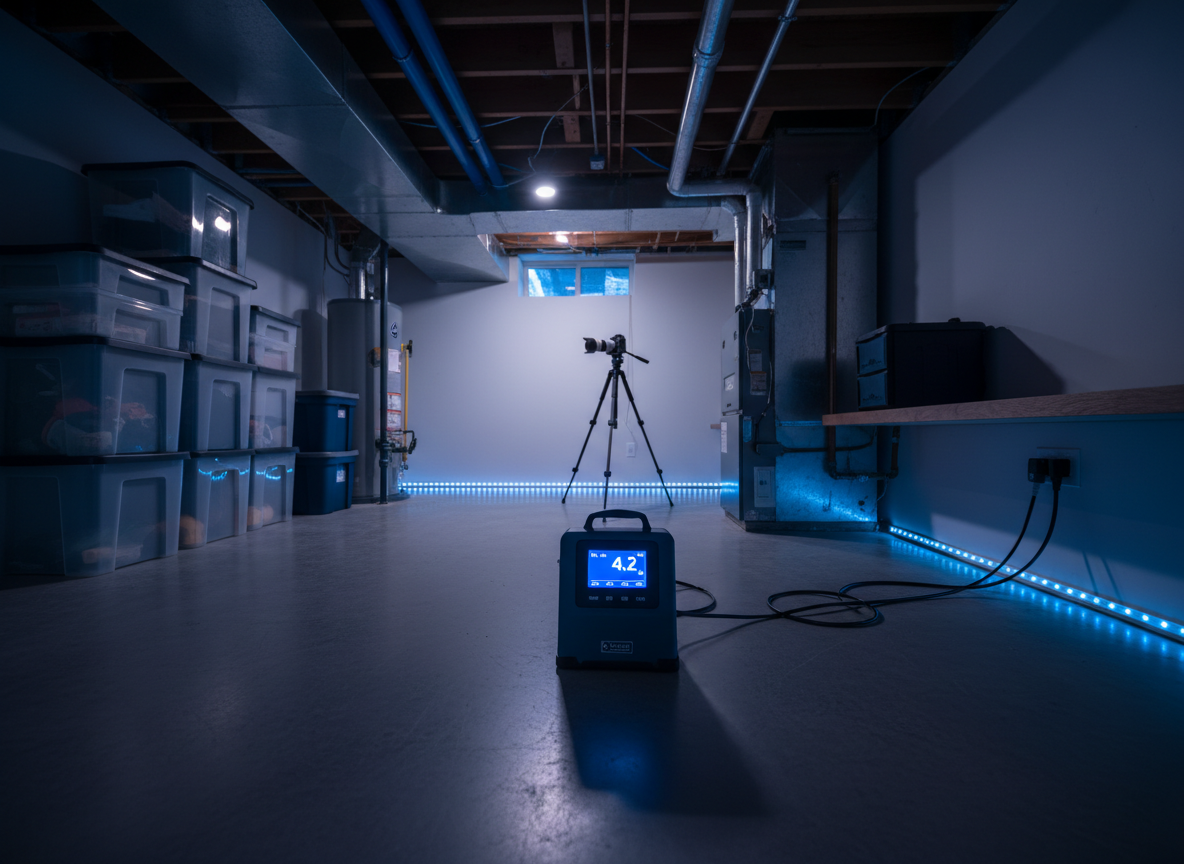
The most common type for initial screening and real estate transactions. A continuous radon monitor (CRM) is placed in the lowest livable level of your home for 2–7 days. The device records hourly radon readings throughout the test period. Results are fast and accepted by lenders and real estate professionals.
Long-Term Testing (90+ Days)
For homeowners who want the most accurate picture of their annual average radon exposure. Radon levels fluctuate with weather, seasons, and home conditions — a long-term test captures these variations and provides a more reliable average. Recommended for homes where you plan to live long-term.
What Happens During Professional Radon Testing
- Scheduling and preparation. We schedule a convenient time to place the testing device. Before the test begins, the home must be in "closed-house conditions" — windows and doors closed (except for normal entry/exit) for at least 12 hours before and during the test. This ensures accurate results.
- Device placement. Our technician places a calibrated continuous radon monitor in the lowest livable level of your home — typically the basement or first floor if there's no basement. The device is positioned away from drafts, high-humidity areas, and exterior walls per EPA protocol.
- Testing period. The device runs undisturbed for the agreed testing period. For short-term tests, this is 2–7 days. The monitor records radon concentrations hourly, creating a detailed log of fluctuations throughout the test.
- Device retrieval and data download. We return to retrieve the monitor and download the recorded data. The device also flags any tampering or unusual conditions (like windows being left open) that could compromise results.
- Report delivery. You receive a detailed report showing your average radon level in pCi/L (picocuries per liter), hourly readings throughout the test, comparison to EPA action levels, and clear recommendations for next steps.
Understanding Your Results
Below 2.0 pCi/L
Low Risk
The EPA considers this acceptable. No action required, but retesting every 2 years is recommended.
2.0 – 4.0 pCi/L
Moderate
Below the EPA action level, but consider mitigation. The EPA says any radon exposure carries some risk.
4.0 pCi/L or above
Take Action
The EPA recommends radon mitigation at this level. A sub-slab depressurization system can reduce levels by up to 99%.
10.0 pCi/L or above
Urgent
Significantly elevated. Mitigation should be completed as soon as possible.
Note: The national average indoor radon level is 1.3 pCi/L. Pennsylvania's average is significantly higher.
What If My Levels Are High?
If your radon test results are at or above 4.0 pCi/L, the most common solution is a sub-slab depressurization system — a pipe and fan system that draws radon from beneath your foundation and vents it outside before it can enter your home. These systems typically reduce radon levels by 90–99% and cost $800–$2,500 to install.
If you already have a mitigation system, we also offer radon fan replacement services when the fan wears out (typically every 5–10 years).
The Bottom Line
Radon testing is simple, non-invasive, and takes just a few days. Given Pennsylvania's elevated radon risk, every home should be tested — especially before buying or selling. Call My Water Damage Hero at 610-228-7440 to schedule certified radon testing.
Related Services
