Lead Paint Testing: When Is It Required?
Lead paint was banned in residential use in 1978 — but it remains in millions of older homes across Southeastern Pennsylvania. Knowing when testing is legally required (and when it's simply the smart thing to do) can protect your family, your workers, and your legal liability.
Quick Facts
- ✓ Lead paint was banned in residential use in 1978
- ✓ Approximately 87% of homes built before 1940 contain lead paint
- ✓ About 69% of homes built between 1940–1960 contain lead paint
- ✓ Even homes built up to 1978 may contain lead paint
- ✓ SE PA has a large stock of pre-1978 housing
Legally Required
Before renovation in pre-1978 homes (EPA RRP Rule)
The EPA's Renovation, Repair, and Painting (RRP) Rule requires that contractors working on pre-1978 homes be certified in lead-safe work practices. While the rule doesn't technically require testing before work begins, it does require treating all painted surfaces as lead-containing unless testing proves otherwise. In practice, testing is the only way to avoid mandatory lead-safe protocols on every surface.
Before demolition of pre-1978 structures
Federal and state regulations require lead surveys before demolition of structures built before 1978. This applies to full demolition and major structural work that disturbs large painted surfaces.
HUD-funded housing
Properties receiving HUD funding or Section 8 vouchers are subject to Lead Safe Housing Rule requirements, which include lead-based paint testing and disclosure requirements.
Strongly Recommended
Before buying or selling a pre-1978 home
Federal law (TSCA Section 1018) requires sellers to disclose known lead paint hazards and provide buyers with an EPA pamphlet. Buyers have the right to conduct a lead inspection before purchase. Testing protects both parties — sellers get documentation, buyers get peace of mind.
If you have young children or are pregnant
Children under 6 are most vulnerable to lead poisoning. Even low-level exposure can cause developmental delays, learning difficulties, and behavioral problems. If your home was built before 1978 and you have young children, testing is one of the most important health steps you can take.
If paint is deteriorating
Chipping, peeling, or chalking paint in a pre-1978 home should be tested before any cleanup or repair work. Disturbing deteriorating lead paint without proper precautions creates dangerous lead dust.
Before any DIY renovation
Homeowners are not subject to the RRP Rule for work on their own homes — but that doesn't mean lead exposure is safe. If you're planning to sand, scrape, or disturb painted surfaces in a pre-1978 home, test first.
What Does Lead Paint Testing Actually Involve?
Professional lead testing is faster and less invasive than most homeowners expect:
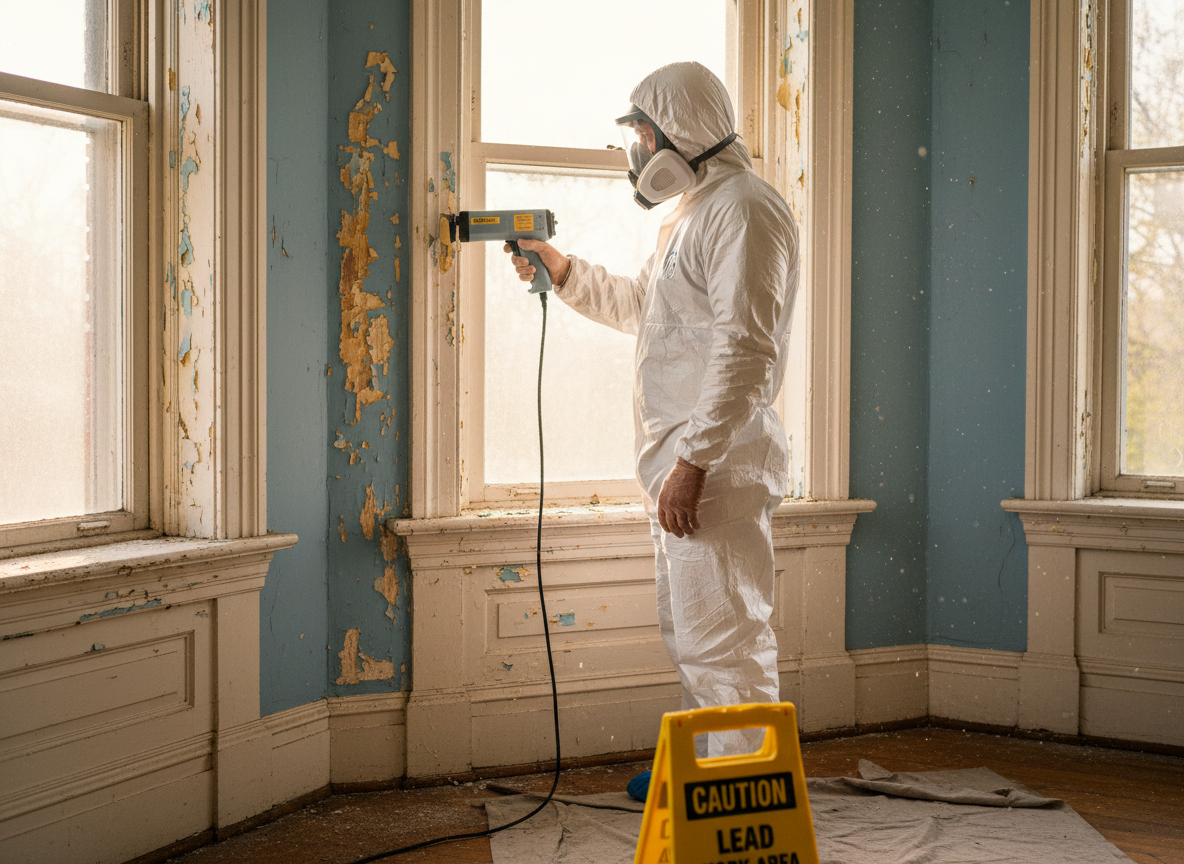
- XRF (X-Ray Fluorescence) Analysis: A handheld device scans painted surfaces and detects lead content instantly — no damage to the surface, no samples needed. This is the most comprehensive method for a full inspection.
- Dust Wipe Sampling: Wipe samples collected from floors, windowsills, and other surfaces measure lead dust levels — the primary exposure pathway for children.
- Soil Sampling: Tests soil around the home's exterior for lead contamination from deteriorating exterior paint.
- Lab Analysis: Dust and soil samples go to an accredited independent laboratory. Results typically return within 3–5 business days.
- Written Report: A detailed report with findings, photos, lab results, and clear recommendations.
What Happens If Lead Is Found?
Finding lead paint doesn't mean you need to immediately tear out all your walls. Your options depend on the condition of the paint and your plans for the home:
- Management in place: Intact, well-adhered lead paint that won't be disturbed is generally not an immediate hazard. Regular monitoring and maintenance are key.
- Encapsulation: Applying an EPA-approved encapsulant seals lead paint in place. Less expensive than abatement, but not appropriate for all situations.
- Abatement: Professional removal of lead-containing materials. Required before renovation work that will disturb lead paint, and recommended when paint is severely deteriorating.
We offer both certified lead testing and lead abatement services — and our Testing Loyalty Discount gives you 10% off abatement when you book testing first.
The Bottom Line
If your home was built before 1978, lead paint testing is one of the most important steps you can take — whether you're renovating, selling, or simply want to protect your family. Call My Water Damage Hero at 610-228-7440 to schedule certified lead testing across Southeastern PA.
Related Services
