
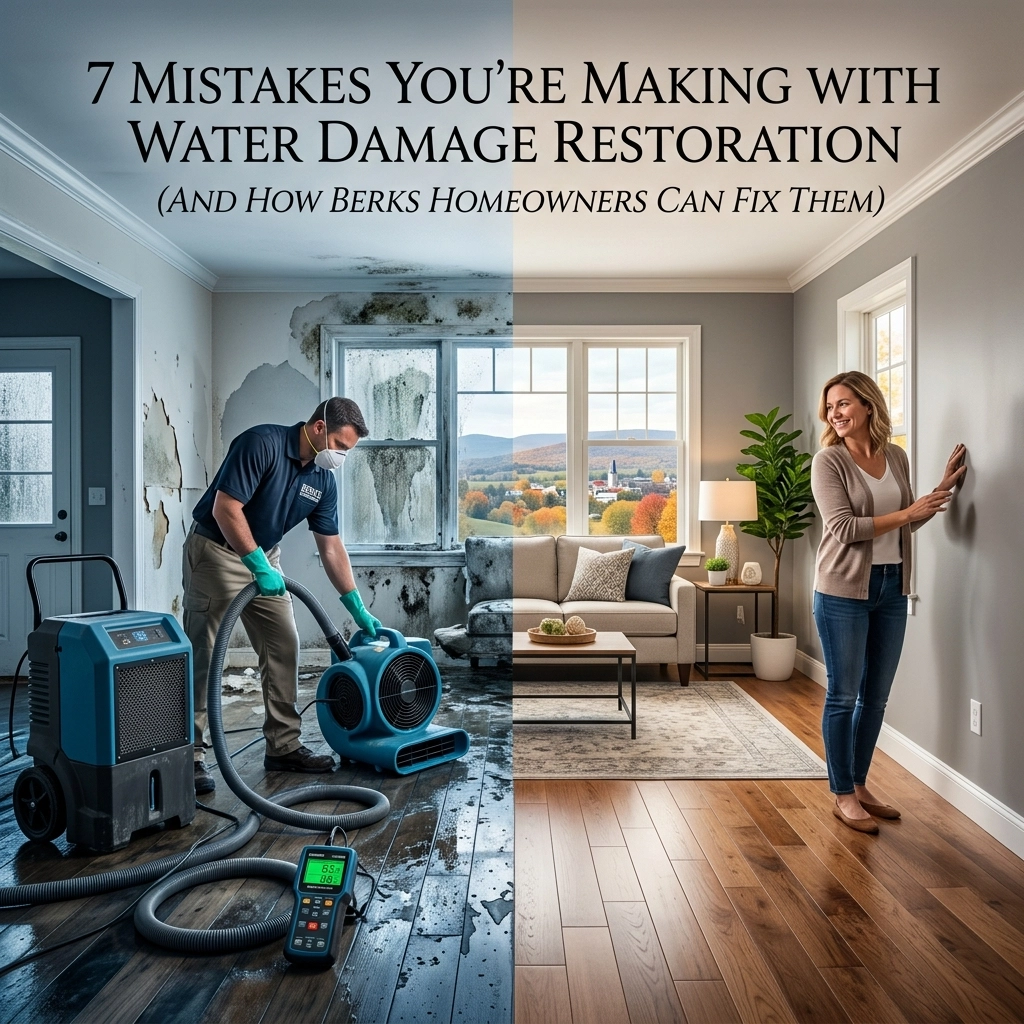
Finding a pool of water in your basement or a damp spot on your ceiling is enough to make any Berks County homeowner panic. Whether it’s from a burst pipe during a cold Pennsylvania winter or a sudden summer storm flooding your crawlspace, water damage is a high-stakes race against the clock.
At My Water Damage Hero, we see it all the time. Homeowners try to do the right thing, but without the right tools or training, a small leak can quickly turn into a full-blown structural nightmare. We’re not just talking about soggy carpets; we’re talking about ruined drywall, compromised foundations, and the dreaded "M-word", mold.
If you’re currently staring at a puddle, take a deep breath. Before you grab the old shop-vac and call it a day, let’s go over the seven most common mistakes people make with water damage restoration and how you can fix them before things get worse.
The absolute biggest mistake you can make is waiting. We get it, life is busy. Maybe you think the leak stopped, or you figure the carpet will dry out on its own if you just crack a window.
In the world of water damage restoration, time is your worst enemy. Within just 24 to 48 hours, mold can begin to colonize. Wood begins to warp, and the glue holding your floorboards together starts to dissolve.
How to Fix It: Don’t wait for "tomorrow." If you see water, act now. If the source is a pipe, shut off the main water valve immediately. If it's a flood, call in the pros for an inspection. Even if the damage looks minor, a professional moisture meter can tell you if there’s a gallon of water hiding behind your baseboards that you can’t see.
We love a good Shop-Vac for cleaning up sawdust in the garage, but it is not a water extraction tool. A standard wet-dry vac doesn't have the "oomph" to pull moisture out of carpet padding or from underneath hardwood floors.
When you leave moisture trapped deep in the fibers or under the subfloor, you’re basically creating a greenhouse for bacteria. This is often where "that smell" comes from a few weeks after a flood.
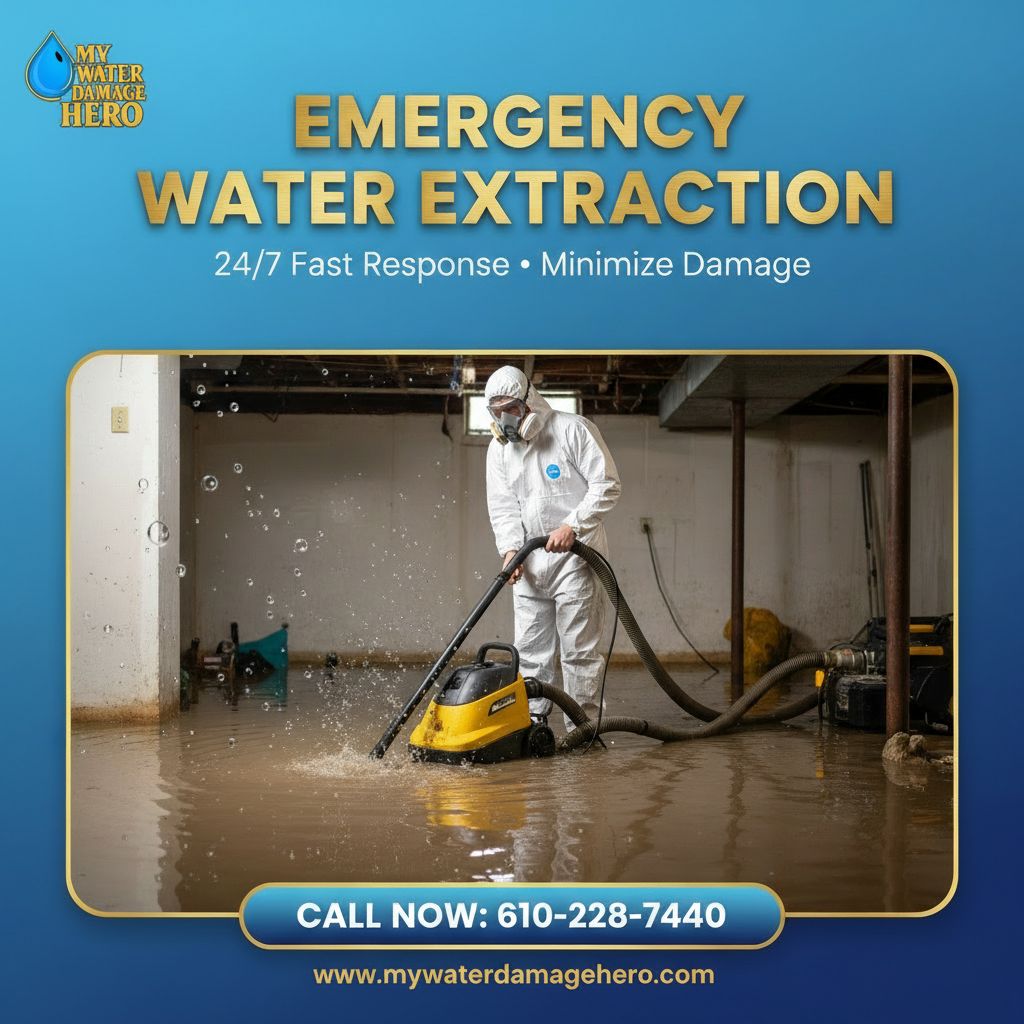
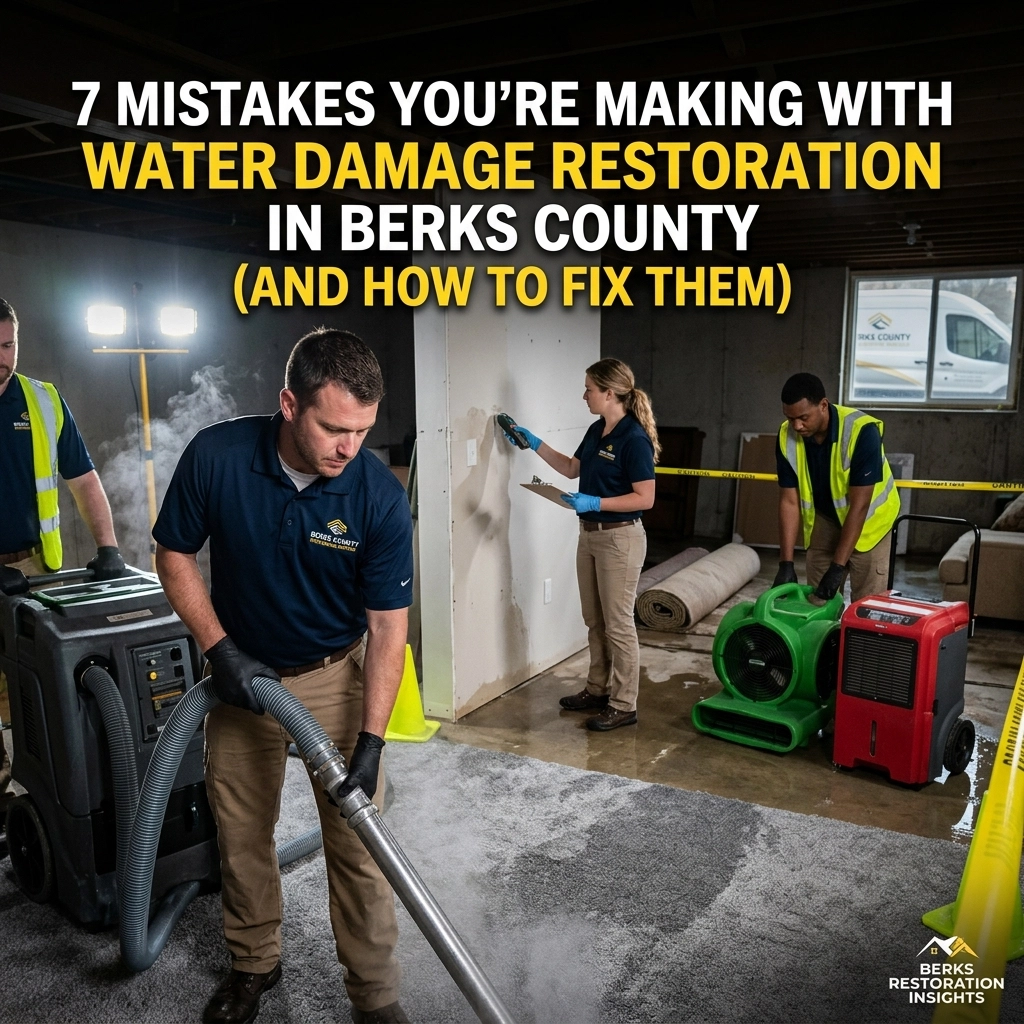
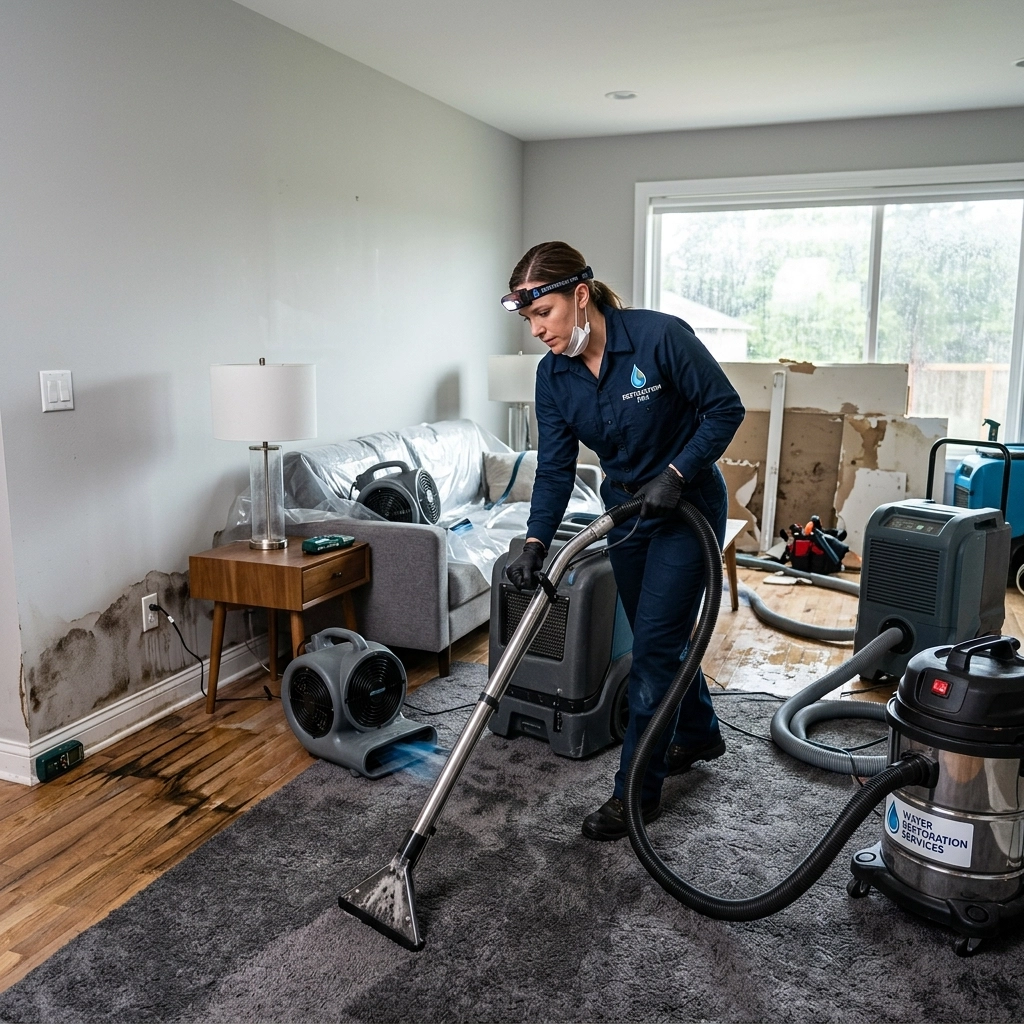
How to Fix It: Professional water damage restoration requires industrial-grade extractors. These machines use massive amounts of suction to pull water from deep within the materials of your home. If you have standing water, you need professional-strength extraction to ensure the "deep water" is gone before the drying process even begins.
It’s easy to get caught up in the cleanup. You’re mopping, you’re throwing away ruined boxes, and you’re scrubbing the floor. But did you actually fix what caused the mess in the first place?
If you clean up a puddle but don’t realize your water heater is cracked or your sump pump is failing, you’re just going to be doing the same work again next week. Worse, a slow, hidden leak behind a wall can lead to massive structural rot before you even notice the drywall is soft.
How to Fix It: Always identify the "why." If it was a one-time weather event, great. If not, you need to find the plumbing failure or the foundation crack. At My Water Damage Hero, we don't just dry your home; we help you understand where the water came from so we can prevent a repeat performance.
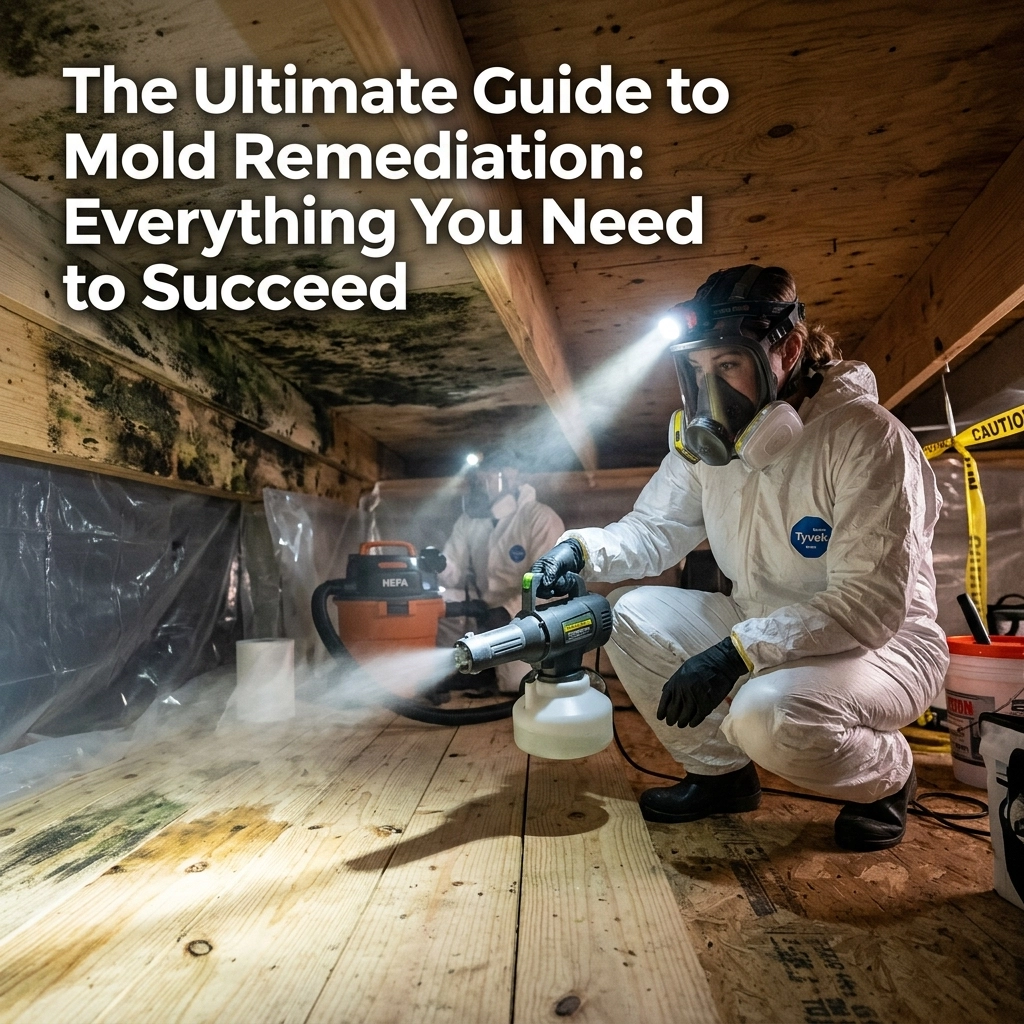
Many Berks County homeowners think mold is something that happens in old, abandoned buildings. The truth is, mold is opportunistic. It loves the humidity we get here in the Northeast. If a surface stays damp for more than two days, mold remediation becomes a necessity, not just a precaution.
Mold doesn’t just stay on the surface. It sends out spores that can travel through your HVAC system, leading to the need for professional air duct cleaning to get your air quality back to a safe level.
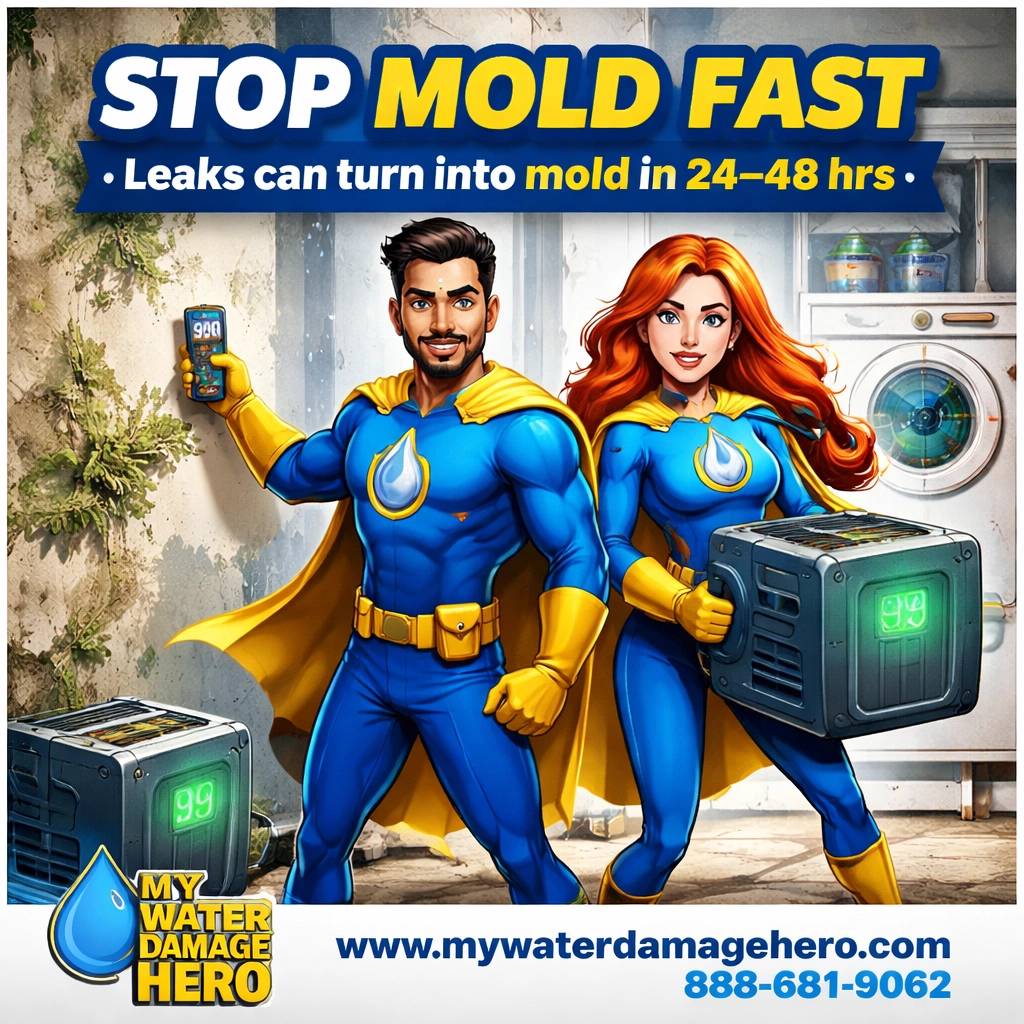
How to Fix It: If you’ve had standing water for more than 48 hours, don't just spray it with bleach and hope for the best. Bleach often doesn't kill mold on porous surfaces like wood or drywall, it just bleaches the color out while the roots keep growing. You need a professional assessment to see if mold remediation is required to keep your family safe.
This is a classic. You run a few box fans for a couple of days, feel the carpet, and think, "Hey, it’s dry!"
Unfortunately, your hand isn't a moisture sensor. Water is sneaky. It travels up walls (wicking) and seeps under floorboards. The surface might feel dry, but the structural studs behind your drywall could still be soaking wet. If you seal that moisture in, you’re asking for rot and hidden mold colonies.
How to Fix It: Professionals use thermal imaging cameras and moisture probes to "see" inside your walls. To truly dry a home, you need industrial dehumidifiers that pull gallons of water out of the air, not just fans that move the air around. Professional water damage restoration ensures the humidity levels in your home return to normal, protecting your structure.
When a disaster hits, people usually fall into two camps: they either throw everything in the dumpster in a panic, or they try to save everything, including contaminated items.
If your "clean" tap water flooded the basement, many items can be saved with professional carpet cleaning and drying. However, if the water came from a sewage backup (Category 3 water), keeping porous items like rugs or drywall is a serious health risk.
How to Fix It: Categorize your loss. Professionals can help you determine what is "salvageable" and what is "hazardous." For example, after a fire, you might think your furniture is ruined, but fire damage restoration specialists can often remove smoke odors and soot that seem permanent to the untrained eye.

In the heat of the moment, the last thing you want to do is take photos. You just want the water out. But if you start throwing away ruined furniture and ripping up carpet before documenting the damage, your insurance company might give you a hard time when it comes to your claim.
How to Fix It: Take "Before," "During," and "After" photos and videos. Keep a log of everything that was damaged and the steps you took to mitigate the loss. Working with an experienced restoration company is also a huge help here; we speak the language of insurance adjusters and can provide the professional documentation they need to process your claim fairly.
Your home is likely your biggest investment. While the "DIY" spirit is strong in Pennsylvania, water damage is one area where it pays to bring in the experts. Whether it’s specialized carpet cleaning after a minor leak or full-scale fire damage restoration after a kitchen mishap, having a "Hero" in your corner makes all the difference.
Beyond just the structure, don't forget about your air. After any restoration project, we often recommend air duct cleaning. Dust, mold spores, and construction debris from the repair process can settle in your vents, blowing right back into your living room the next time the AC kicks on.
If you’re dealing with water, smoke, or mold, don’t tackle it alone. My Water Damage Hero is here to help Berks County homeowners navigate the mess and get back to normal: fast.
From the first emergency extraction to the final check on your air quality, we’ve got your back. Remember: act fast, document everything, and never assume "dry to the touch" means the job is done.
Need a hand? Give My Water Damage Hero a call today. We’re ready to save the day (and your home)!
Contact us for quick, trusted restoration.
See how we’ve turned tough situations into success stories.

