February 27, 2026
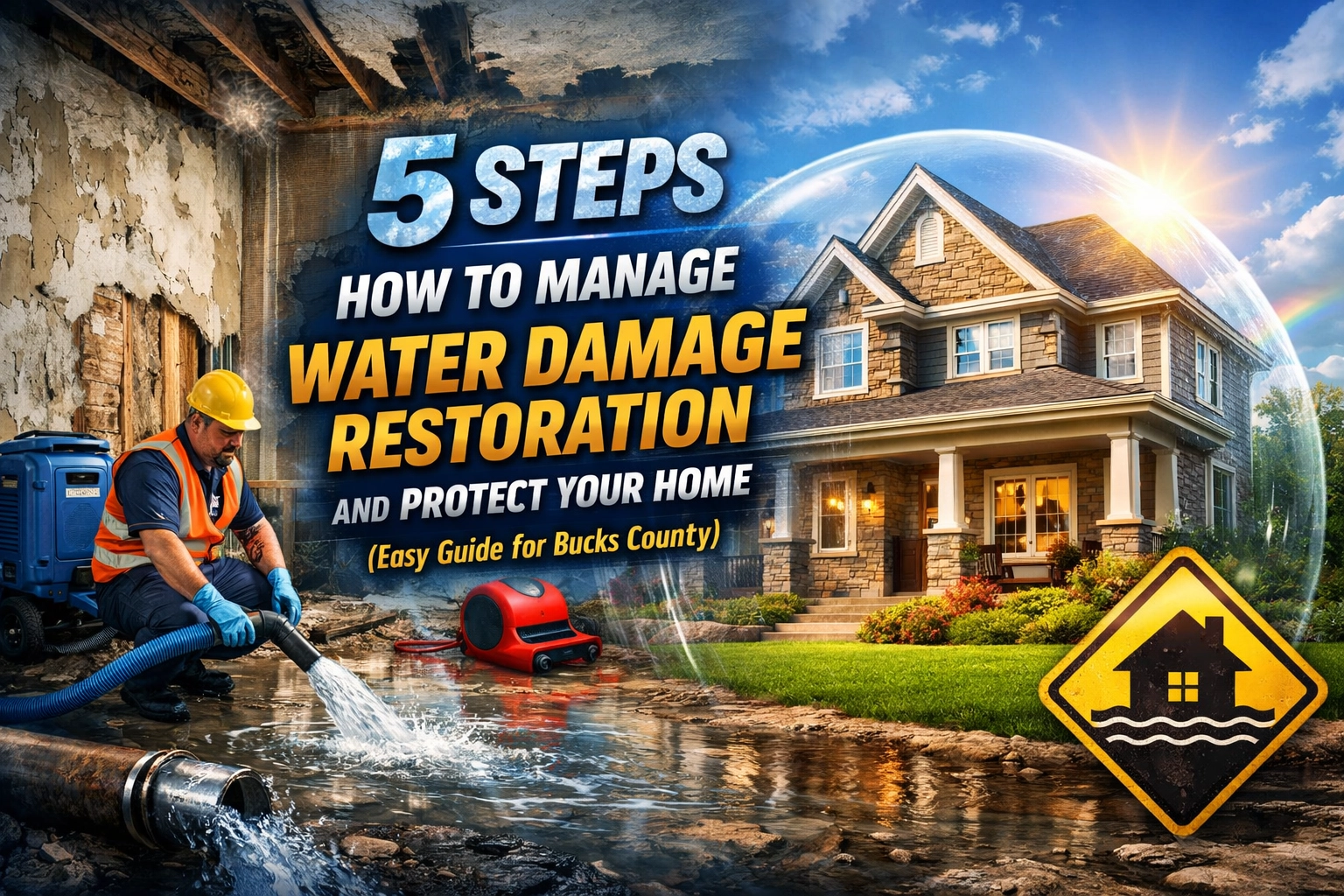
5 Steps How to Manage Water Damage Restoration and Protect Your Home (Easy Guide for Bucks County)
Water damage can go from “small problem” to “major rebuild” way faster than most homeowners expect: especially in Bucks County where basements, older plumbing, and seasonal storms are a real mix. The good news: you don’t need to be a contractor to make smart moves right away.
Below is a simple 5-step plan to manage water damage restoration, reduce the chance of mold remediation, and protect your home (and your wallet). Use it as your checklist the moment you notice water where it shouldn’t be.
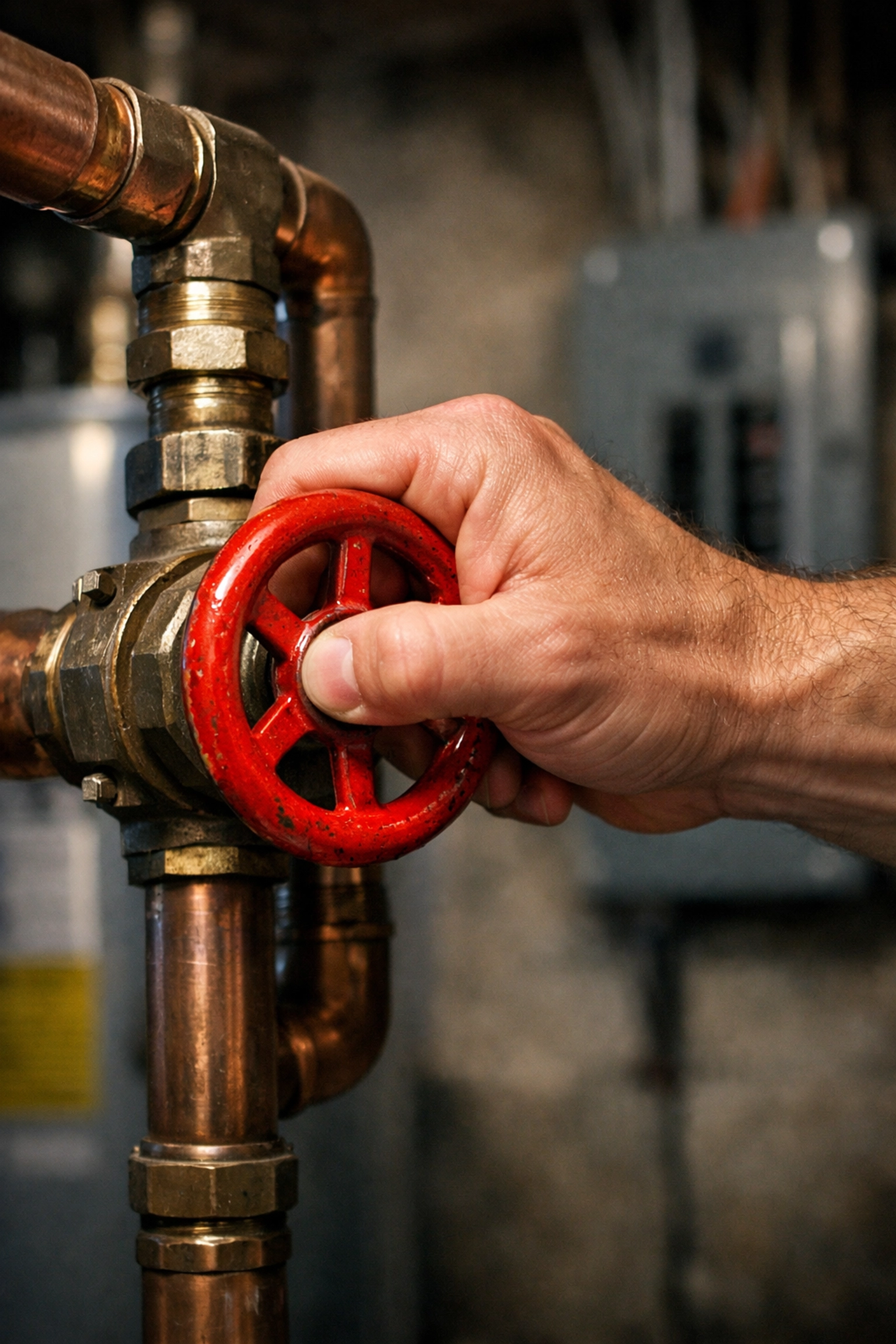
Step 1) Make it safe first (then stop the water source)
Before you think about towels, fans, or cleanup: make sure the situation isn’t dangerous.
Quick safety checklist
- If water is near outlets, appliances, or your electrical panel: avoid the area and shut off power at the breaker if you can do it safely.
- If you smell gas or water is near gas appliances (water heater/furnace): leave the home and contact your gas utility.
- Watch for “hidden” hazards: slippery floors, sagging ceilings, wet insulation, and contaminated water (sewage).
Stop the water at the source
The fastest way to limit damage is simply preventing more water from entering.
- Burst pipe / leaking supply line: shut off your main water valve.
- Overflowing toilet/sink: shut off the fixture valve (usually behind the toilet or under the sink).
- Roof leak: place buckets/tarps as a temporary measure and move valuables away from the drip line.
- Sump pump failure: stop additional water intrusion if possible and prepare for fast extraction.
Why this step matters: Water damage restoration gets exponentially harder the longer moisture sits. Mold can start growing in as little as 24–48 hours in damp conditions: so time really is everything.
Step 2) Document the damage (and call insurance early)
Even if you plan to handle some cleanup yourself, take a few minutes to document what happened. It’s one of the easiest things you can do to protect yourself later.
What to document (fast and simple)
- Take wide photos of each affected room.
- Take close-ups of damaged materials (drywall, flooring, baseboards).
- Record video walking through the space and narrating what you see.
- Capture “proof” of the source if possible (burst pipe, failed supply line, leaking appliance).
What to do with damaged items
- Don’t throw things away yet if insurance may be involved.
- Make a basic list: “area + item + rough value” (example: “Basement: box of kids’ books: $50”).
Call your insurance company
Report the claim and ask:
- Is this covered under my policy (clean water vs. sewer backup vs. flood)?
- What’s my deductible?
- Do I need to use preferred vendors?
- What documentation do you want?
Helpful Bucks County note: A lot of homeowners assume “flooding is covered,” but flood insurance is often separate. Water that enters from outside (groundwater, storm surge) is handled differently than a pipe break. When in doubt, report it and ask.
If you need professional help quickly, a local water damage restoration team can often provide moisture readings and a clear scope of work that helps the claim go smoother. Learn more about our services at My Water Damage Hero: http://www.mywaterdamagehero.om
Step 3) Remove standing water and extract moisture (don’t “wait it out”)
Once it’s safe and documented, the next job is to get water out: fast.
Standing water: what to do right away
- If it’s minor (small spill/limited seepage), you may manage with a wet/dry shop vac.
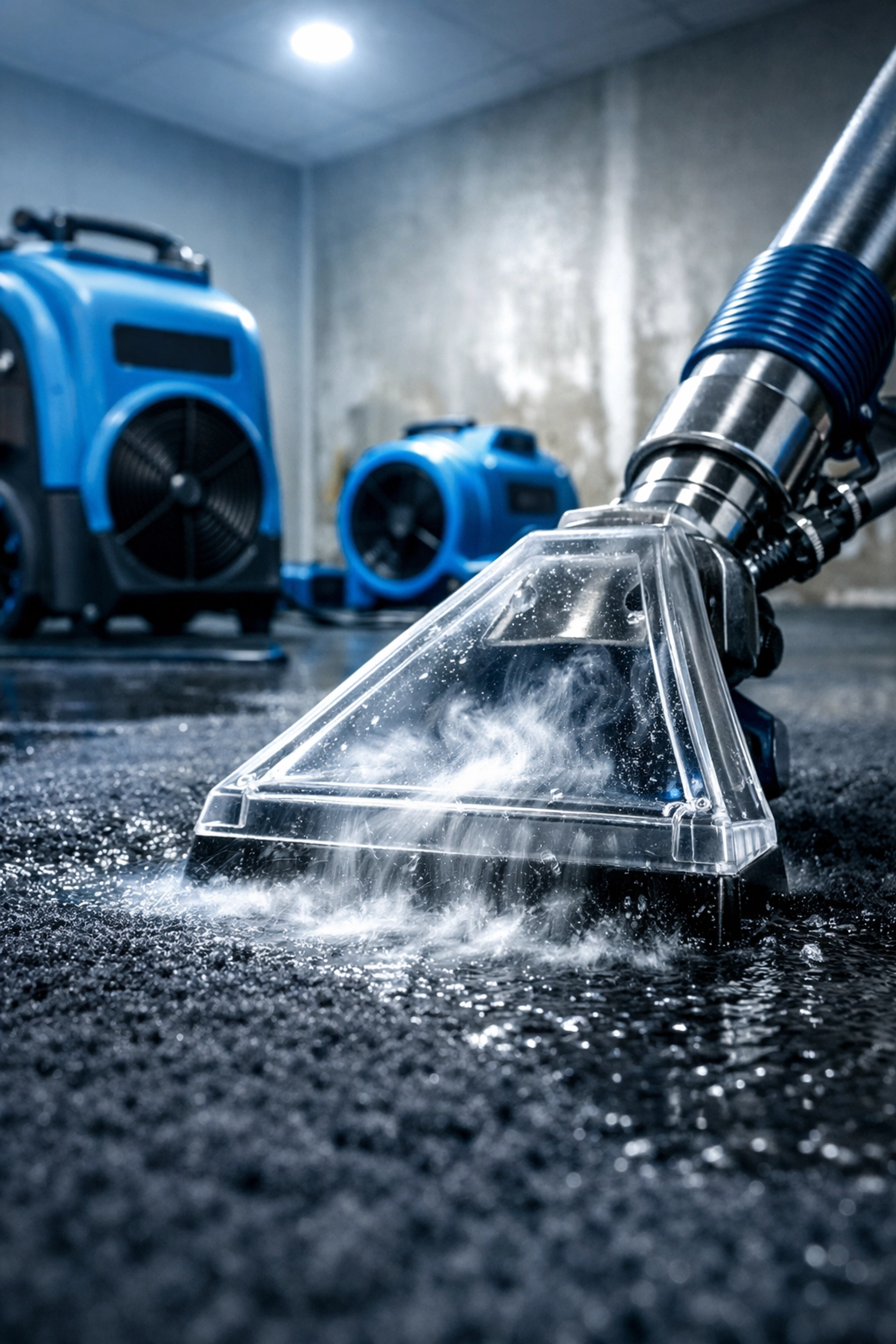
- If it’s more than a small area, or your basement has pooled water, professional extraction equipment is usually the difference between “dry in a few days” and “mold + warped materials.”
Professionals use industrial pumps and extraction tools that can remove water efficiently from:
- Basements and crawl spaces
- Carpet and padding
- Hardwood seams and subfloors
- Wall cavities (where moisture hides)
Why “extraction” matters more than you think
Water doesn’t just sit on the surface. It wicks into:
- Baseboards
- Drywall (especially the bottom 12–24 inches)
- Carpet pad (often a mold magnet)
- Underlayment and subfloor
If the water isn’t removed quickly, you may end up needing mold remediation and more demolition than you expected.
Step 4) Dry everything thoroughly (this is where most DIY plans fail)
Here’s the part that trips people up: it can look dry and still be wet.
Drying isn’t just about blowing air around. Real water damage restoration means controlling:
- Humidity
- Airflow
- Temperature
- Time
- Moisture trapped inside materials
What proper drying usually includes
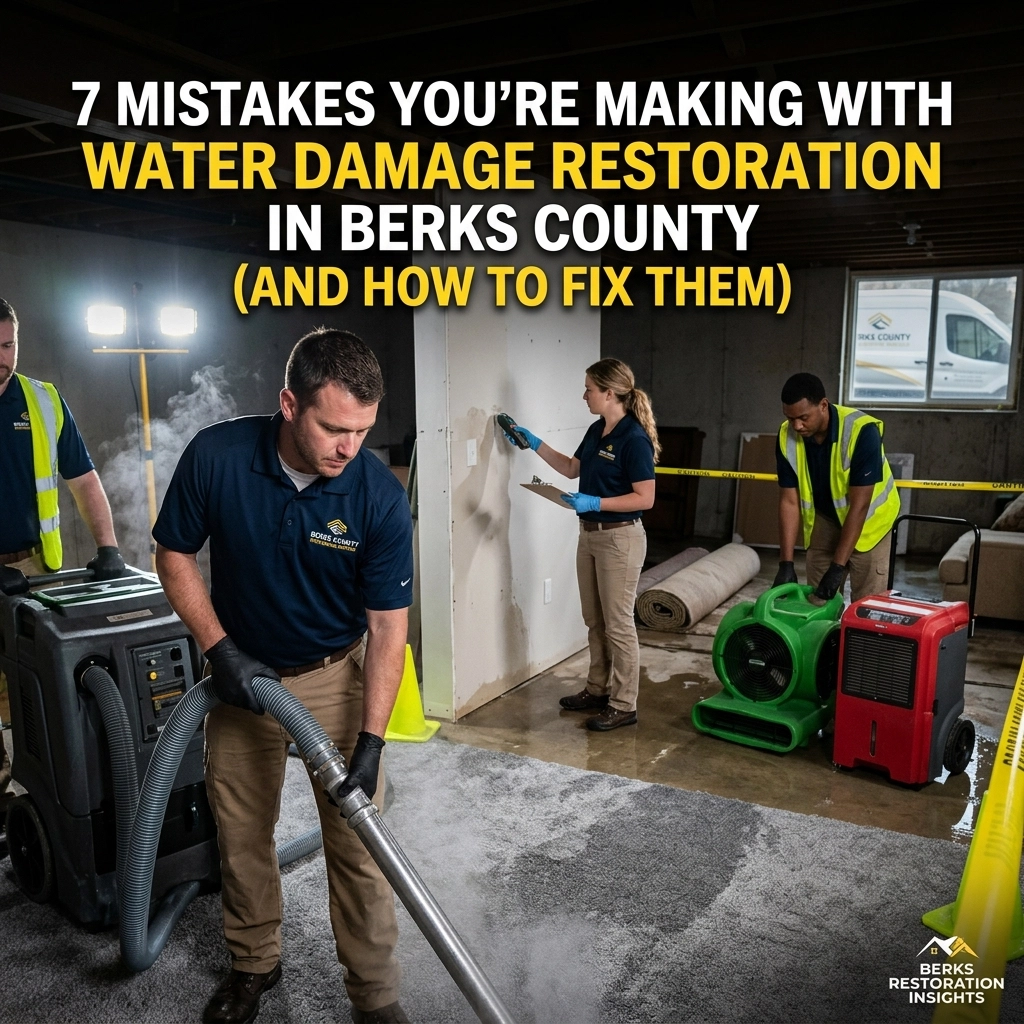
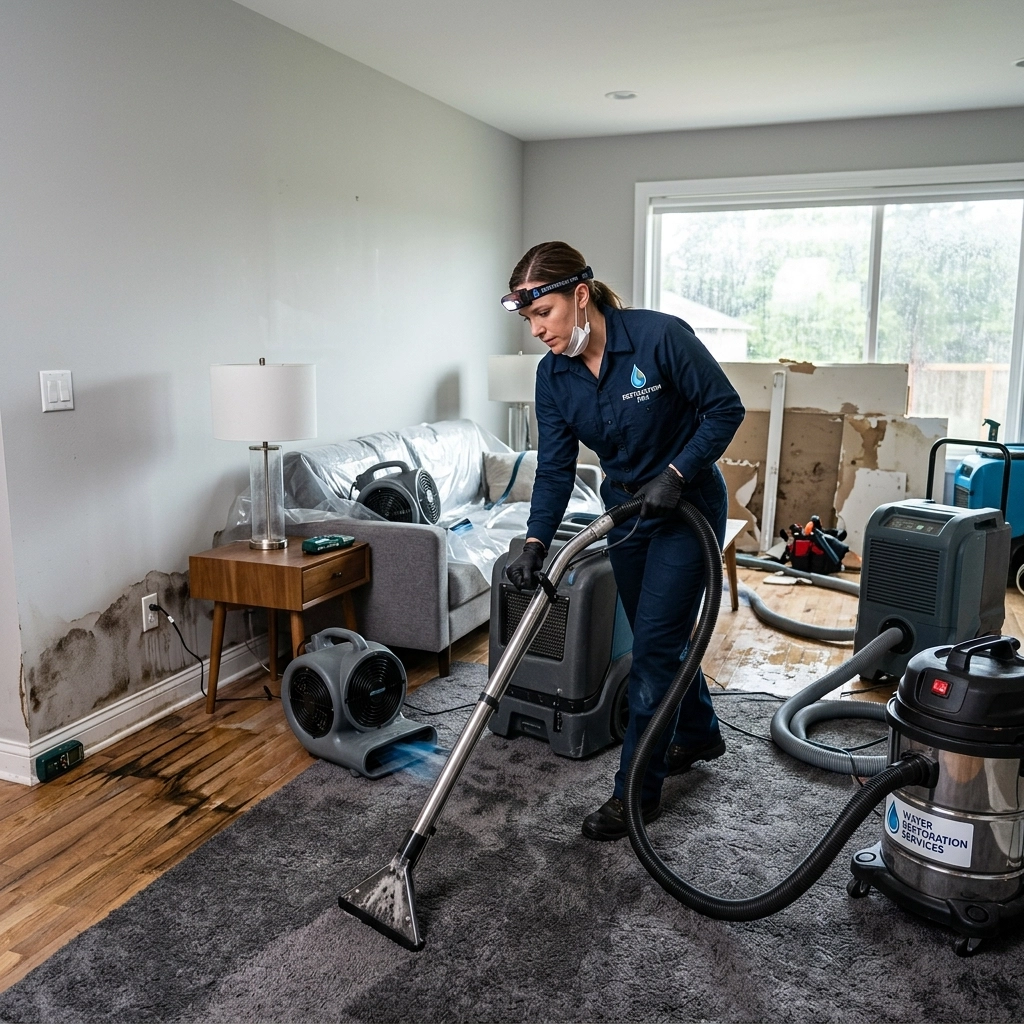
- Air movers to push airflow across wet surfaces
- Commercial dehumidifiers to pull moisture from the air
- Moisture meters to confirm materials are actually drying, not just “feeling” dry
Most structural drying takes roughly 3–7 days, depending on:
- how much water there was
- what materials were affected
- the season (humidity in summer can slow drying)
- how quickly the water was extracted
Common Bucks County “hidden moisture” spots
- Finished basements with insulation behind drywall
- Under carpet in bedrooms and family rooms
- Under vinyl plank or laminate flooring
- Around chimneys and roof valleys after storms
- Laundry rooms near supply lines and drain hoses
Carpet: clean vs. replace?
Carpet decisions depend on the water source and how fast you acted:
- Clean water + quick extraction/drying: carpet cleaning and drying may be possible.
- Gray/black water (appliance wastewater, sewage backup, stormwater): padding typically needs removal, and carpet may need replacement depending on contamination.
Tip: Even when carpet looks fine, the padding underneath can stay wet and start smelling musty. That smell is often the first sign you’re headed toward mold remediation.
Step 5) Sanitize, prevent mold, and restore your home back to normal
After drying, the job isn’t “done”: not if you want your home to be safe and fully livable.
5A) Cleaning + antimicrobial treatment
Once moisture levels are back to normal, technicians may apply EPA-registered antimicrobial products to reduce microbial growth risk. This matters most when:
- water sat for more than a day
- humidity stayed high
- porous materials were affected
- you already notice a musty odor
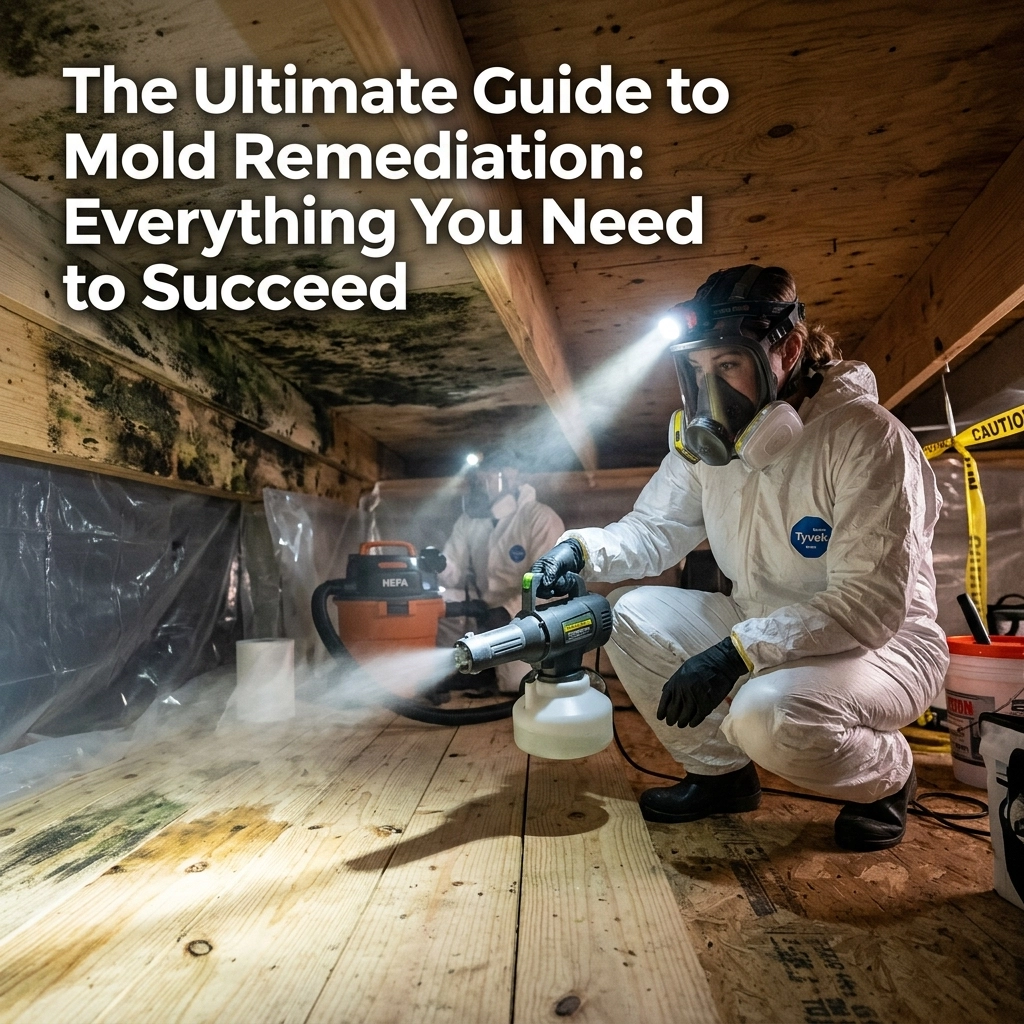
If mold is present (visible growth or strong odor + confirmed moisture problem), you may need full mold remediation rather than just cleaning.
When to suspect mold
- Musty smell that won’t go away after drying
- Dark/green/black spotting on drywall, wood, or around baseboards
- Allergy-like symptoms that improve when you leave the home
- Warped or crumbling drywall near the floor line
5B) Repairs and rebuild (the “restoration” part)
Restoration may include:
- Removing and replacing damaged drywall sections
- New baseboards/trim
- Flooring replacement (carpet, laminate, hardwood)
- Painting and finishing
- Cabinet toe-kick and vanity repairs
- Insulation replacement in wall cavities
In many Bucks County water damage restoration projects, the full process (mitigation + rebuild) can take 7–14 days, but timelines vary based on how much needs to be rebuilt and how quickly materials dry.

A simple “Do / Don’t” list for homeowners (print this mentally)
Do
- Do act fast: the first 24 hours are huge.
- Do keep receipts (fans, dehumidifiers, materials) if insurance is involved.
- Do move valuables to a dry area (photos, documents, electronics).
- Do ventilate if weather allows (but don’t rely on open windows as your only drying method).
- Do check other rooms: water travels under floors and along framing.
Don’t
- Don’t run electronics in wet areas.
- Don’t paint over water stains without fixing the source and drying completely.
- Don’t assume bleach solves mold: it often doesn’t penetrate porous materials well.
- Don’t ignore “small” leaks: slow leaks can cause major mold and structural damage over time.
What about smoke or fire damage at the same time?
It’s not uncommon to see overlapping issues: like an electrical short after water intrusion, or smoke damage from a furnace malfunction after a storm. If that happens, you’ll want a coordinated plan because water, soot, and odor all require different approaches.
Fire damage restoration may include:
- Soot removal (walls, ceilings, contents)
- Odor control (HEPA filtration, deodorization)
- Air quality cleanup
- Repainting/sealing smoke-stained surfaces
If your home has both water and smoke issues, address water first for safety and mold prevention, then move into deodorization and smoke cleanup.
Indoor air matters: when air duct cleaning helps (and when it doesn’t)
After water damage or mold issues, homeowners often ask about air duct cleaning: and it can be helpful in the right situations.
Air duct cleaning can help if:
- Dust/debris entered the system during demolition
- There’s a persistent odor moving through the home
- Mold contamination is confirmed in or near HVAC components
- Your filters are clogging unusually fast after the incident
Air duct cleaning is not a substitute for:
- drying wet building materials
- removing moldy drywall or insulation
- fixing the original leak or intrusion source
If your HVAC system pulled in humid air or odors during the event, cleaning plus proper filtration can support a healthier reset after restoration.
Quick Bucks County scenarios (and what they usually need)
“My basement carpet is wet after heavy rain”
- Likely needs: extraction, drying, possible carpet cleaning, check sump pump/perimeter drains
- Watch for: moisture behind finished walls and under padding
“My dishwasher line leaked overnight”
- Likely needs: fast extraction + structural drying (kitchen cabinets/toe kick area)
- Watch for: swelling cabinet bases, wet subfloor under vinyl/laminate
“We had a small ceiling leak from the bathroom upstairs”
- Likely needs: fix source, dry ceiling cavity, may require a drywall cut for airflow
- Watch for: insulation holding moisture and slow mold growth
If you only remember one thing…
Water damage restoration is a race against time: stop the water, document it, extract it, dry it correctly, then clean and restore. That’s the best path to avoiding the expensive stuff: like major rebuilds and full mold remediation.
For homeowners in Bucks County who want a straightforward plan and professional help when it’s needed, you can check our service info here: http://www.mywaterdamagehero.om