
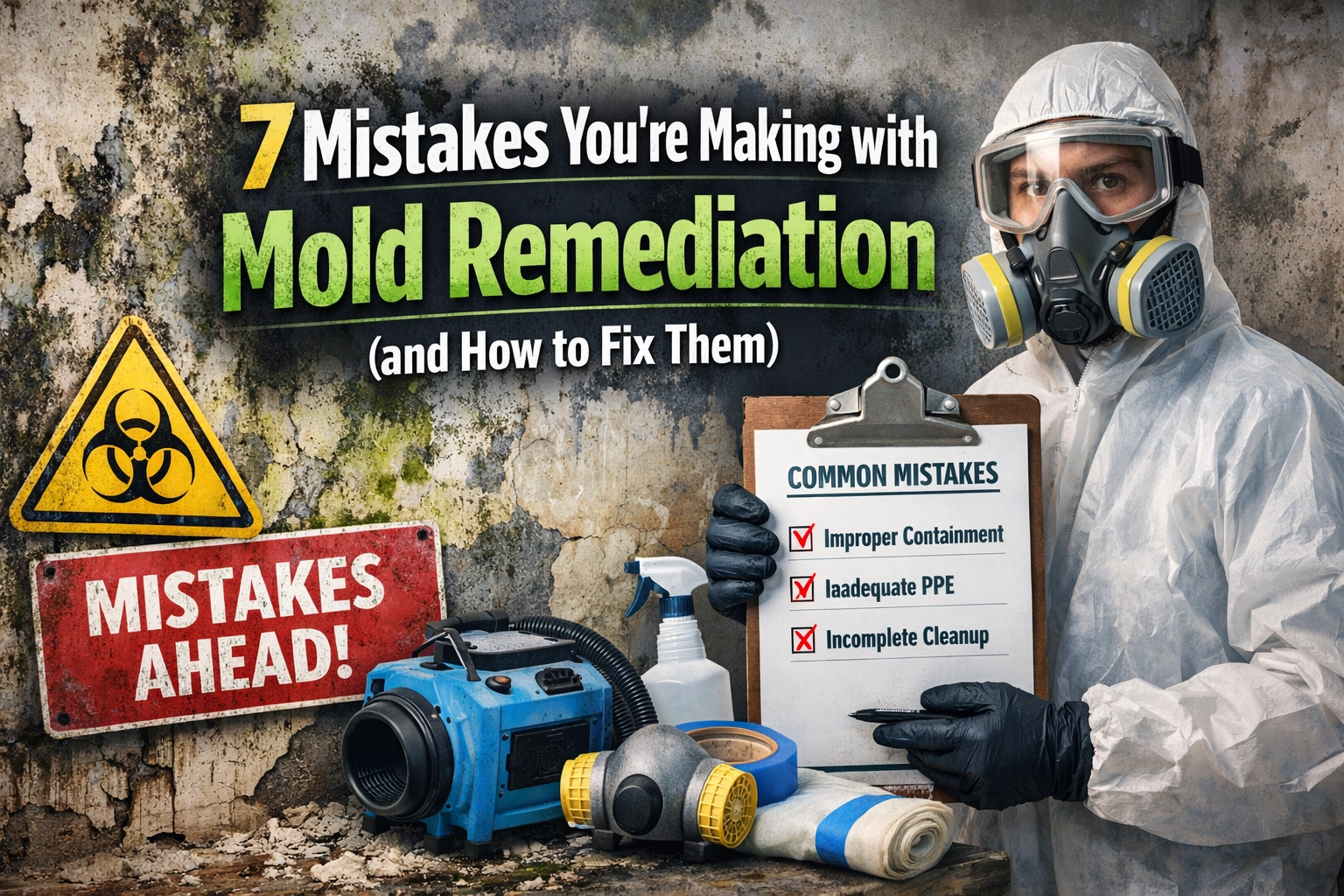
Finding a patch of fuzzy black or green growth in your home is enough to make any homeowner panic. Whether it’s under the kitchen sink, in a corner of the basement, or lurking behind the bathroom wallpaper, mold is a literal headache. Your first instinct might be to grab a jug of bleach and a scrub brush and go to town.
Hold on a second!
Before you start scrubbing, you should know that many "common sense" ways of dealing with mold actually make the problem worse. At My Water Damage Hero, we see the results of DIY mold remediation gone wrong every single day. Mold is sneaky, resilient, and: if handled incorrectly: potentially dangerous to your health and your home's structure.
If you’re dealing with a fungal invasion, make sure you aren’t falling into these seven common traps. Here is what you might be doing wrong and how to fix it like a pro.
This is the number one mistake we see. For decades, the "gold standard" for cleaning mold was a bottle of laundry bleach. While bleach is great for whitening your socks or disinfecting a porcelain countertop, it is not a magic wand for mold remediation: especially on porous surfaces.
The Mistake: Bleach is mostly water. When you spray it on a porous surface like drywall, wood, or carpet, the chlorine stays on the surface, but the water soaks in. This might kill the mold you see on top, but the "roots" (hyphae) of the mold deep inside the material are now being fed by the water in the bleach. You’ve basically just watered the weeds.
The Fix: Use professional-grade antimicrobial cleaners instead. If you are dealing with a non-porous surface like tile or metal, bleach might work, but for anything else, you need a solution designed to penetrate the material and kill the mold at the source. If the mold has deeply infested porous materials like drywall or insulation, the only real fix is to remove and replace those materials entirely.

We get it. Mold is ugly. It looks like a stain on your beautiful home. It’s very tempting to think, "If I can’t see it, it’s not there," and reach for a can of "mold-resistant" paint or a tube of caulk.
The Mistake: Painting over mold is like putting a band-aid on a broken leg. It might look better for a week, but the problem is still there underneath. In fact, mold loves the dark, damp environment under a fresh coat of paint. It will continue to eat the paper backing of your drywall and eventually bubble right through the new paint, often coming back worse than before.
The Fix: You must completely remove the mold before any cosmetic repairs happen. Clean and dry the area thoroughly (or replace the material). Only after the area is verified to be mold-free should you apply mold-resistant primers or paints to help prevent future growth.
Mold doesn’t just show up for no reason. It needs three things to grow: food (like drywall or wood), the right temperature, and moisture. You can’t change the fact that your house is made of "mold food," but you can control the moisture.
The Mistake: Many homeowners focus 100% on the cleaning part but 0% on why the mold was there in the first place. If you clean the mold but don't fix the leaky pipe or the high humidity in the crawlspace, the mold will be back within 24 to 48 hours. Mold remediation and water damage restoration go hand-in-hand.
The Fix: Find the leak first. Check your plumbing, look for roof leaks, and use a dehumidifier to keep indoor humidity below 50%. If the mold was caused by a flood, you need professional water damage restoration to ensure the structure is completely dry before you even think about cleaning the mold.
We love a good DIY project as much as anyone, but mold is a different beast. There is a big difference between a little mildew on your shower tile and a three-foot patch of black mold on your basement wall.
The Mistake: When you disturb a large patch of mold without the right equipment, you release millions of microscopic spores into the air. You then breathe those in, and they drift through your house, landing on your furniture, clothes, and inside your HVAC system. This can turn a small room problem into a whole-house disaster.
The Fix: Know your limits. The EPA generally suggests that if the moldy area is larger than 10 square feet (about a 3×3 patch), you should call in the pros. Professionals use HEPA vacuums, air scrubbers, and specialized suits to make sure the mold stays where it is and doesn't end up in your lungs.
Even if the patch of mold looks small, how you handle it matters.
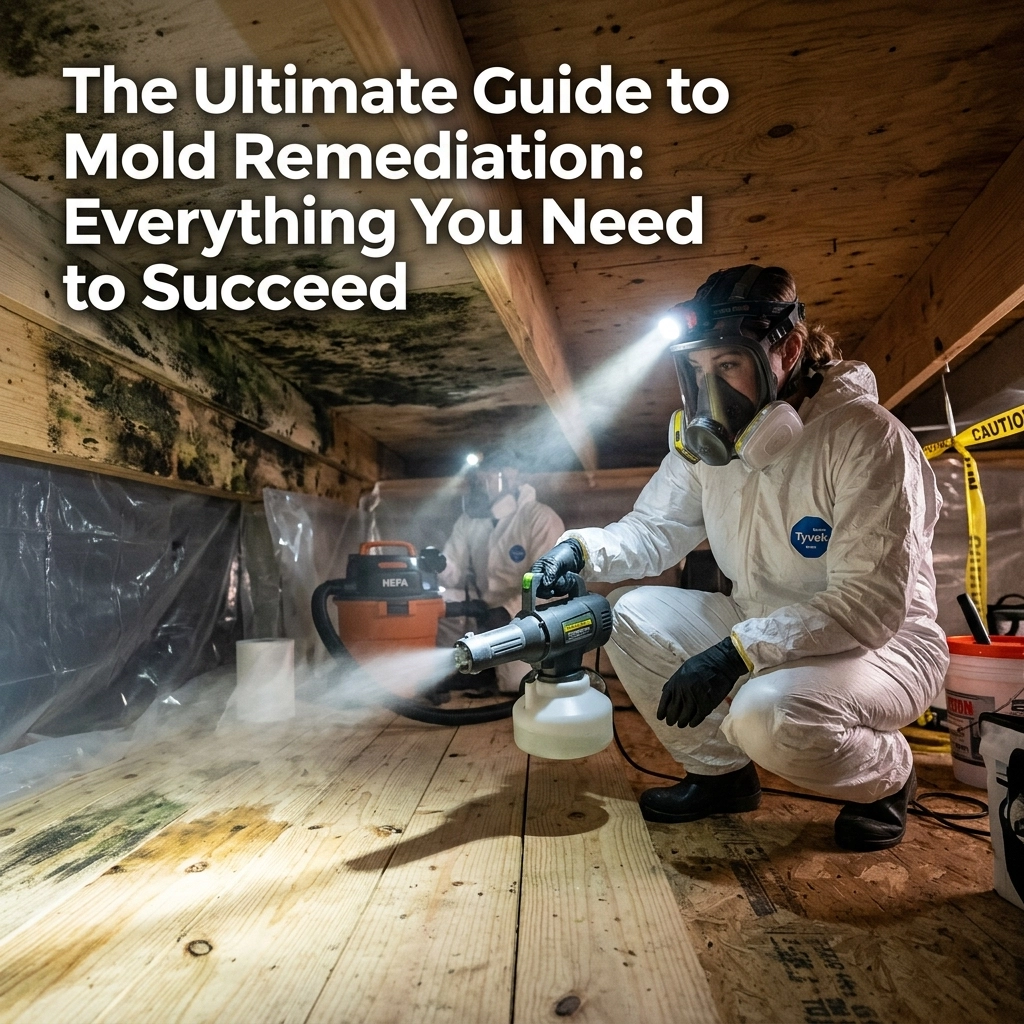
The Mistake: Many people go in with a dry brush or a high-pressure spray to "scrub" the mold away. This is the worst thing you can do. Dry-scrubbing mold sends the spores airborne instantly. If you don't have the area sealed off with plastic sheeting, those spores will travel through your hallways and into your vents, leading you to need air duct cleaning much sooner than you planned.
The Fix: Always use "wet" cleaning methods to keep spores from flying away. More importantly, set up containment. Use heavy-duty plastic sheeting and painter's tape to seal off the work area from the rest of the house. Professionals also use "negative air pressure" machines to ensure that air only flows into the moldy room and then out a window through a filter, never into your living room.
In an effort to be thorough, some people think, "If one cleaner is good, two must be better!" They might mix bleach with an ammonia-based cleaner or an acidic bathroom cleaner.
The Mistake: This is extremely dangerous. Mixing bleach with ammonia creates toxic chloramine gas. Mixing bleach with acids (like some vinegar or toilet bowl cleaners) creates chlorine gas. Both can cause severe respiratory distress, coughing, and even permanent lung damage.
The Fix: Stick to one product at a time. Read the labels carefully. If you are using a professional antimicrobial for mold remediation, don't mix it with anything else. Safety should always be your top priority.
"I don't see any mold, so we're fine," is a dangerous sentence. Mold is the "iceberg" of home maintenance: what you see on the surface is usually just a tiny fraction of the total problem.
The Mistake: Many homeowners ignore a "musty" smell because they can't see any black spots. Or they clean the front of a baseboard but don't look behind it. If you have had previous issues requiring fire damage restoration or water cleanup, there could be moisture trapped in wall cavities that you can't see.
The Fix: Use your nose. A musty, earthy smell is a huge red flag for hidden mold. Use moisture meters and thermal imaging cameras (or hire a pro who has them) to look behind walls and under floors. Often, the worst mold is growing on the backside of the drywall or inside the insulation.

Once the mold is physically removed and the moisture source is fixed, many people think the job is done. But mold spores are survivors. They linger in the fibers of your rugs and the dust in your vents.
If you’ve had a significant mold issue, we highly recommend professional carpet cleaning and air duct cleaning. Mold spores love to hide in the dust inside your HVAC system. Every time the AC kicks on, it could be blowing those spores right back into the room you just spent days cleaning. A deep clean of these areas ensures your indoor air quality is actually safe.
At My Water Damage Hero, we don't just "clean" mold; we solve the problem. Mold remediation is a scientific process that involves:
Dealing with mold can be overwhelming, but you don't have to do it alone. Whether you need a simple inspection or a full-scale remediation, we’re here to help. We also specialize in fire damage restoration and general water damage restoration to keep your home in top shape year-round.

If you suspect you have a mold problem: or if you’ve realized you might have made one of the mistakes above: don't wait. Mold grows fast, but My Water Damage Hero moves faster. Give us a call, and let’s get your home back to being a safe, healthy place for you and your family.

Contact us for quick, trusted restoration.
See how we’ve turned tough situations into success stories.

