
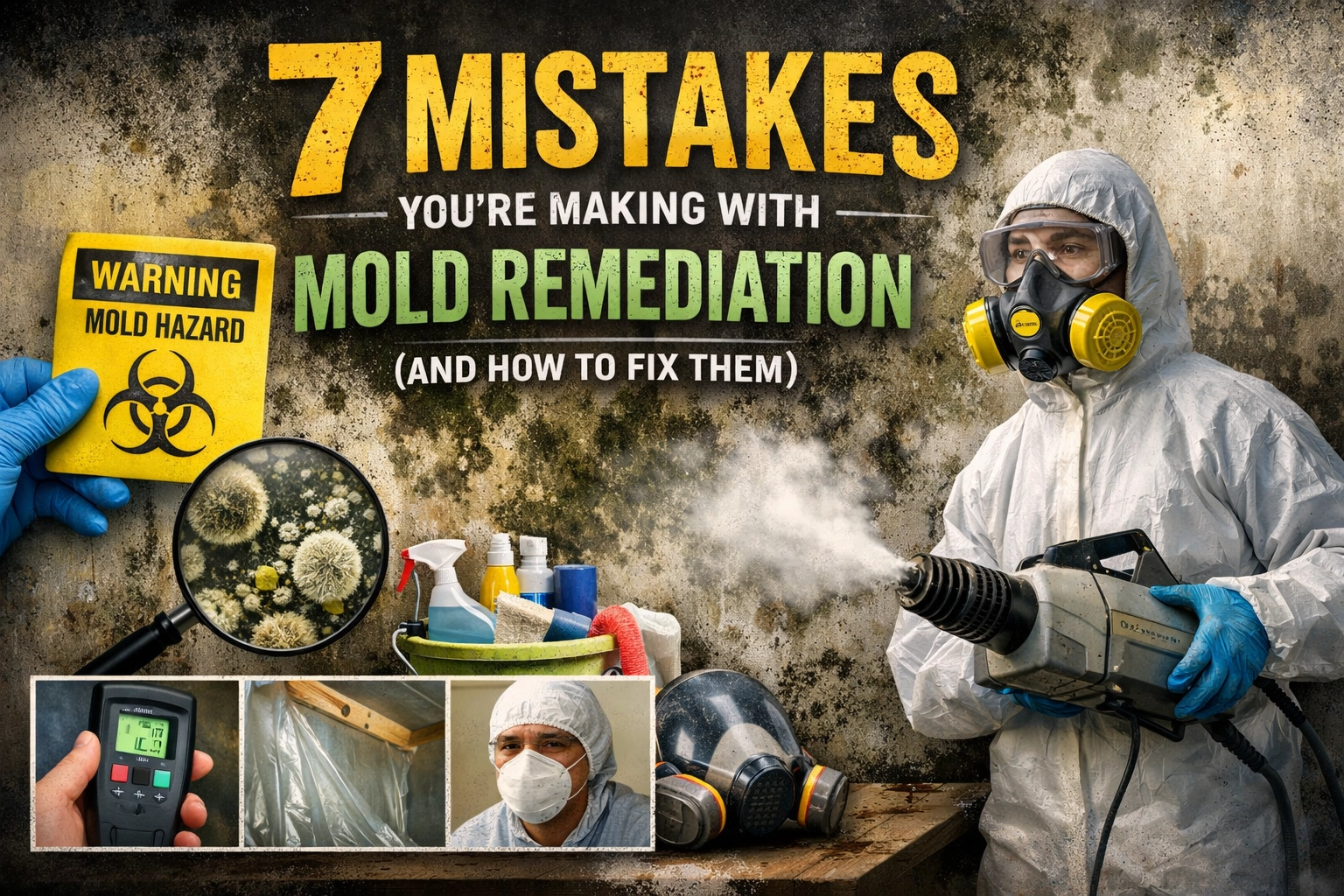
Hey there! Finding mold in your home is enough to ruin anyone’s Monday. It’s fuzzy, it’s smelly, and it’s definitely not something you want hanging out in your basement or bathroom. When most homeowners spot a patch of black or green growth, their first instinct is to grab a bucket of soapy water and start scrubbing.
But here’s the thing: mold is tricky. If you don't handle it the right way, you could actually make the problem worse, spreading spores throughout your house and potentially affecting your family's health. At My Water Damage Hero, we see these common slip-ups all the time.
If you're planning on tackling a cleanup, make sure you aren't falling into these traps. Here are the seven biggest mistakes people make with mold remediation and, more importantly, how to fix them.
We get it. That dark stain on the ceiling or the corner of the shower looks terrible. It’s tempting to just grab a can of white paint or a tube of caulk and cover it up so you don’t have to look at it anymore. This is probably the most common mistake we see in the building maintenance world.
The Problem: Paint and caulk do not kill mold. They simply hide it. Mold is a living organism, and by covering it up, you’re essentially creating a dark, enclosed space where it can continue to thrive. Over time, the mold will eat through the paint or push the caulk right off the wall, and by then, the structural damage underneath will be much worse.
The Fix: You must completely remove the mold before you even think about cosmetic repairs. If the surface is non-porous (like metal or tile), scrub it clean with the right solutions. If it’s porous (like drywall), it usually needs to be cut out and replaced. Only after the area is clean, dry, and mold-free should you apply any "mold-resistant" paint or sealant.
When people get "mold-panic," they often go into survival mode and think, "The stronger the chemical, the better." This leads to a very dangerous DIY habit: mixing different cleaning products together to create a "super-cleaner."
The Problem: Mixing bleach with ammonia-based cleaners (or even some vinegar solutions) creates toxic chlorine gas. Breathing this in can cause immediate respiratory issues, stinging eyes, and, in severe cases, it can be fatal. Beyond the chemical danger, some mixtures can actually damage your surfaces, making them more prone to future water damage restoration needs.
The Fix: Stick to one product at a time. Always read the labels. If you aren't sure what's in a bottle, don't mix it. For most small mold jobs, a simple mixture of water and a specialized mold cleaner is enough. Always keep the area well-ventilated while you work.
If you ask your neighbor how to get rid of mold, they’ll probably tell you to "just hit it with some bleach." While bleach is a powerful disinfectant, it isn't the magic wand people think it is, especially when it comes to mold on porous surfaces.
The Problem: Bleach is mostly water. When you spray bleach on something like wood or drywall, the chlorine stays on the surface, but the water soaks in. Since mold loves moisture, the water in the bleach can actually feed the mold roots deep inside the material. You might kill the color on the surface (making it look "clean"), but the mold is still alive and kicking inside the wall.
The Fix: Use enzyme-based cleaners or professional-grade fungicides designed specifically for mold remediation. These products are formulated to penetrate surfaces and kill the mold at the root without adding unnecessary moisture that feeds the problem.
You can scrub, spray, and clean until your arms are sore, but if you don’t find out why the mold started growing in the first place, it will come back. Mold needs moisture to survive. Period.
The Problem: Many homeowners treat the mold as the primary problem when it's actually just a symptom. If you have a slow-leaking pipe behind the wall or high humidity in your attic, the mold is just the messenger. Ignoring the moisture source is like trying to bail out a boat without plugging the hole in the bottom.
The Fix: Before you finish your cleanup, play detective. Check for leaky pipes, roof leaks, or poor drainage around your foundation. If the area is naturally damp (like a basement), install a high-quality dehumidifier. Professional water damage restoration experts often use moisture meters to find hidden pockets of water that the naked eye can't see.

We love a good DIY project as much as anyone, but there is a line where "doing it yourself" becomes "doing it dangerously."
The Problem: If the mold covers an area larger than about 10 square feet (roughly a 3-foot by 3-foot patch), it’s considered a major infestation. When you start scrubbing or tearing out large sections of moldy drywall without professional containment, you release millions of spores into the air. These spores travel through your HVAC system and land in other rooms, starting new colonies. This is why many people find mold in their bedroom a few weeks after "cleaning" it in their bathroom.
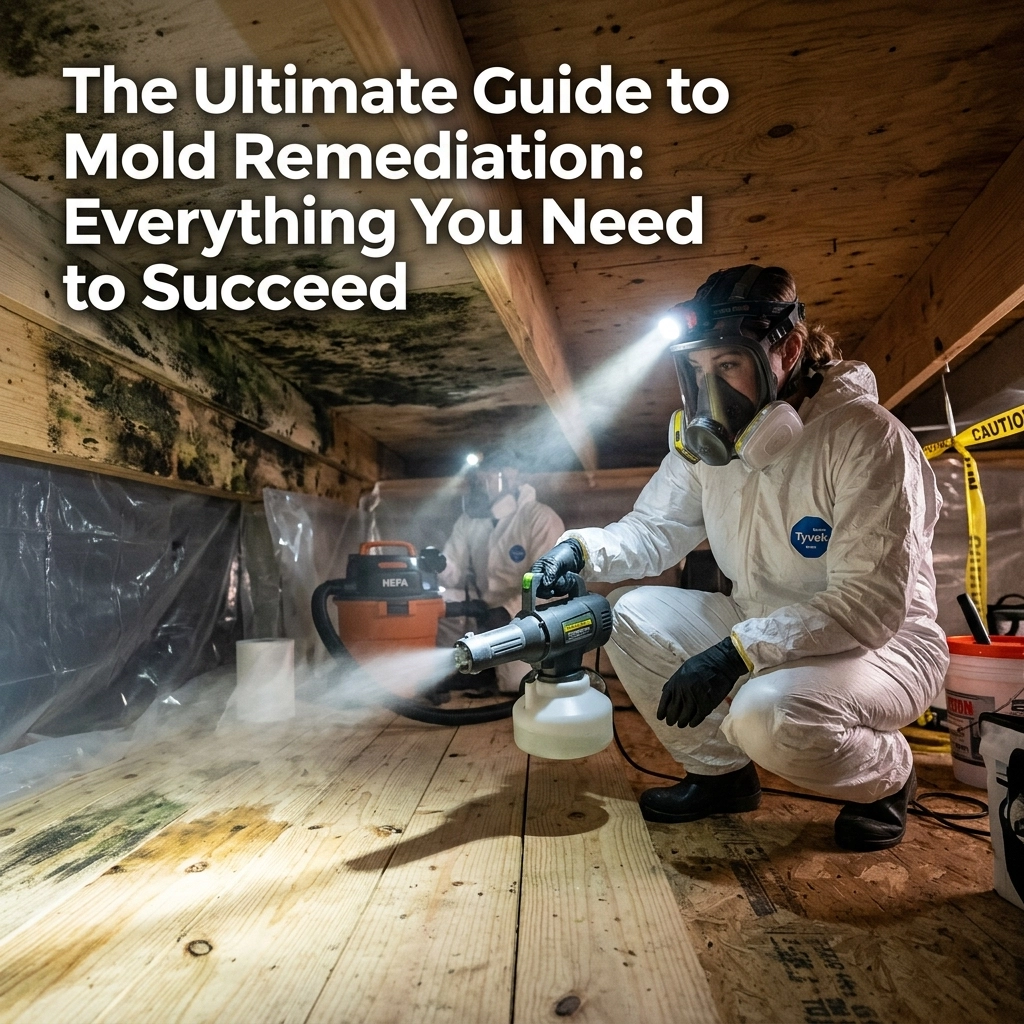
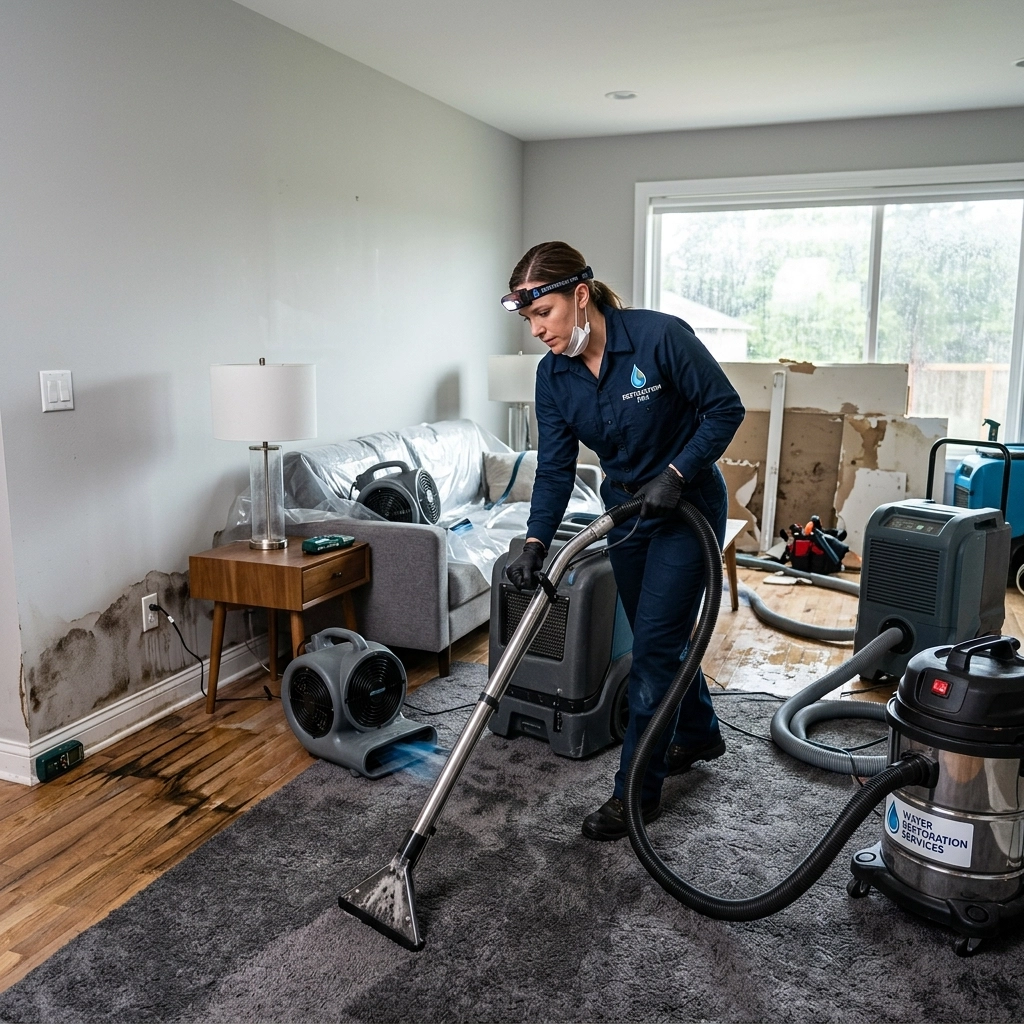
The Fix: For large jobs, call in the pros. We use specialized equipment like air scrubbers, HEPA vacuums, and negative air pressure machines to ensure that those spores stay contained. It’s much cheaper to hire a professional for mold remediation once than to pay for a whole-house cleanup because the spores spread.
It’s easy to think, "Oh, I'm just going to be in there for five minutes," and skip the mask and gloves. But mold isn't something you want to mess around with unprotected.
The Problem: When you disturb mold, it releases spores and "microbial volatile organic compounds" (MVOCs). Breathing these in can cause allergic reactions, asthma attacks, and other respiratory issues. Plus, some cleaning chemicals are harsh on the skin and eyes.
The Fix: At a minimum, you need an N95 respirator mask, goggles (without vent holes), and long rubber gloves. If you are doing a more intensive cleanup, wearing disposable coveralls is a great idea so you don't carry spores on your clothes into the rest of the house.

It’s hard to throw things away, especially if it’s a piece of furniture you like or a section of wall that looks "mostly okay." However, mold is a master at hiding in tiny spaces.
The Problem: Materials like drywall, insulation, unsealed wood, and carpet are porous. This means they have tiny holes where mold roots (hyphae) can grow deep inside. No matter how much you scrub the surface, you can't reach the mold inside these materials. If you keep them, the mold will inevitably return.
The Fix: If it’s porous and moldy, it’s got to go. Bag it up tightly before moving it through the house to prevent spreading spores. This is also a good time to consider air duct cleaning and carpet cleaning, as these areas can act as reservoirs for spores that have traveled through the air. Once the moldy materials are removed, ensure the remaining structure is treated with an antimicrobial solution and dried completely before rebuilding.

Dealing with mold is stressful, but you don't have to do it alone. Whether you’ve recently dealt with a flood and need water damage restoration, or you’ve discovered a hidden mold patch during a renovation, getting it right the first time is the key to a healthy home.
At My Water Damage Hero, we specialize in making your home safe again. From fire damage restoration to expert mold testing and cleanup, our team is here to help you avoid these common mistakes and get your life back to normal.

If you're worried about mold in your home, don't wait for it to spread! Give us a call or schedule an inspection today. We’ll help you identify the source, contain the problem, and make sure your indoor air quality is top-notch. Stay safe out there!
Contact us for quick, trusted restoration.
See how we’ve turned tough situations into success stories.

