
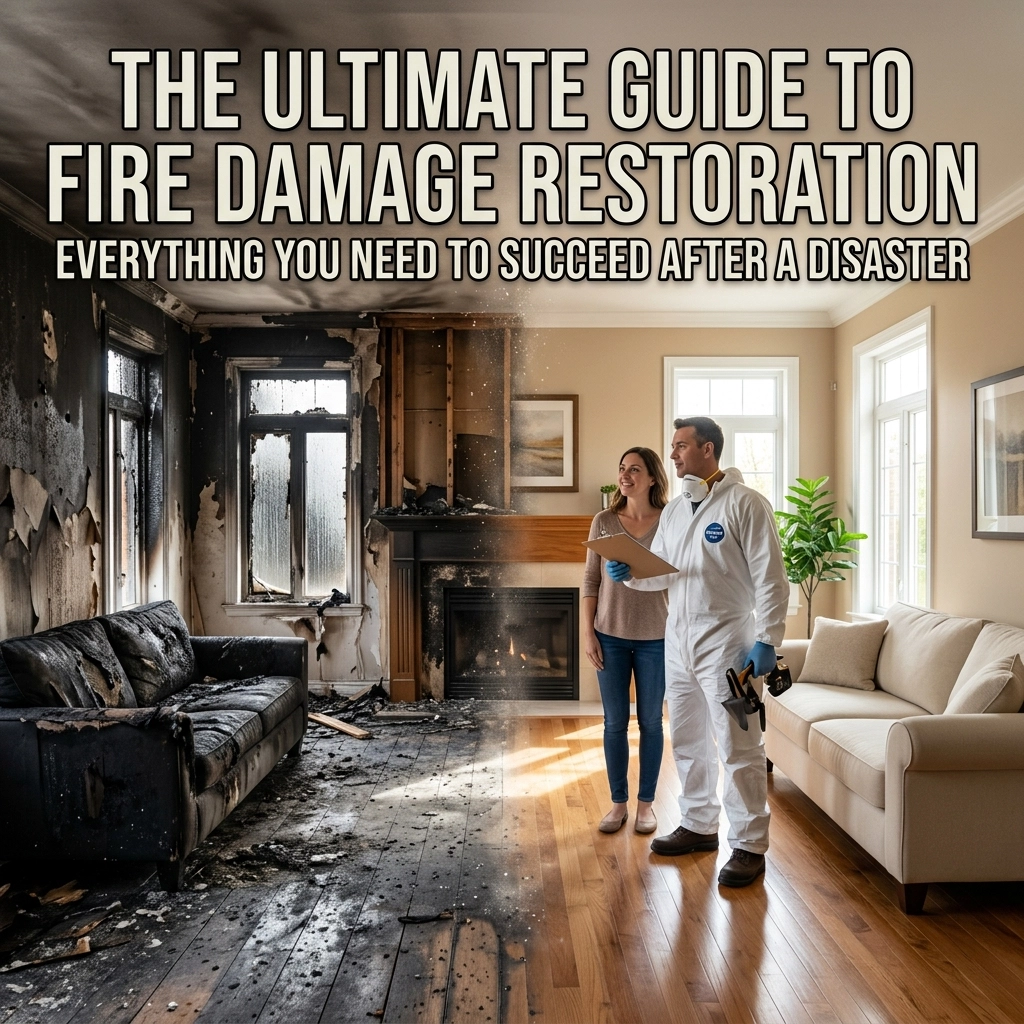
Hey there. If you are reading this, chances are you’ve just been through a terrifying experience. First of all, we are so glad you’re safe. Dealing with a house fire is overwhelming, and it’s okay to feel a bit lost right now. Between the smoke, the charred remains of your belongings, and, believe it or not, all that water from the fire hoses, it’s a lot to take in.
But here is the good news: you don’t have to do this alone. At My Water Damage Hero, we see people bounce back from disasters every single day. We’ve put together this ultimate guide to help you understand exactly what happens during the fire damage restoration process. Knowing what to expect can turn that mountain of stress into a manageable set of steps.
Before we dive into the nitty-gritty, we have to talk about safety. Even if the flames are out, your home is a hazardous zone.
Restoring a home isn't a weekend DIY project. It’s a specialized process that usually takes anywhere from two to eight weeks, depending on how much damage occurred. Here is the roadmap we follow to get your life back to normal.
As soon as we arrive, our first job is to figure out the "big picture." We look at three main things:
Once we have a plan, we secure your home. This means boarding up broken windows and tarping the roof to keep out rain and unwanted guests. We want to make sure your home is a "closed loop" before we start cleaning.
Wait, why are we talking about water? Well, the fire department uses a lot of it to save your home. If that water sits there, you’re going to have a secondary disaster on your hands: mold.
This is where water damage restoration begins. We use commercial-grade pumps to get the standing water out and high-power air movers to dry the structure. This step is non-negotiable because it prevents the need for massive mold remediation later on.

Once the house is dry, we have to get rid of the stuff that just can't be saved. This includes charred drywall, melted insulation, and ruined flooring. We clear out the debris so we can see the "bones" of the house. This phase also includes "packing out" your salvageable belongings to be cleaned at a specialized facility.
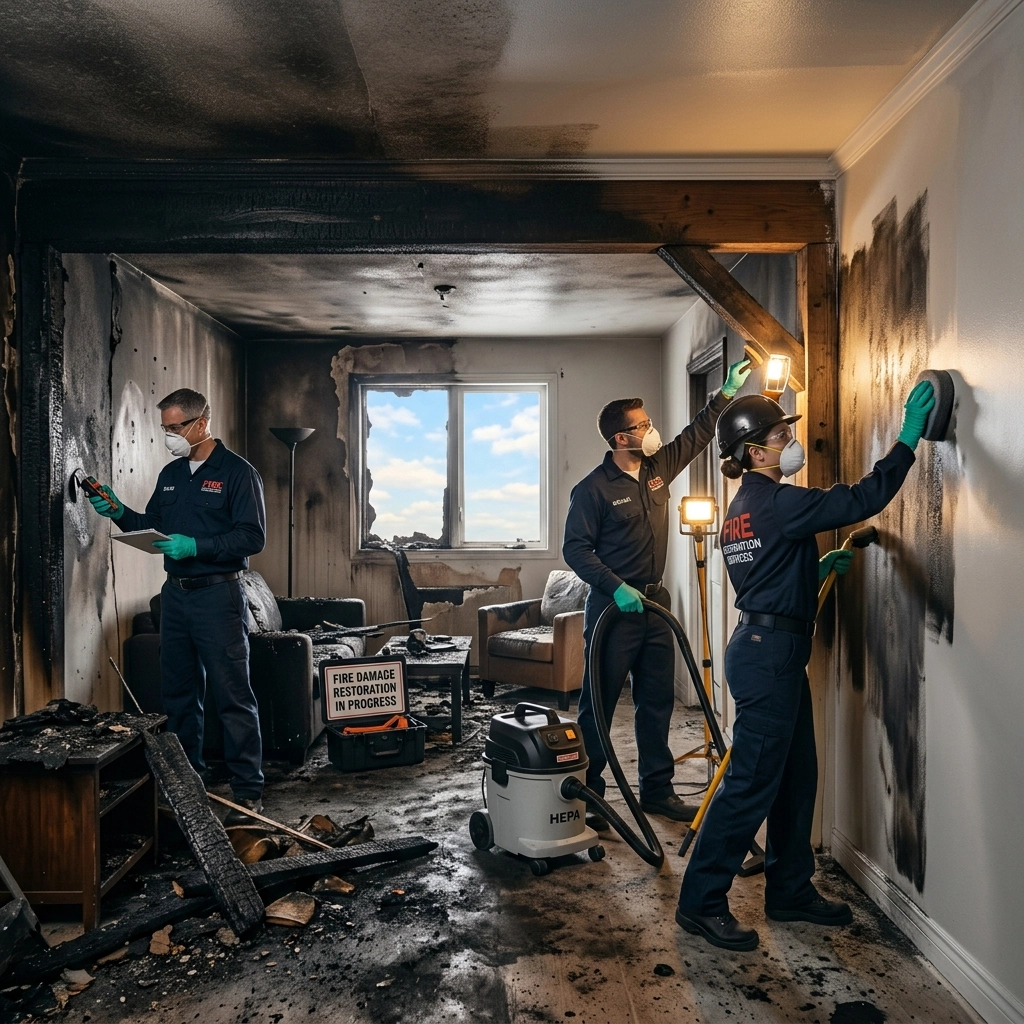
This is the most labor-intensive part of the job. Soot is oily and acidic; it sticks to everything and can actually eat through your finishes if left alone. We clean every single inch of the affected area, walls, ceilings, cabinets, and even inside your electronics.
A huge part of this is air duct cleaning. Smoke gets sucked into your HVAC system and settles in the vents. If you don't do a thorough air duct cleaning, every time you turn on your AC, you'll be blowing "campfire smell" and toxic particles back into your clean house.
If you’ve ever sat by a bonfire, you know how that smell clings to your hair and clothes. Now imagine that smell amplified by a thousand. We don't just use "Febreze" and call it a day. We use industrial ozone generators and thermal foggers that chemically break down the odor molecules.
During this phase, we also focus on carpet cleaning. Rugs and carpets are like giant sponges for smoke. If the carpet is salvageable, we use deep-cleaning methods to pull those microscopic soot particles out of the fibers.

Now that the house is clean, dry, and smells fresh, it’s time to rebuild. This is the "construction" phase. We:
This is the part where you start to see your home again. It’s a rewarding phase where the "disaster" finally starts looking like a "house" again.
We don't just hand you the keys and leave. We do a final walk-through to ensure every odor is gone, the air quality is safe, and every repair meets building codes. We want to make sure your home is better than it was before the fire.
Dealing with insurance is often the part homeowners dread the most. Here are a few tips to make it easier:

It’s tempting to grab a bucket of soap and start scrubbing, but fire damage is tricky.
A fire is a life-changing event, but it doesn’t have to be the end of your story. At My Water Damage Hero, we specialize in taking the weight off your shoulders. Whether it’s the initial water damage restoration to dry things out, a deep carpet cleaning to save your favorite rug, or a full-scale reconstruction, we’ve got your back.

If you’re standing in your driveway wondering what to do next, give us a call. We’ll help you navigate the assessment, the cleaning, and the rebuilding. You’ve been through enough: let us handle the hard part.
Need help right now?
Don't wait. The longer soot and water sit in your home, the more damage they do. Reach out to the experts at My Water Damage Hero today for a consultation. We’ll get your home back to being a safe, clean, and happy place for your family.
You’re going to get through this. It takes time, and it takes a plan, but soon enough, this disaster will just be a memory in the rearview mirror of a beautifully restored home.
Contact us for quick, trusted restoration.
See how we’ve turned tough situations into success stories.

