
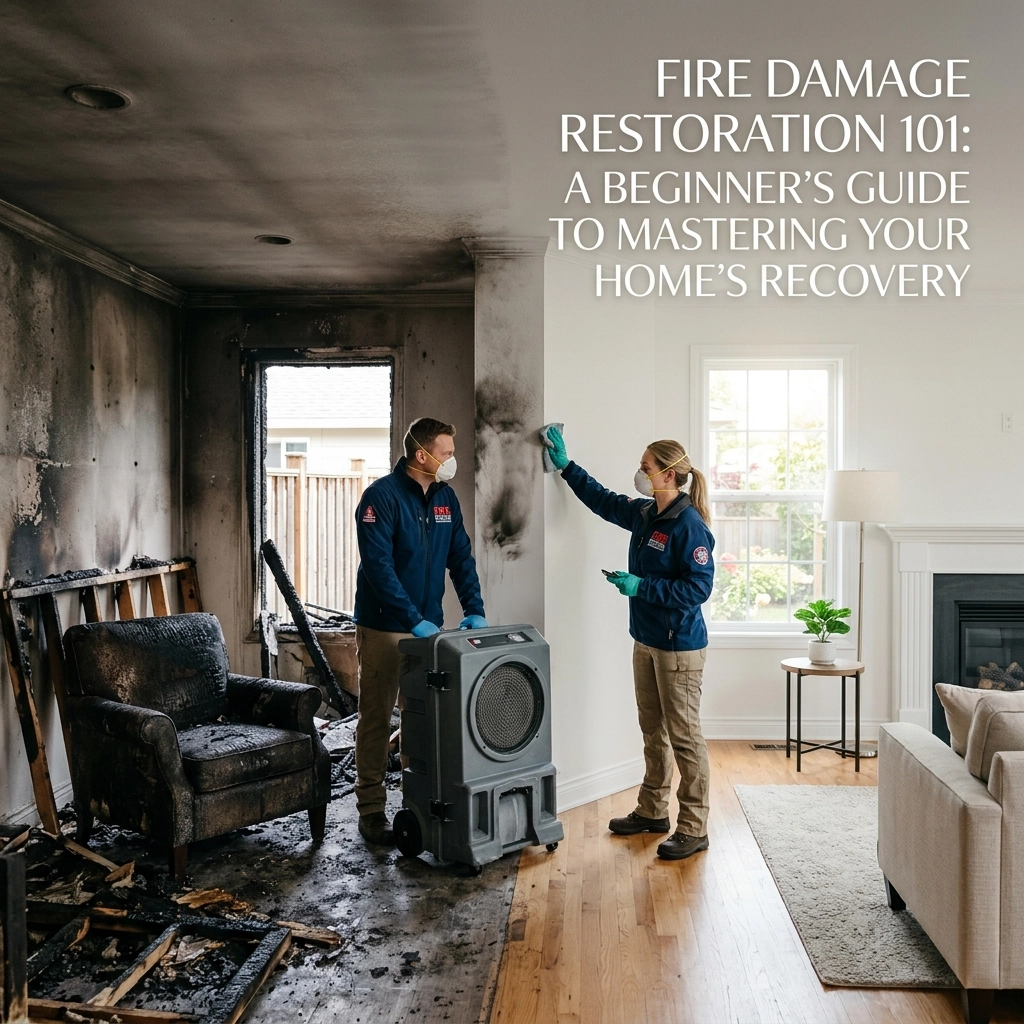
Finding yourself standing in front of your home after a fire is, honestly, one of the most overwhelming experiences a person can go through. Your mind is probably racing with a million questions: Is anything salvageable? Where do I even start? How long is this going to take?
At My Water Damage Hero, we see this every day, and the first thing we want you to know is that there is a path forward. While the damage might look like a total loss right now, professional fire damage restoration can work wonders. This guide is designed to walk you through the basics of the recovery process so you know exactly what to expect as you get your home back to normal.
To put it simply, fire damage restoration is the process of taking a property that has been scorched by flames and smoke and returning it to its "pre-loss condition." It sounds straightforward, but it’s actually a pretty complex dance.
Unlike water damage restoration, which often focuses on drying things out over a few days, fire restoration is a marathon, not a sprint. Because fire changes the chemical makeup of materials and leaves behind toxic soot and stubborn odors, the process usually takes several weeks or even months. It involves everything from structural repairs to specialized carpet cleaning and even cleaning out your home's "lungs", the HVAC system.
Before anyone, even you, steps back inside, the fire department has to give the "all clear." Fire can weaken support beams, melt electrical wiring, and make floors unstable. Once it's safe to enter, the restoration pros come in for an assessment.
During this stage, we look at:

A damaged home is a vulnerable home. The next step is "board-up and tarping." If windows are blown out or there’s a hole in the roof, we need to seal those up immediately. This keeps out rain, prevents further water damage, and stops any unwanted guests (human or animal) from entering the site. We also usually set up temporary fencing to keep the area secure while the real work begins.
This is where things start to get messy before they get clean. Anything that is charred beyond repair, think burnt drywall, insulation, or flooring, needs to be removed.
At the same time, we have to deal with the water. If the fire department used thousands of gallons of water to save your home, your basement and floors are likely soaked. We use industrial-grade extractors and air movers for water damage restoration to dry everything out. If we don’t get the moisture out quickly, you’ll be dealing with a massive mold problem on top of the fire damage.
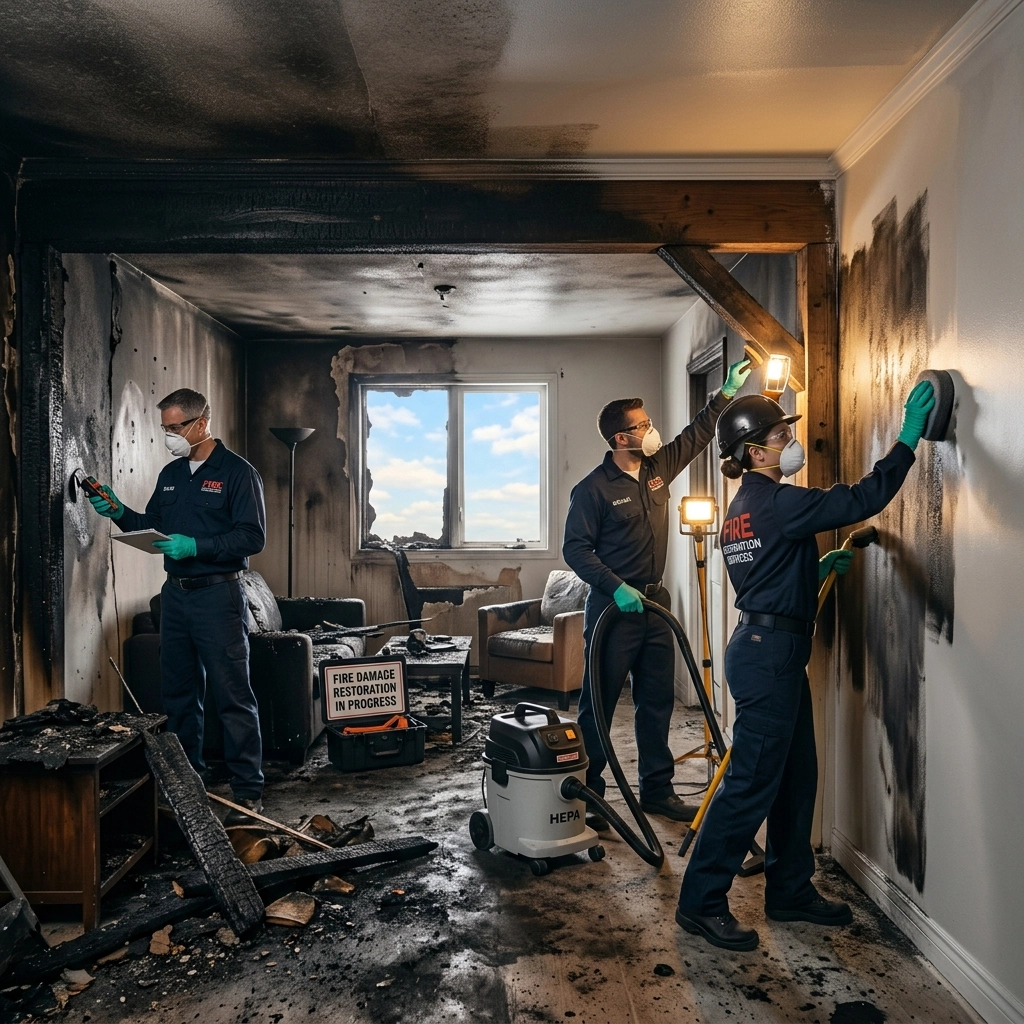
This is the most labor-intensive part of the job. Soot is oily, acidic, and gets everywhere. If it isn't cleaned properly, it will literally eat away at your surfaces over time.
Professionals use specialized cleaning agents to scrub every inch of the affected areas. This isn't your standard Saturday morning dusting; it’s a deep, chemical-level cleaning of walls, ceilings, and floors.
Smoke odors love to hide in fibers. Your rugs, curtains, and furniture will require professional carpet cleaning and upholstery treatments. Sometimes, items are taken off-site to a specialized facility for "pack-out" cleaning where they can be treated in a controlled environment.
If your HVAC system was running during or after the fire, it sucked in smoke and soot. Every time you turn on the AC, you’ll be blowing those toxins back into the house. Comprehensive air duct cleaning is a non-negotiable part of the process. We use high-powered vacuums and brushes to ensure your indoor air quality is safe for your family to breathe again.

Have you ever tried to get the smell of burnt popcorn out of a microwave? Now imagine that smell is your entire house. "Covering up" the smell with candles or sprays won't work.
Restoration experts use equipment like ozone generators or hydroxyl generators. These machines actually break down the smoke molecules that are trapped in your walls and furniture, neutralizing the odor at its source. This is the only way to ensure that "campfire" smell doesn't come back every time it gets humid outside.
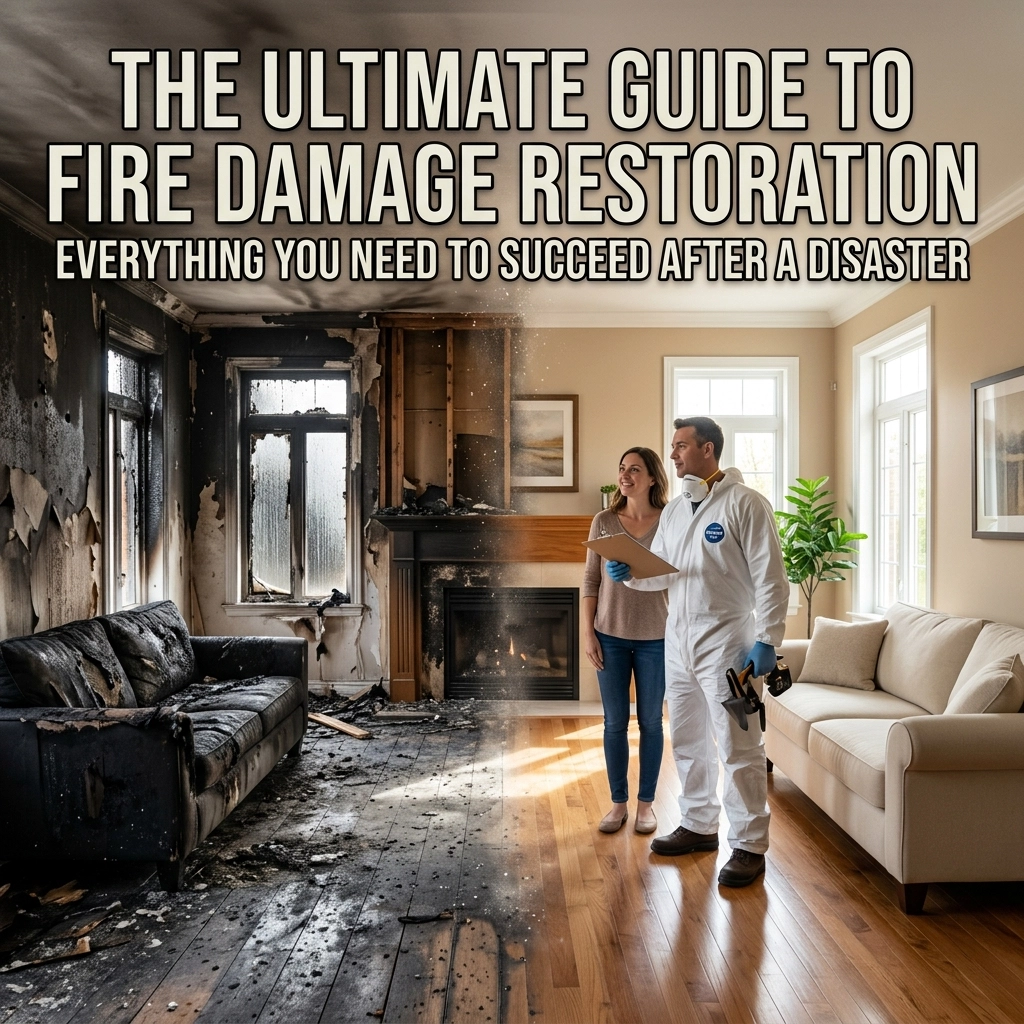
Once the house is dry, clean, and odor-free, it’s time to rebuild. This is the "restoration" part of fire damage restoration. It includes:
By the end of this stage, you shouldn't be able to tell a fire ever happened.

While the pros handle the heavy lifting, there are a few things you can do to make the process smoother:
It might be tempting to try and DIY some of the cleanup to save money, but fire damage is tricky. Hidden soot can cause respiratory issues, and improper drying can lead to structural rot. Working with a company like My Water Damage Hero means you have a team that understands the science of restoration. We handle everything from the initial water extraction to the final coat of paint, ensuring your home is truly safe.

Going through a house fire is a major life event, and it’s okay to feel a bit lost. Just remember that you don't have to do it alone. By following this 101 guide and hiring the right team, you can turn a disaster into a fresh start. Whether it's clearing out smoke with air duct cleaning or rebuilding your kitchen from the studs up, the goal is always the same: getting you back home.
If you’re facing the aftermath of a fire and don't know where to turn, give us a call. We’re here to be your hero!
Contact us for quick, trusted restoration.
See how we’ve turned tough situations into success stories.

