
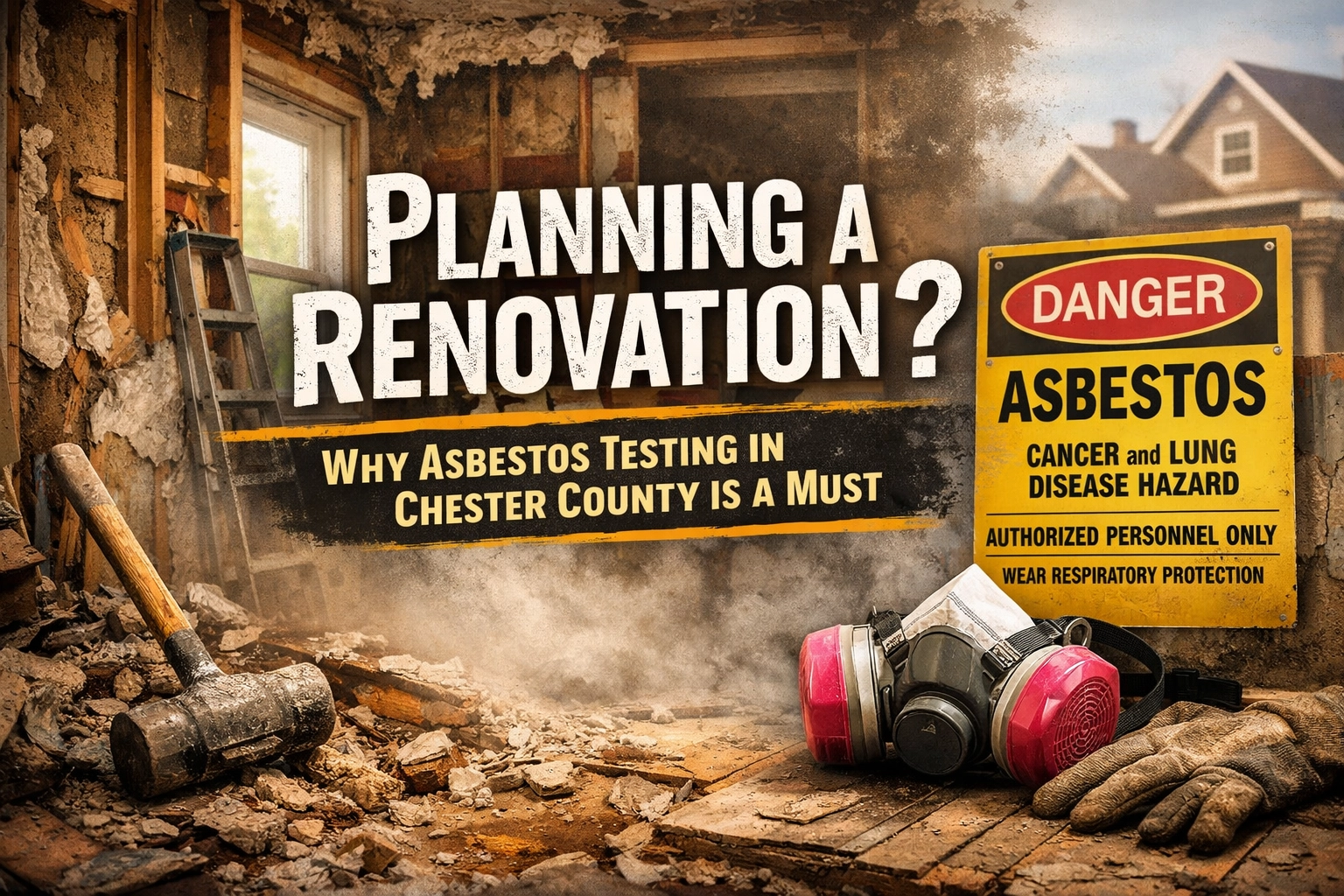
So you've finally decided to tackle that renovation project you've been planning. Maybe you're opening up the kitchen, finishing the basement, or updating those vintage bathroom tiles. Before you grab a sledgehammer and start swinging, there's something critical you need to know: if your Chester County home was built before the 1990s, there's a real chance it contains asbestos.
And here's the thing: disturbing asbestos without proper testing and precautions isn't just risky. In Pennsylvania, it's actually illegal.
Chester County has some beautiful older homes with tons of character. That charming 1960s ranch? The stately Victorian in West Chester? That cozy Cape Cod you picked up in Phoenixville? They're all part of an era when asbestos was the go-to building material.
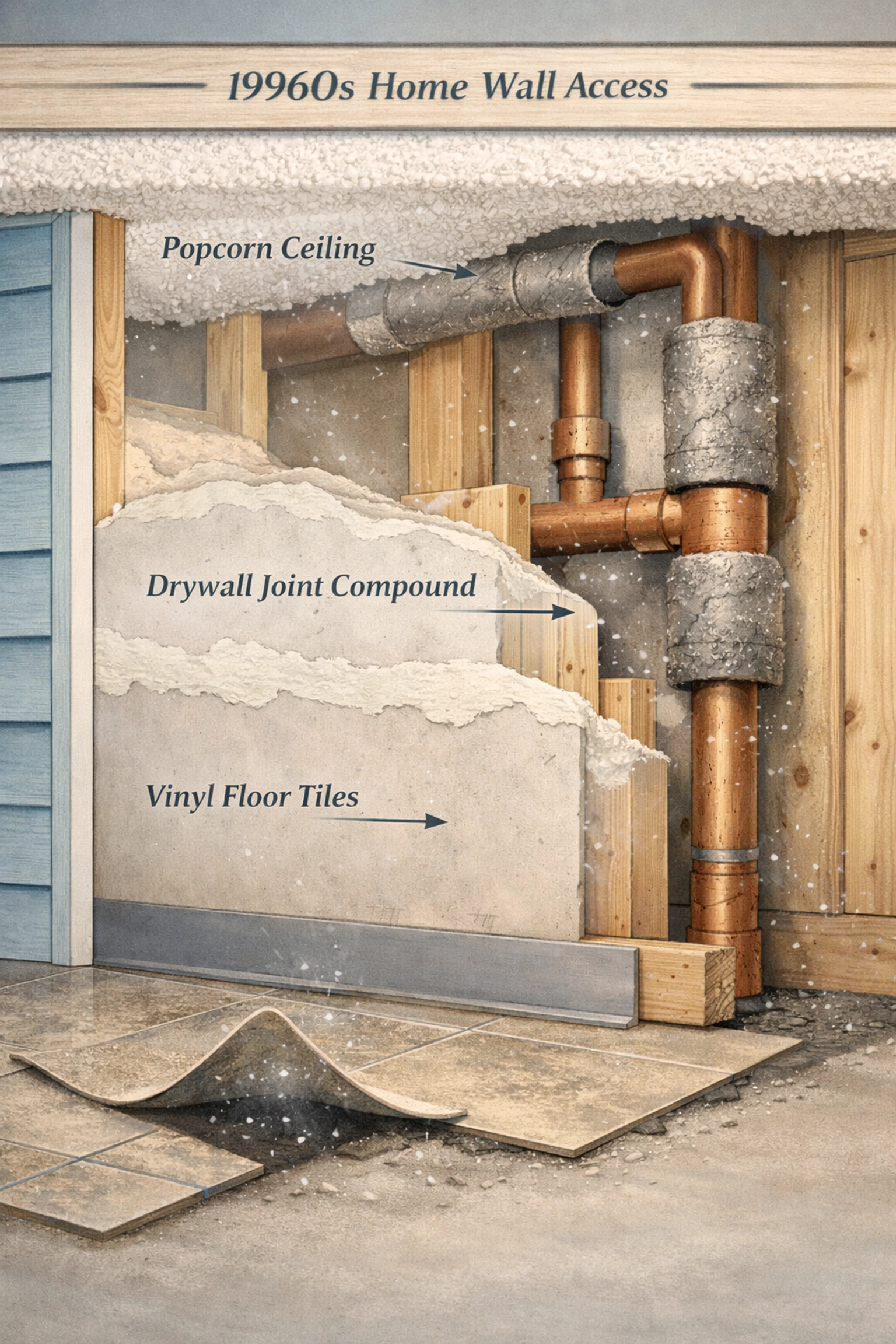
From the 1940s through the early 1980s, asbestos was everywhere in construction. Builders loved it because it was fireproof, durable, and cheap. You'll find it in:
The problem? When these materials get disturbed: sanded, cut, demolished, or even just cracked from age: microscopic asbestos fibers become airborne. And once they're in the air, they're in your lungs.
Here's what a lot of homeowners don't realize: Pennsylvania doesn't mess around when it comes to asbestos. Before you can renovate or demolish any structure, the law requires a thorough inspection for asbestos-containing materials (ACMs).
If your project involves disturbing more than 3 square feet or 3 linear feet of material that could contain asbestos, you need to notify the Pennsylvania Department of Environmental Protection at least 10 working days before starting work. For projects removing friable (easily crumbled) asbestos materials, that timeline shrinks to five days: but you still need certified professionals handling it.
This isn't just a suggestion. These requirements come from federal regulations (National Emission Standards for Hazardous Air Pollutants) and Pennsylvania's own Asbestos Occupations Accreditation and Certification Act. Translation? If you skip testing and someone reports you: or worse, someone gets sick: you're looking at serious civil and potentially criminal penalties.
Even reputable contractors won't touch your project without proper asbestos testing. If someone's willing to start tearing into your walls without asking about asbestos, that's a massive red flag.
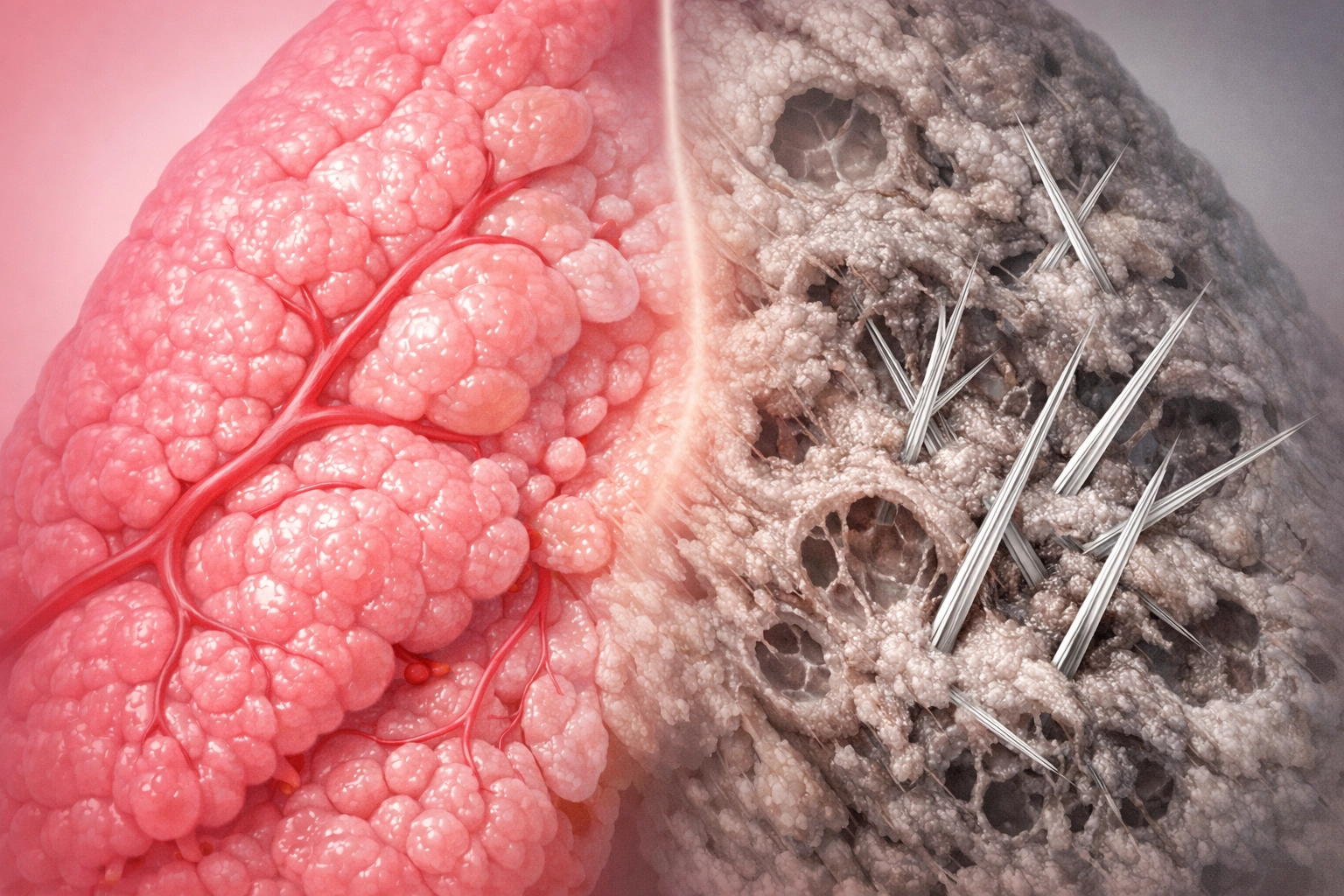
Let's talk about why these laws exist in the first place. Asbestos exposure causes serious, life-altering diseases:
Mesothelioma: An aggressive cancer that attacks the lining of your lungs and abdomen. There's no cure, and it's almost exclusively caused by asbestos exposure.
Asbestosis: Chronic scarring of lung tissue that makes breathing increasingly difficult over time. It's progressive and irreversible.
Lung Cancer: Asbestos significantly increases your risk, especially if you smoke.
The scary part? These diseases can take 10 to 40 years to develop. You might renovate your bathroom today, breathe in asbestos fibers, and not show symptoms until you're ready to retire. By then, the damage is done.
And it's not just you at risk. Your family, your neighbors, even your contractor's crew could be exposed. Those fibers don't stay contained: they travel on clothing, through ventilation systems, and settle into carpets and furniture.
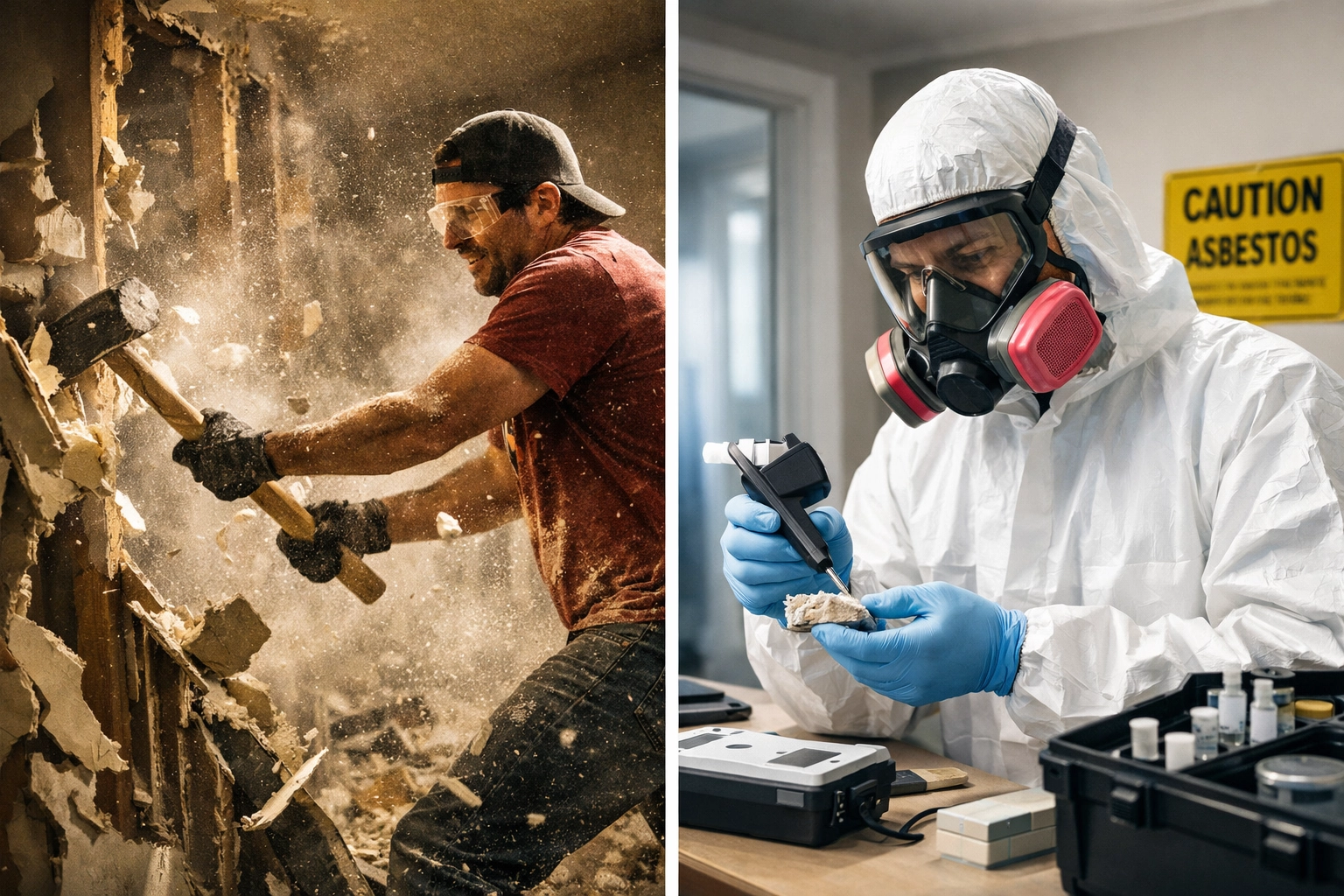
Getting your Chester County home tested isn't as complicated (or expensive) as you might think. Here's what happens when you call in certified professionals like My Water Damage Hero:
Step 1: Visual Inspection
A certified AHERA (Asbestos Hazard Emergency Response Act) building inspector walks through your property, identifying all suspect materials. They're looking at everything: ceilings, floors, pipes, insulation, even old adhesives.
Step 2: Sample Collection
The inspector carefully collects small samples of questionable materials. They do this using wet methods and containment procedures to prevent any fiber release during collection.
Step 3: Laboratory Analysis
Those samples go to an accredited lab where they're analyzed under specialized microscopes. Any material containing more than 1% asbestos is classified as ACM and subject to regulatory requirements.
Step 4: Documentation
You receive a detailed report documenting what materials contain asbestos, where they're located, their condition (friable or non-friable), and recommendations for your renovation project.
This entire process typically takes just a few days from inspection to final report. And honestly? It's a small investment compared to the cost of asbestos remediation after you've already disturbed contaminated materials: or worse, the medical bills if someone gets exposed.
You've probably seen those DIY asbestos testing kits at the hardware store or online. They're cheaper than hiring a professional, so why not just use one of those?
Here's the problem: those kits only test the specific samples you collect. If you miss a material or don't know what to look for, you're working with incomplete information. Professional inspectors are trained to identify the dozens of places asbestos might be hiding: places you'd never think to check.
Plus, collecting samples without proper training can actually make things worse. If you damage friable asbestos material while trying to get a sample, congratulations: you've just released fibers into your home.
And remember those legal requirements we mentioned? DIY testing doesn't satisfy Pennsylvania's notification requirements. You still need a certified inspector's report to comply with state and federal regulations.
First, don't panic. Finding asbestos doesn't mean your renovation is doomed. It just means you need to adjust your approach.
If the asbestos-containing materials aren't in the area you're renovating and they're in good condition, you might not need to do anything. Undisturbed asbestos that's sealed and stable isn't dangerous.
If your project does involve those materials, you have two options:
Encapsulation: Sealing the asbestos in place so it can't release fibers. This works for materials you don't need to remove.
Removal: Having certified asbestos abatement professionals remove and dispose of the materials properly. This is required if you're demolishing or significantly altering areas with ACMs.
Either way, Pennsylvania law requires that only licensed, certified contractors handle asbestos work. This protects you, your family, and your property value.
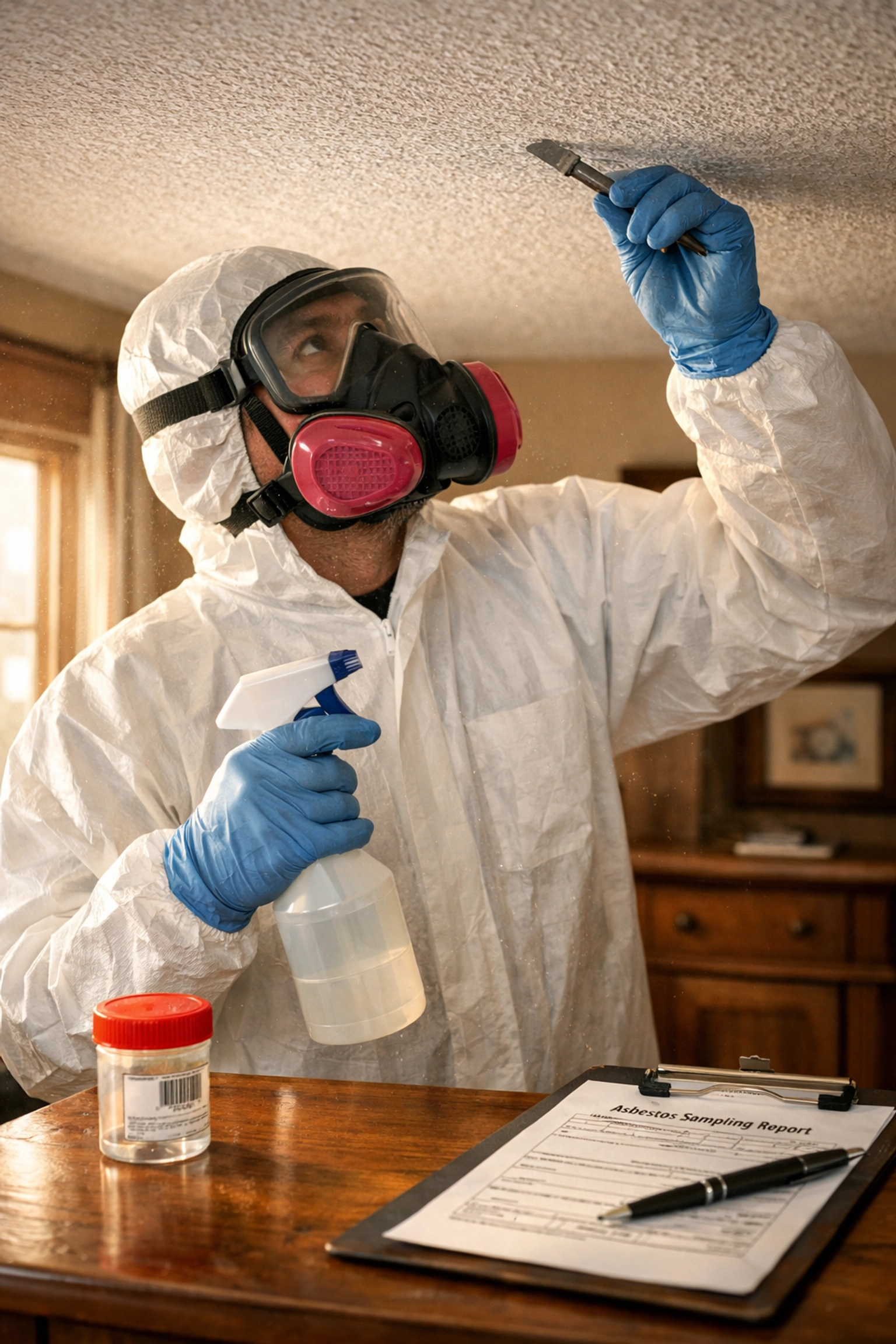
At My Water Damage Hero, we've seen too many renovation disasters that could have been prevented with proper testing. That's why we provide certified asbestos inspections throughout Chester County and surrounding areas.
Our AHERA-certified inspectors know exactly where to look and how to safely collect samples. We work with accredited laboratories to ensure accurate results, and we provide you with detailed documentation that satisfies all Pennsylvania regulatory requirements.
But here's what really sets us apart: we don't just hand you a report and wish you luck. We walk you through what the results mean for your specific project, connect you with certified abatement contractors if needed, and help you understand your options.
We get that you're excited about your renovation. We want to help you do it safely and legally, without unnecessary delays or costs.
Look, we know that adding another step to your renovation checklist isn't fun. You want to get started. You're ready to transform your space. We get it.
But spending a few hundred dollars and a few days on proper asbestos testing now can save you tens of thousands in remediation costs, legal penalties, and medical bills down the road. It protects your family, your investment, and your peace of mind.
If you're planning any renovation work on a Chester County property built before 1990, make asbestos testing your first call: not an afterthought. It's required by law, it's the right thing to do, and honestly, it's just common sense.
Ready to get your Chester County home tested before your renovation? My Water Damage Hero provides fast, certified asbestos inspections that keep your project on track and everyone safe. Visit mywaterdamagehero.com or give us a call: let's make sure your renovation starts the right way.
Contact us for quick, trusted restoration.
See how we’ve turned tough situations into success stories.

