
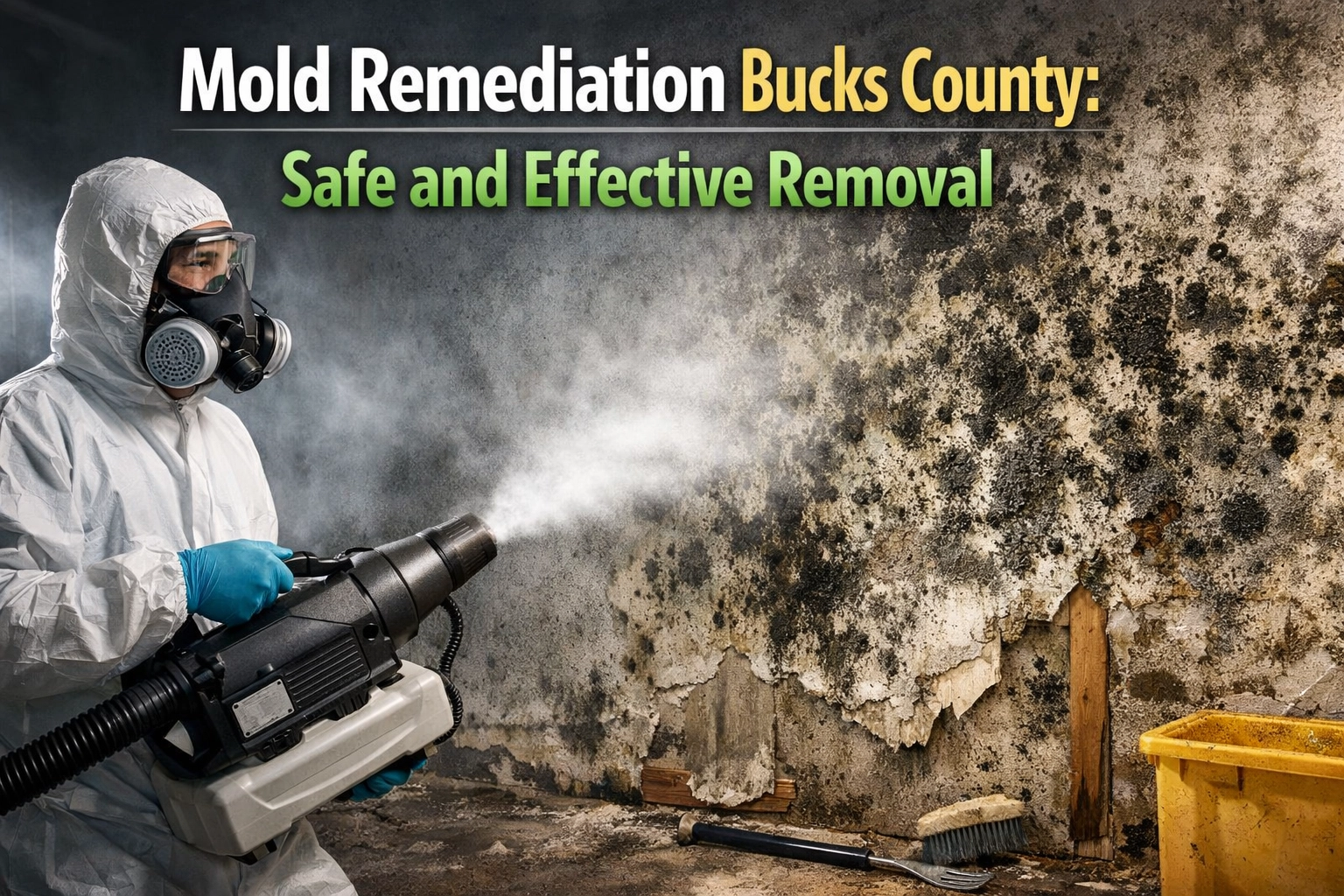
If you've spotted fuzzy patches on your walls, caught a musty smell in your basement, or noticed discoloration around your windows, you might be dealing with mold. And if you're a homeowner in Bucks County, you're definitely not alone. Between our humid summers and those damp basements that seem to come standard with homes around here, mold finds plenty of opportunities to make itself at home.
The good news? Professional mold remediation in Bucks County can tackle the problem safely and effectively. Let's walk through what you need to know about getting rid of mold for good.
Living in Bucks County means dealing with weather that mold absolutely loves. We get humid summers that can make your basement feel like a sauna, spring rains that test every weak spot in your foundation, and old homes with character: but sometimes also with moisture problems.
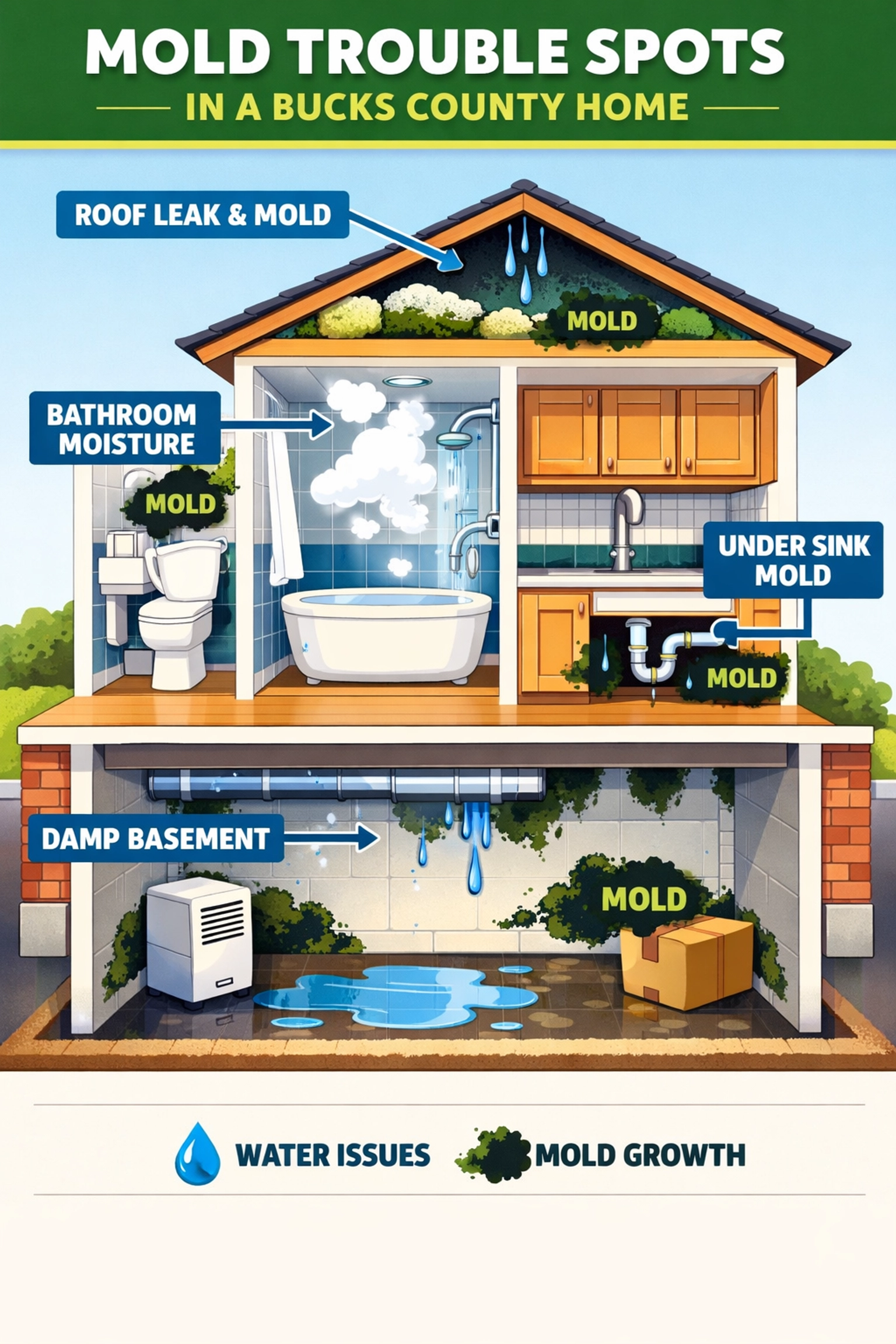
Mold doesn't need much to thrive. Just a bit of moisture, some organic material to feed on (like drywall or wood), and temperatures between 40-100°F. Check, check, and check for most Bucks County homes during a good chunk of the year.
Common spots where mold loves to set up shop include:
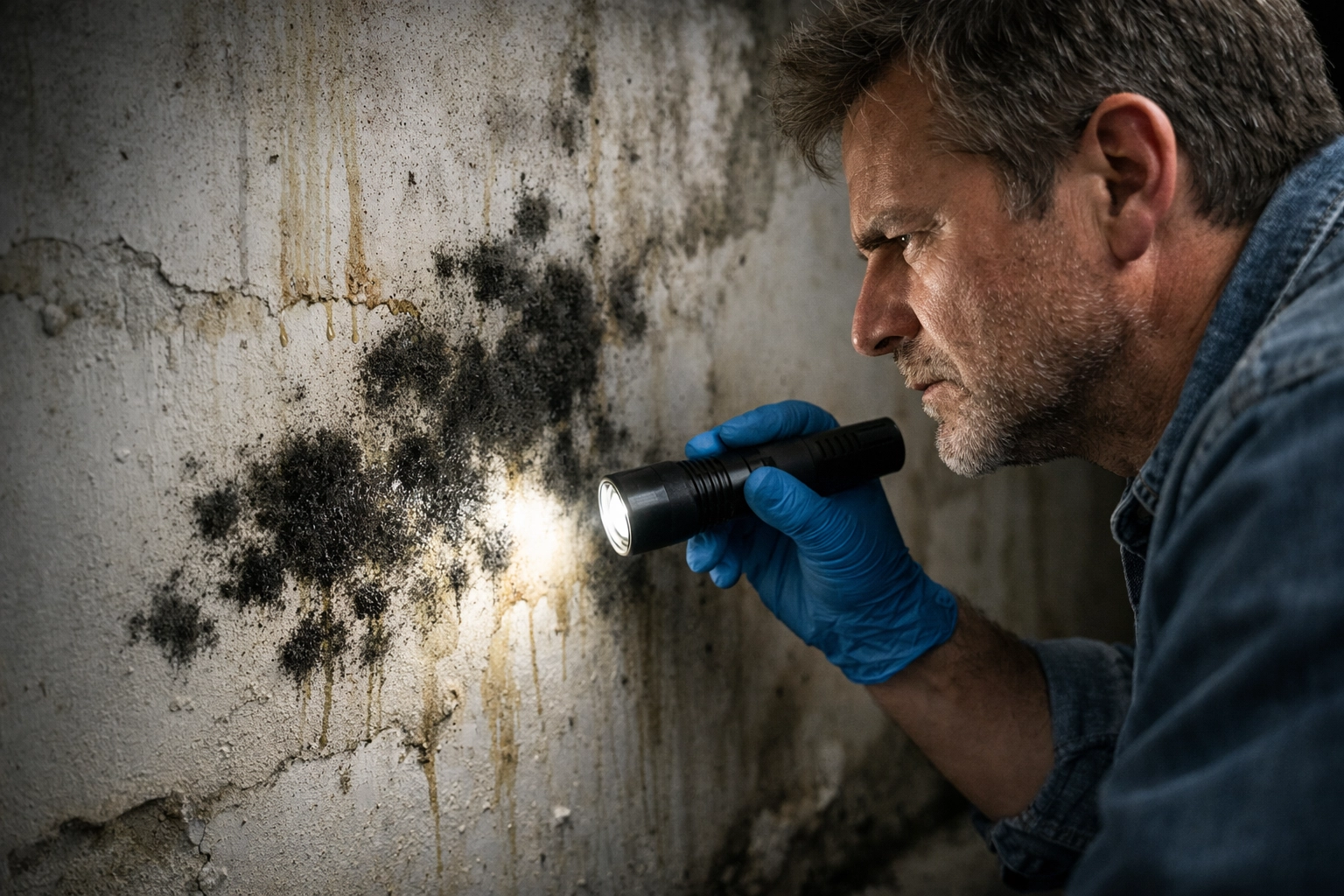
Look, we get it. There's something satisfying about tackling home problems yourself. And sure, if you've got a tiny bit of surface mold on your bathroom tile, some bleach and elbow grease might do the trick.
But here's the thing about mold: what you see on the surface is often just the tip of the iceberg. Mold grows in colonies, and those colonies send out microscopic spores through the air. By the time you notice that patch on your wall, there's a good chance mold has already spread to areas you can't see: behind drywall, under flooring, or in your HVAC system.
Professional mold remediation in Bucks County becomes necessary when:
When you call in the pros for mold remediation, they follow a systematic approach that goes way beyond just scrubbing visible mold. Here's what the process looks like:
First things first: professionals need to figure out exactly what they're dealing with. This means a thorough inspection using both visual assessment and sometimes advanced testing technology. They're looking for obvious mold growth, but also hunting for hidden colonies behind walls, under flooring, or lurking in your ventilation system.
The inspection also involves detective work to find the moisture source. After all, you can clean up mold all day long, but if you don't fix the leak or moisture problem causing it, you're just going to be right back where you started in a few months.
Here's where things get serious. Before any removal starts, specialists set up containment barriers to prevent mold spores from spreading to clean areas of your home. Think of it like creating a quarantine zone.
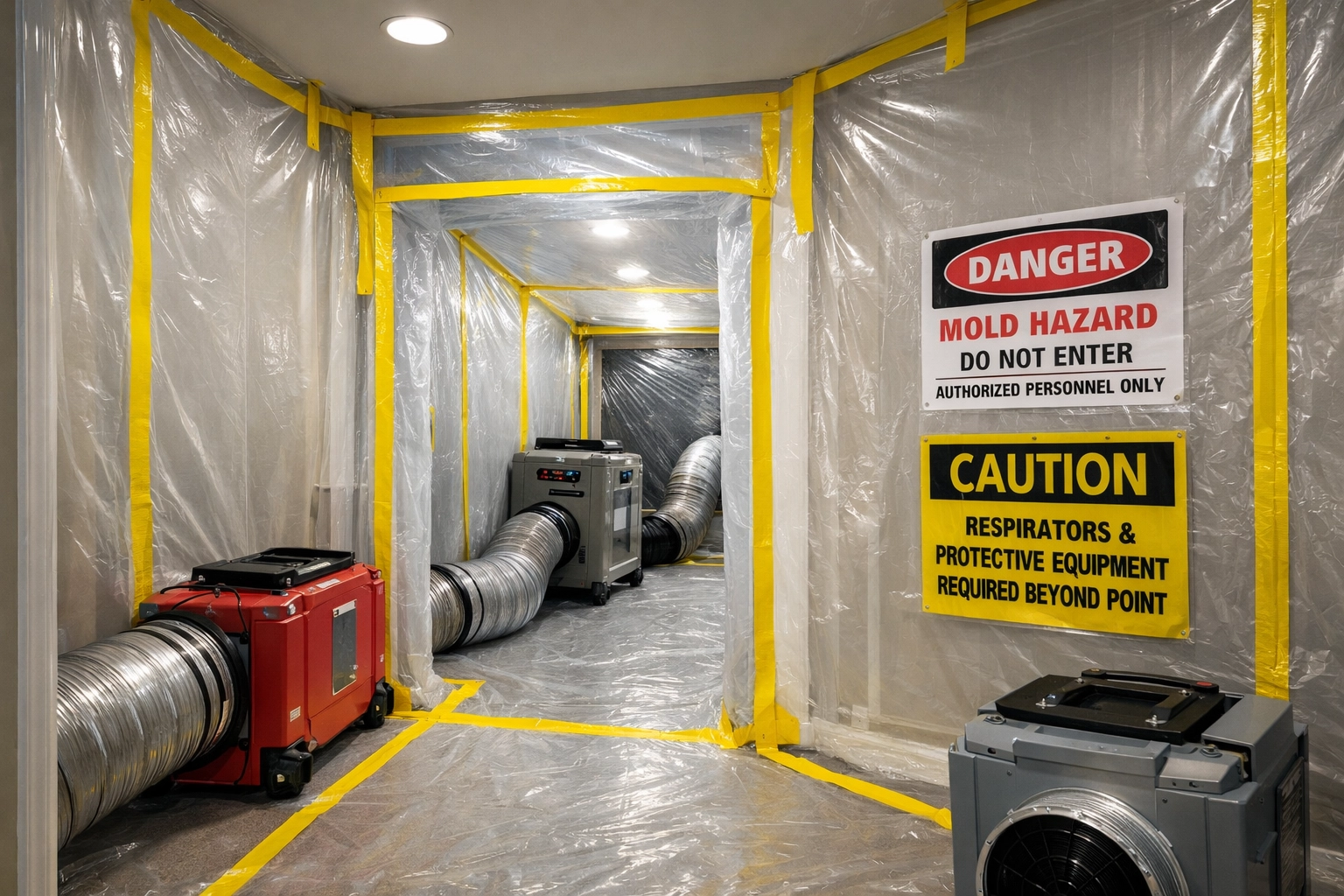
They'll seal off the affected area with plastic sheeting and use negative air pressure, basically, fans and filtration systems that pull air out of the contaminated area, preventing spores from drifting into other rooms. Your HVAC system gets turned off too, so it doesn't spread spores throughout your home.
While the remediation work happens, powerful air scrubbers and HEPA filtration systems run continuously. These aren't your average home air purifiers: we're talking industrial-grade equipment that can capture microscopic mold spores from the air.
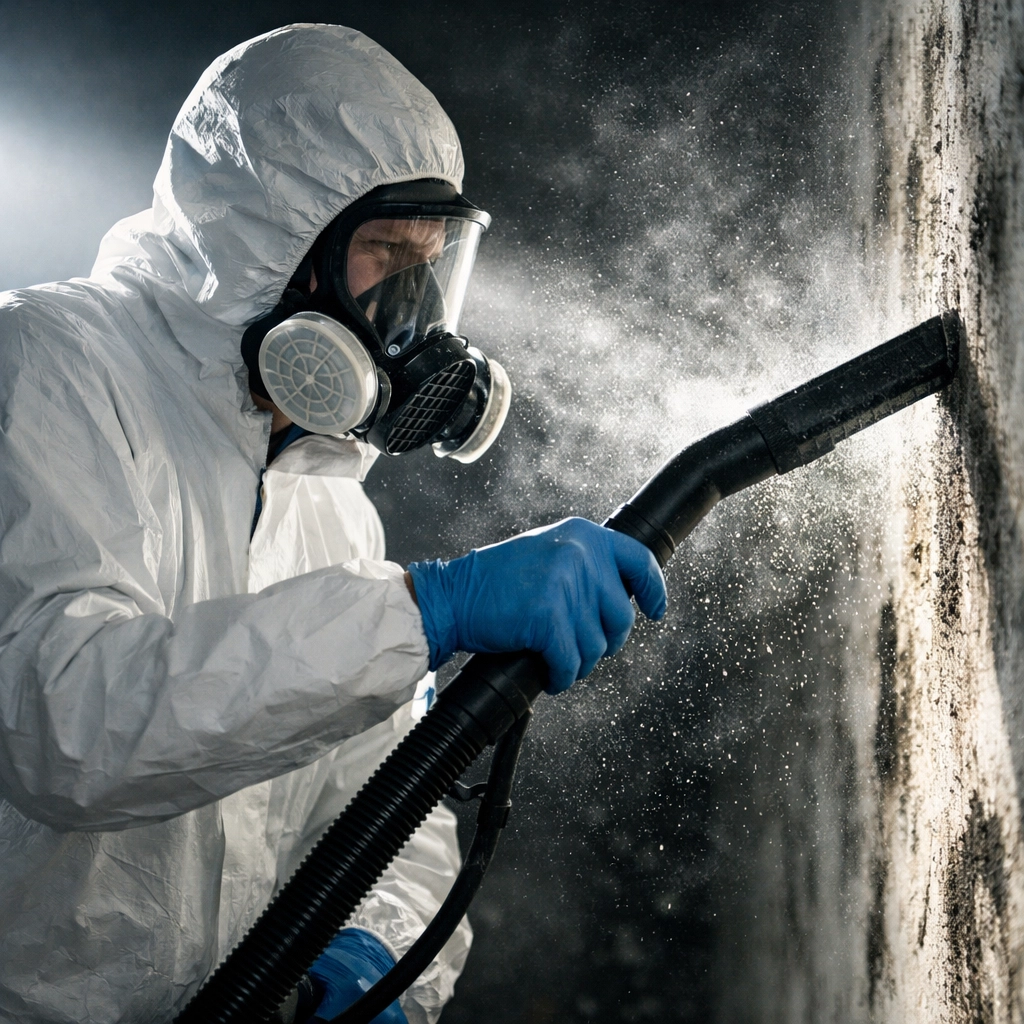
HEPA vacuums (that's High-Efficiency Particulate Air for anyone wondering) are used throughout the process to clean surfaces and trap particles that regular vacuums would just blow back into the air.
Now comes the actual removal. Technicians use antifungal and antimicrobial treatments to kill mold colonies. For materials with heavy mold growth: think drywall, insulation, or carpeting: there's often no saving them. These porous materials trap mold deep in their fibers, so they need to be carefully removed and properly disposed of.
Hard surfaces like tile, metal, or sealed wood can usually be cleaned and treated. Everything gets scrubbed down with specialized cleaning solutions that don't just remove mold but also help prevent it from coming back.
Moisture is mold's best friend, so professional remediation includes thorough drying of the affected area. Industrial-grade dehumidifiers and air movers work to eliminate excess moisture and prevent condensation that could lead to new mold growth.
This step is crucial for Bucks County homes, where basements can stay damp even during dry weather. Getting humidity levels down to where mold can't thrive (typically below 50%) makes a huge difference in preventing future problems.
Once everything is clean, dry, and mold-free, it's time to put your home back together. This might mean replacing drywall, installing new insulation, repainting, or replacing flooring. Reputable mold remediation companies can handle these repairs or work with your contractors to get everything restored.
Not all mold remediation is created equal. Professional companies in Bucks County should follow IICRC (Institute of Inspection, Cleaning and Restoration Certification) standards and EPA guidelines. These aren't just suggestions: they're established protocols that ensure the remediation is done safely and effectively.
When you're choosing a company for mold remediation, ask about their certifications and whether they follow these industry standards. It's your home and your family's health, so don't settle for anything less than proper professional service.
At My Water Damage Hero, we understand that dealing with mold in your Bucks County home is stressful enough without having to worry about whether it's being handled properly. We follow all IICRC standards and EPA guidelines, using proven techniques and professional-grade equipment to ensure your mold problem is solved: not just temporarily masked.
Our team has seen it all in Bucks County homes, from minor bathroom mold to major basement infestations. We treat every job with the same level of care and attention, because we know that what might look like a small problem can quickly become a big one if not handled correctly.
Once your mold problem is taken care of, you'll want to keep it from coming back. Here are some practical tips for Bucks County homeowners:
Control Humidity: Keep indoor humidity below 50%. A hygrometer (humidity meter) is cheap and worth having. Use dehumidifiers in basements and other damp areas, especially during humid months.
Fix Leaks Promptly: That slow drip under your sink? Take care of it now, not later. Same goes for roof leaks, foundation cracks, and plumbing issues. Water + time = mold.
Improve Ventilation: Make sure bathrooms and kitchens have working exhaust fans that vent outside (not just into your attic). Open windows when weather permits to increase air circulation.
Clean Gutters: Clogged gutters can cause water to overflow and seep into your home's foundation or walls. Keep them clear, especially in fall.
Maintain Your HVAC: Change filters regularly and have your system professionally serviced. A well-maintained HVAC system helps control indoor moisture levels.
Address Water Damage Immediately: If you have a leak, flood, or water intrusion, dry everything out within 24-48 hours. This is your window to prevent mold from establishing itself.
Don't wait until a small mold problem becomes a major renovation project. If you've noticed mold in your Bucks County home, especially if it's more than a small surface patch, it's time to call in professionals who know what they're doing.

Mold remediation isn't just about making your home look better: it's about protecting your property value and your family's health. The longer mold grows unchecked, the more damage it causes and the more expensive remediation becomes.
My Water Damage Hero is here to help Bucks County homeowners tackle mold problems safely and effectively. We'll walk you through the process, answer your questions, and make sure the job is done right. Because your home should be a healthy, comfortable place for your family: not a breeding ground for mold.
Ready to take care of that mold problem? Visit us at http://www.mywaterdamagehero.om or give us a call. We'll schedule an inspection and get you on the path to a mold-free home.

Contact us for quick, trusted restoration.
See how we’ve turned tough situations into success stories.

