
Dealing with fire damage is one of the most overwhelming experiences a homeowner can face. Beyond the emotional toll, you're left staring at a property that needs serious attention. The good news? Understanding the fire damage restoration process can help you take control and move forward with confidence.
Let's break down everything you need to know about recovering from fire damage, from those first crucial steps to getting your home back to normal.
Here's something most people don't realize until they're living it: fire damage restoration isn't just about repairing what burned. It's actually a triple threat situation.
First, you've got the obvious fire damage: charred walls, burned materials, and structural issues. But then there's what happens when firefighters put out those flames. They use tons of water, which means you're now dealing with water damage restoration on top of everything else. Water seeps into floors, walls, and furniture, creating a whole separate problem that needs immediate attention.
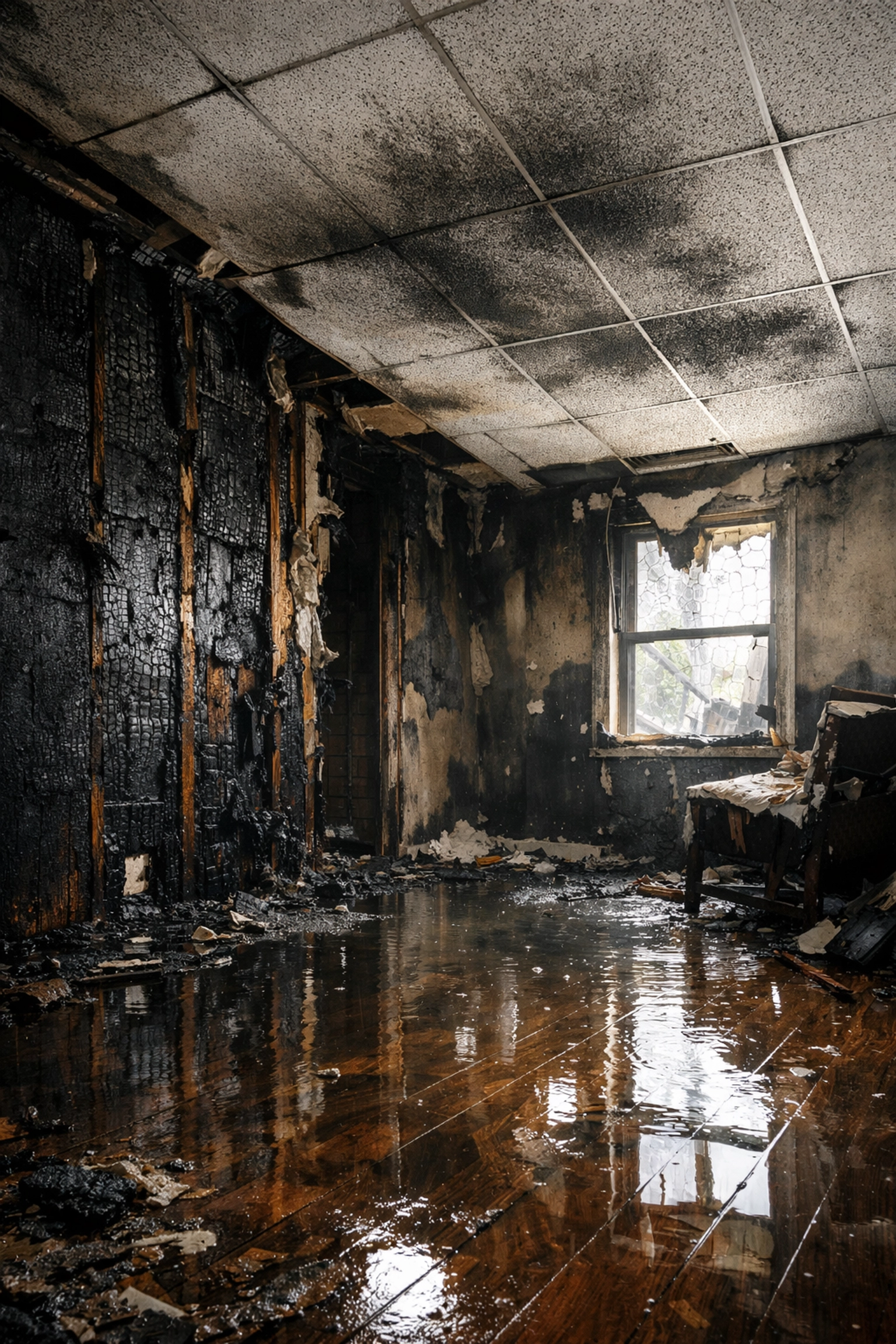
And finally, there's the sneaky villain: smoke and soot. This stuff gets everywhere: and we mean everywhere. It penetrates porous materials like carpets, upholstery, and even seeps into your HVAC system. Smoke particles carry acidic compounds that will continue corroding your surfaces long after the fire is out. That's why specialized air duct cleaning becomes essential after a fire.
Fire damage restoration typically happens in five distinct phases. Understanding these steps helps you know what to expect and how long the process might take. Spoiler alert: we're talking weeks to months, depending on the severity.
Once the fire department gives the all-clear, professional restoration teams step in for a comprehensive assessment. This isn't a quick walk-through: it's a detailed evaluation that covers:
This assessment creates your roadmap. You'll get a detailed scope of work, timeline, and cost estimate. It's not the fun part, but it's absolutely critical for everything that follows.
Before any cleanup begins, your property needs to be secured. This means:
Think of this as protecting what's left. The last thing you need is additional damage from rain, wind, or unauthorized access while you're working on recovery.
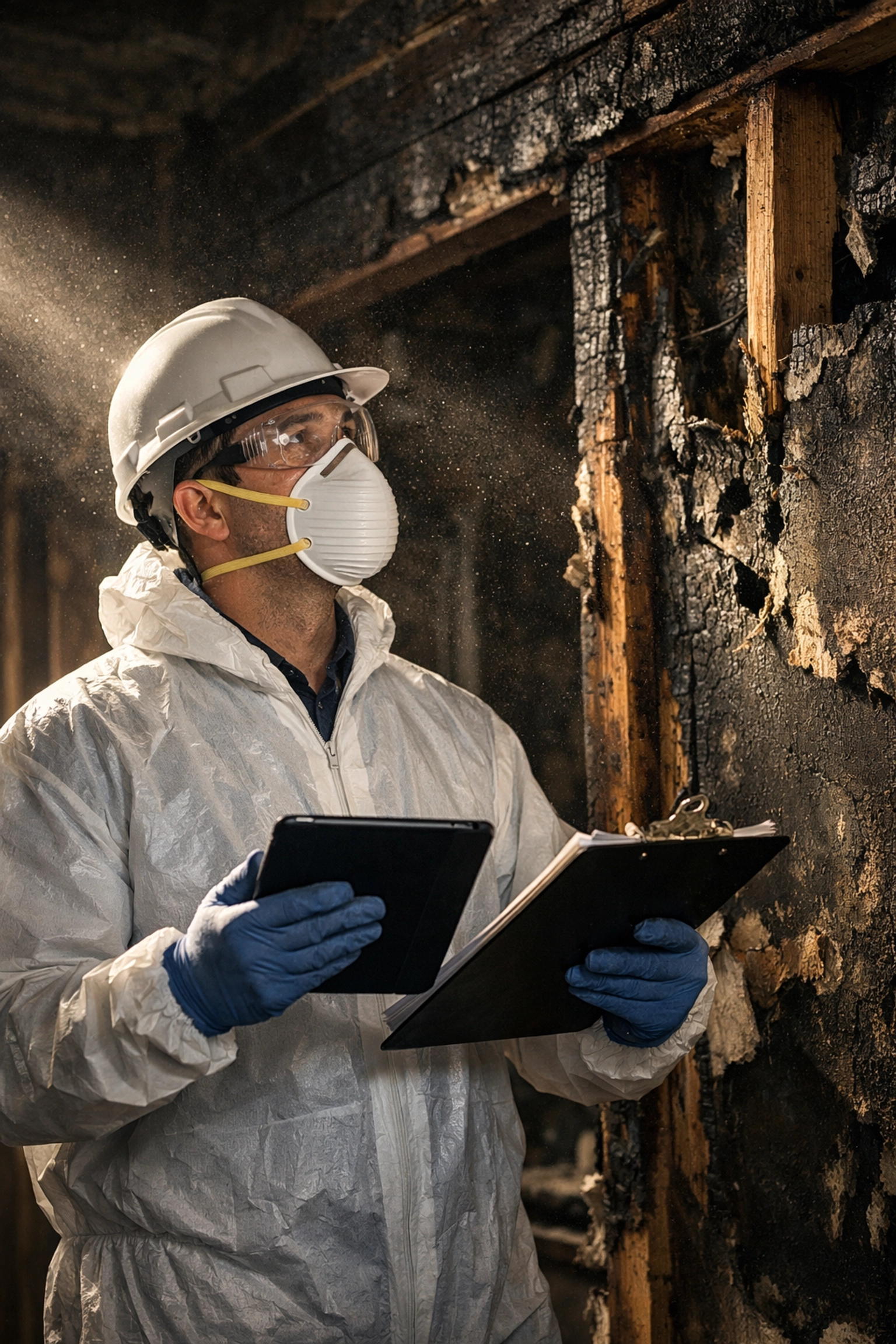
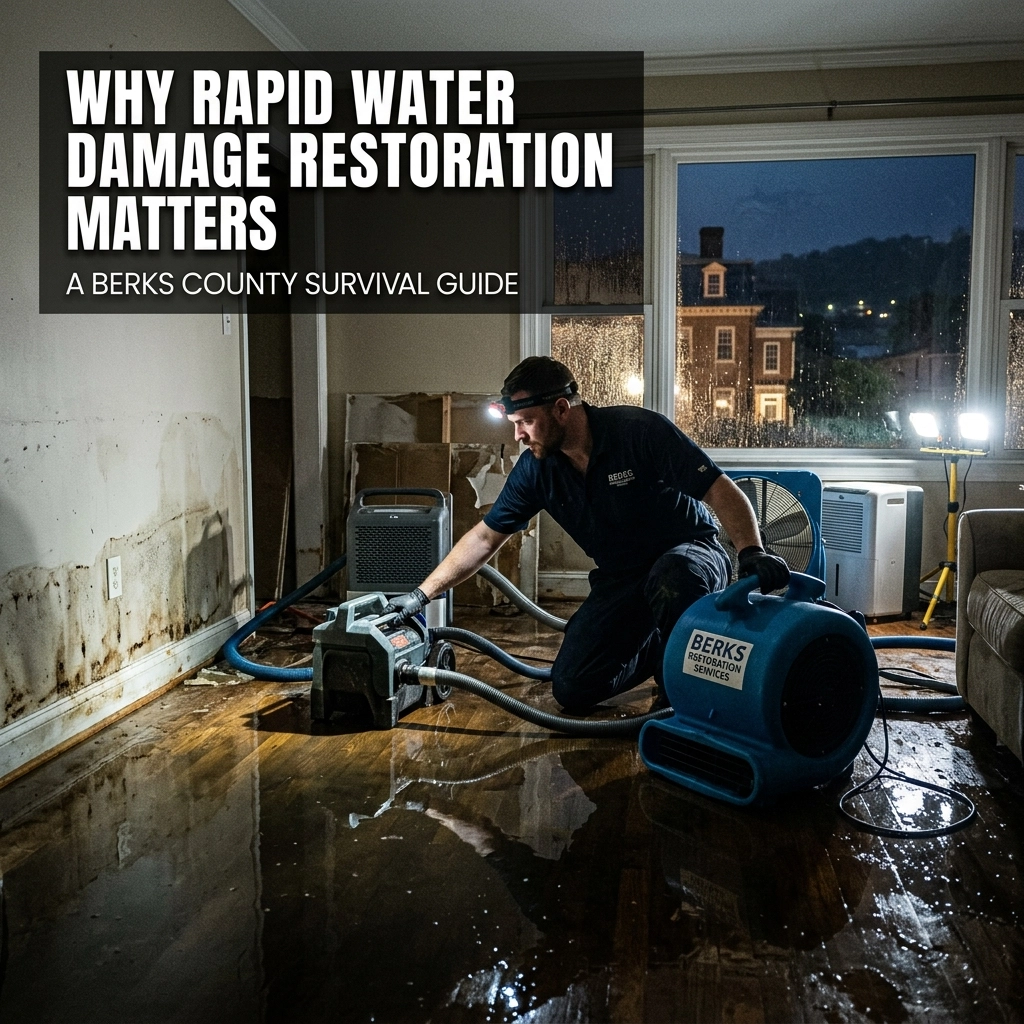
Remember that water damage we mentioned? Now it's time to tackle it head-on. This phase is crucial because water doesn't just sit there: it promotes mold remediation issues within 24-48 hours if left untreated.
Professional teams use specialized equipment to:
This step can't be rushed. Everything needs to be bone-dry before the cleanup phase begins, or you'll be dealing with mold problems down the road.
This is where the heavy lifting happens, literally. Cleaning up after a fire is the most labor-intensive phase of the entire process.
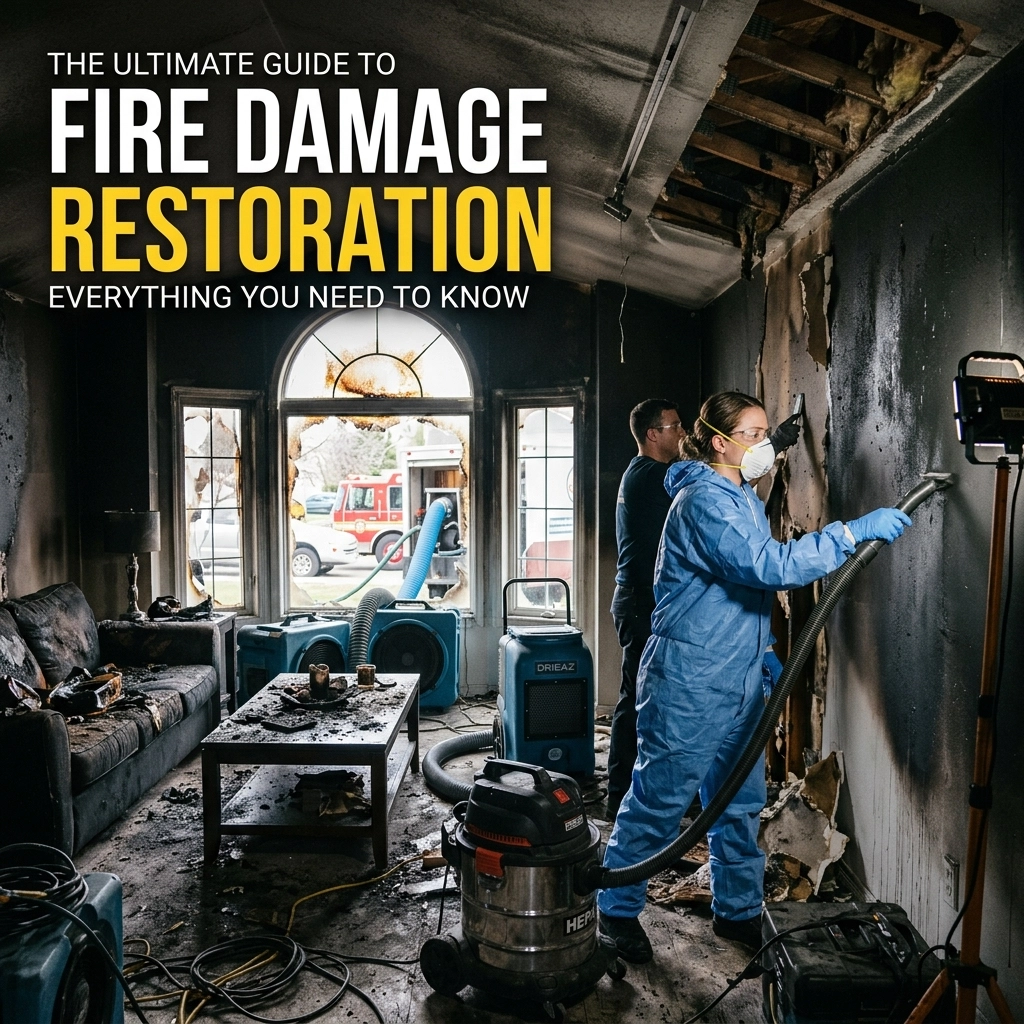
Professional restoration teams tackle smoke and soot using equipment and products that aren't available to regular homeowners. We're talking:
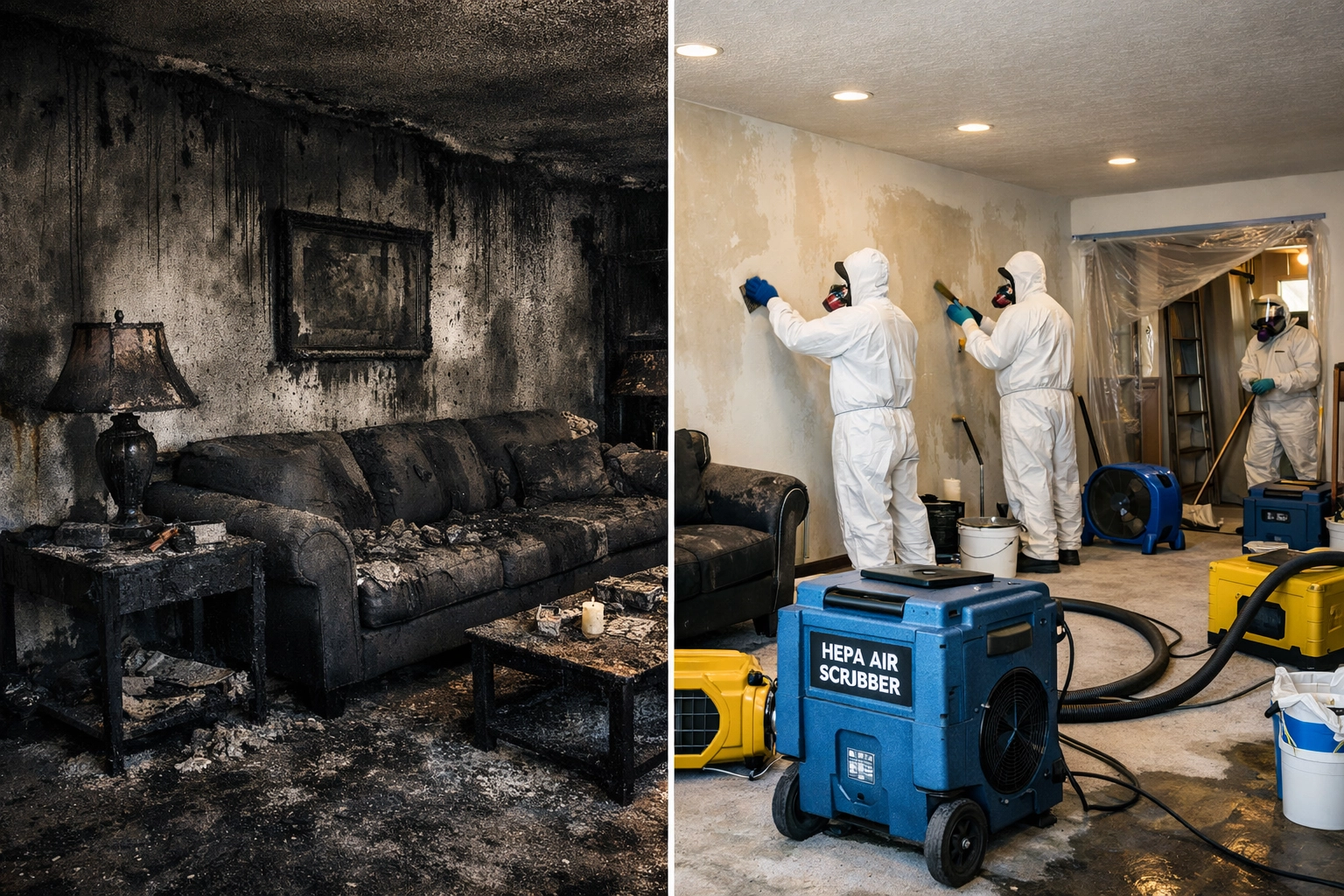
The smell of smoke is particularly stubborn. It clings to everything and won't go away with regular cleaning. Professional deodorization techniques neutralize odors at the molecular level rather than just covering them up with air fresheners.
If you have carpeting that survived the fire, professional carpet cleaning becomes essential. Smoke and soot particles embed themselves deep in carpet fibers, and standard vacuuming won't cut it.
The final phase is all about bringing your home back to life. Depending on the damage, this might involve:
Everything must meet current building codes, which sometimes means upgrades to your home's systems. While nobody wants to deal with fire damage, this phase gives you a chance to rebuild better than before.
Let's be real: after seeing the cost estimates for professional fire damage restoration, you might be tempted to handle some of the work yourself. We get it: fire damage costs billions in property losses annually, and the financial impact is real.
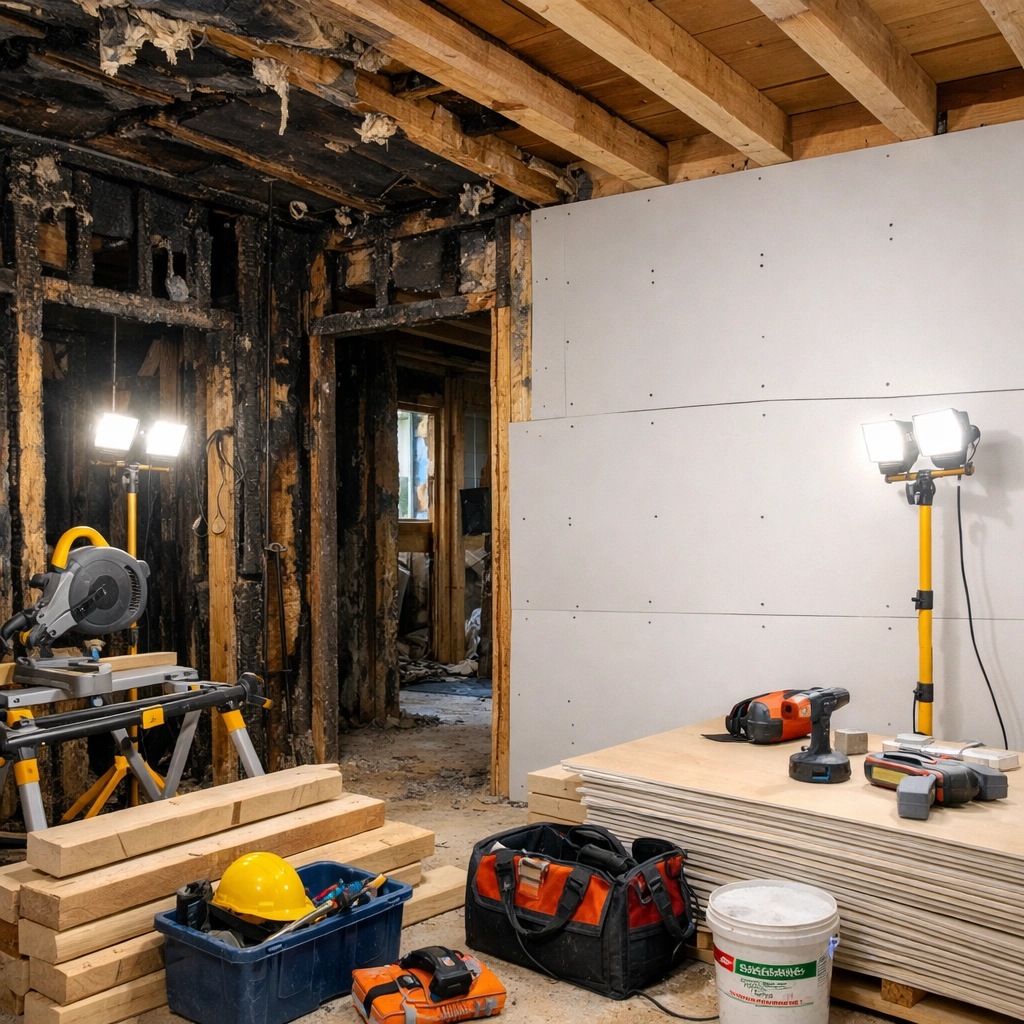
But here's where you need to draw a hard line. Some things you can handle:
But leave these tasks to the professionals:
Fire damage restoration isn't just about making things look better. It's about safety, structural integrity, and ensuring hidden damage doesn't cause problems months or years down the road.
One of the trickiest aspects of fire damage restoration is addressing the concurrent water damage. When firefighters extinguish flames, they're not thinking about your hardwood floors or drywall: they're saving your home and possibly your life.
But that water creates its own set of problems. It can:
That's why water damage restoration expertise is just as important as fire damage knowledge. The best restoration companies handle both seamlessly, understanding how these two types of damage interact and compound each other.
Recovering from fire damage feels impossible when you're standing in the aftermath, but thousands of homeowners successfully navigate this process every year. The key is taking it one step at a time and working with professionals who understand the complexity of fire damage restoration.
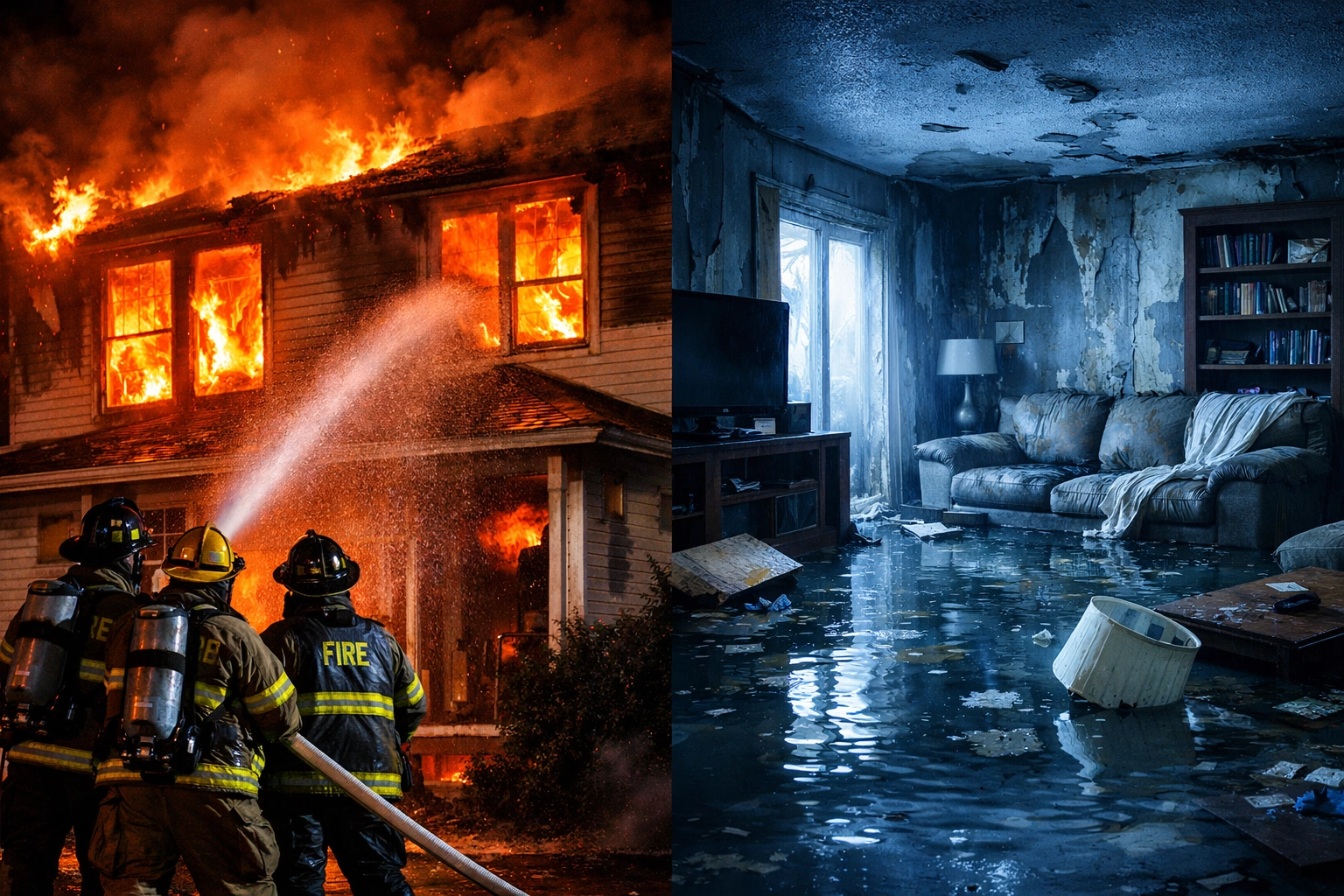
Remember, fire damage restoration isn't a quick fix: it's a comprehensive process that addresses immediate damage, hidden issues, and long-term concerns. From that initial assessment through final reconstruction, each phase builds on the last to return your home to a safe, livable condition.
If you're dealing with fire damage, don't wait. The longer smoke residue sits on surfaces, the more damage it causes. The longer water remains in your structure, the higher the risk of mold. Quick action combined with professional expertise gives you the best chance at a full recovery.
Need help navigating fire damage restoration? The team at My Water Damage Hero understands what you're going through and can guide you through every step of the recovery process. From water extraction to air duct cleaning, we've got the expertise to help you master your recovery and reclaim your home.
Contact us for quick, trusted restoration.
See how we’ve turned tough situations into success stories.

