
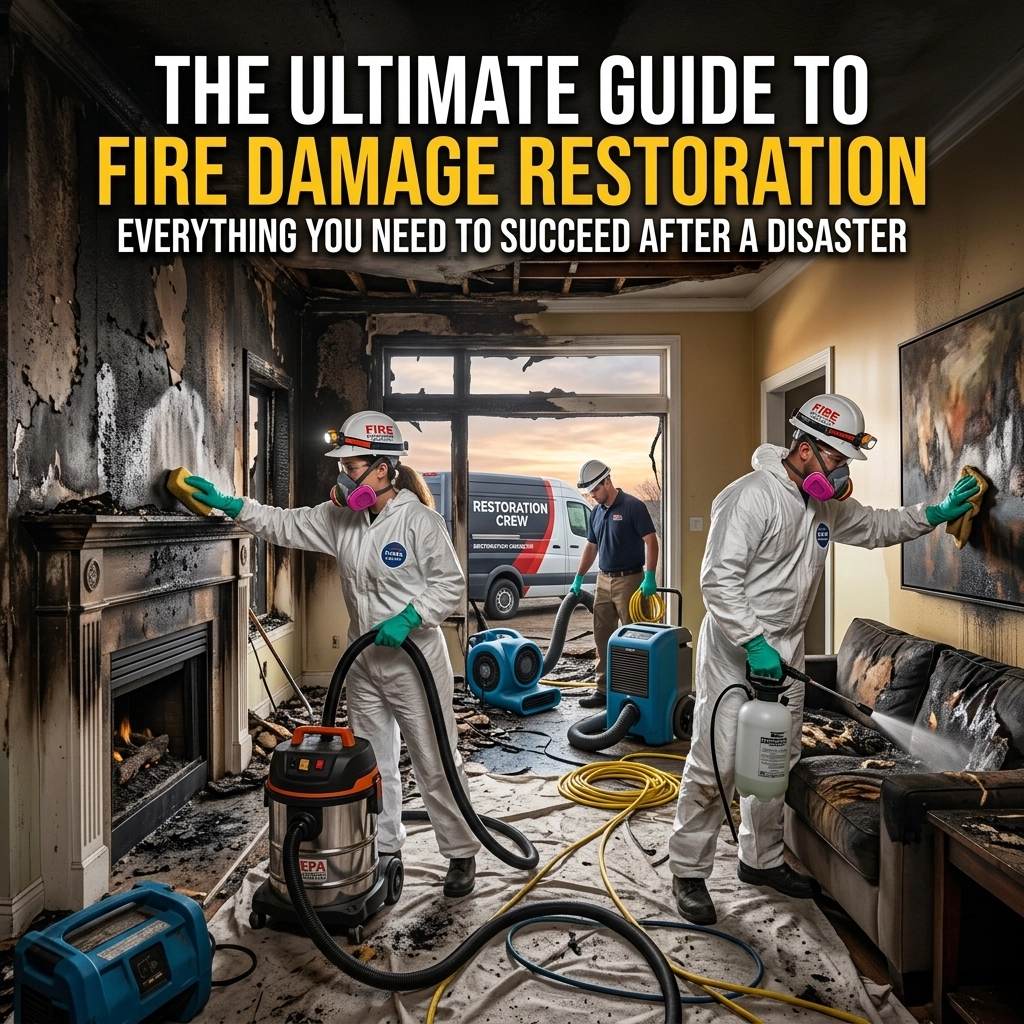
Hey there. If you’re reading this, you might have just gone through one of the scariest things a homeowner can face: a house fire. First, I want to say how sorry we are that you’re dealing with this. At My Water Damage Hero, we see the aftermath of these disasters every day, and we know that the "after" part can feel just as overwhelming as the fire itself.
The good news? You don’t have to do this alone, and your home can be restored to the way it was before. But there is a lot to know. Fire damage isn’t just about the flames; it’s about smoke, soot, and: strangely enough: a whole lot of water.
In this guide, I’m going to walk you through the entire fire damage restoration process. We’ll cover everything from the first 24 hours to the moment you can finally settle back onto your couch. Let’s get started.
When the fire trucks pull away, the clock starts ticking. The first 48 hours are what we call the "golden hours" of restoration. Why? Because soot and smoke are acidic. If they sit on your surfaces for too long, they can cause permanent staining and corrosion that even the best cleaning can’t fix.
Before you touch anything, you need a pro to look at the damage. A fire damage restoration expert will walk through the property to see how deep the damage goes. They’ll look at the structure, the electrical system, and the HVAC units to see what can be saved and what needs to go.
A fire often leaves your home vulnerable. Windows might be broken, or the roof might have holes. To keep out rain, pests, and uninvited guests, we start by boarding up doors and windows and putting heavy-duty tarps over the roof. This keeps your home safe while we work on the inside.

It sounds a bit backwards, doesn't it? You had a fire, and now you have to worry about water. But think about how the fire was put out. Thousands of gallons of water were likely pumped into your home.
If that water isn't dealt with immediately, you’re going to have a secondary disaster: water damage restoration needs. Standing water seeps into floorboards, wicks up into the drywall, and creates the perfect environment for mold.
We use industrial-strength vacuums and pumps to get the standing water out. Then, we bring in high-velocity air movers and dehumidifiers. This isn't your average floor fan; these are heavy-duty machines designed to pull moisture out of the very bones of your house.
Since mold can start growing in as little as 24 to 48 hours, mold remediation is often part of the fire recovery process. We treat damp surfaces with antimicrobial sprays to make sure that while we’re fixing the fire damage, we aren’t letting a mold problem take root.
Once the house is dry and safe to enter, it’s time for the "big clean-out." This part is emotional because it involves going through your belongings.
We systematically remove everything that is too damaged to save. This includes:
Removing these items isn't just about cleaning; it’s about safety. Burned materials release toxins, and getting them out of the house improves the air quality immediately.
This is where the real "magic" happens. Cleaning up after a fire is much more intense than your Saturday morning chores. Soot is greasy and can smear, making the mess even worse if you use the wrong cleaning products.
Every inch of the affected area needs to be cleaned. We use specialized chemicals to break down the soot on walls, ceilings, and floors. For items that can be saved: like some upholstery or curtains: we might use professional carpet cleaning techniques and deep-cleaning methods to lift the smoke particles out of the fibers.
One mistake many homeowners make is forgetting about the HVAC system. During a fire, smoke and soot are sucked into the vents. If you turn on your AC without getting an air duct cleaning, you’ll blow soot and that "burnt" smell right back into your freshly cleaned rooms. Professional air duct cleaning ensures the air you breathe is safe and odor-free.

After the cleaning and deodorizing are done, your home might look a bit like a skeleton. This is the reconstruction phase. This is where we put the "home" back in your house.
This phase includes:
By the time we reach this stage, the goal is to make it look like the fire never happened.

I know you want to be back in your bed as soon as possible. While every fire is different, here is a general idea of how the timeline usually shakes out:
It’s a marathon, not a sprint, but staying on top of the schedule helps the process move as quickly as possible.
It’s tempting to grab a bucket and a sponge and start scrubbing, but fire restoration is dangerous.
Working with a professional team like My Water Damage Hero ensures that the job is done safely and that your insurance company gets the documentation they need to process your claim.
Going through a fire is a life-changing event, but it doesn't have to be the end of your home's story. With the right help, you can navigate the path from disaster to a fresh start. Whether you need immediate fire damage restoration, mold remediation after the firefighters leave, or a thorough carpet cleaning to get rid of that last bit of soot, we’re here for you.
You’ve been through enough. Let us handle the hard work of putting the pieces back together.

Need help right now?
If you’re dealing with the aftermath of a fire, don’t wait. Contact My Water Damage Hero today. We offer 24/7 emergency services to help you secure your property and start the restoration process immediately. We’re your heroes in the neighborhood, ready to get your life back to normal.
Contact us for quick, trusted restoration.
See how we’ve turned tough situations into success stories.

