
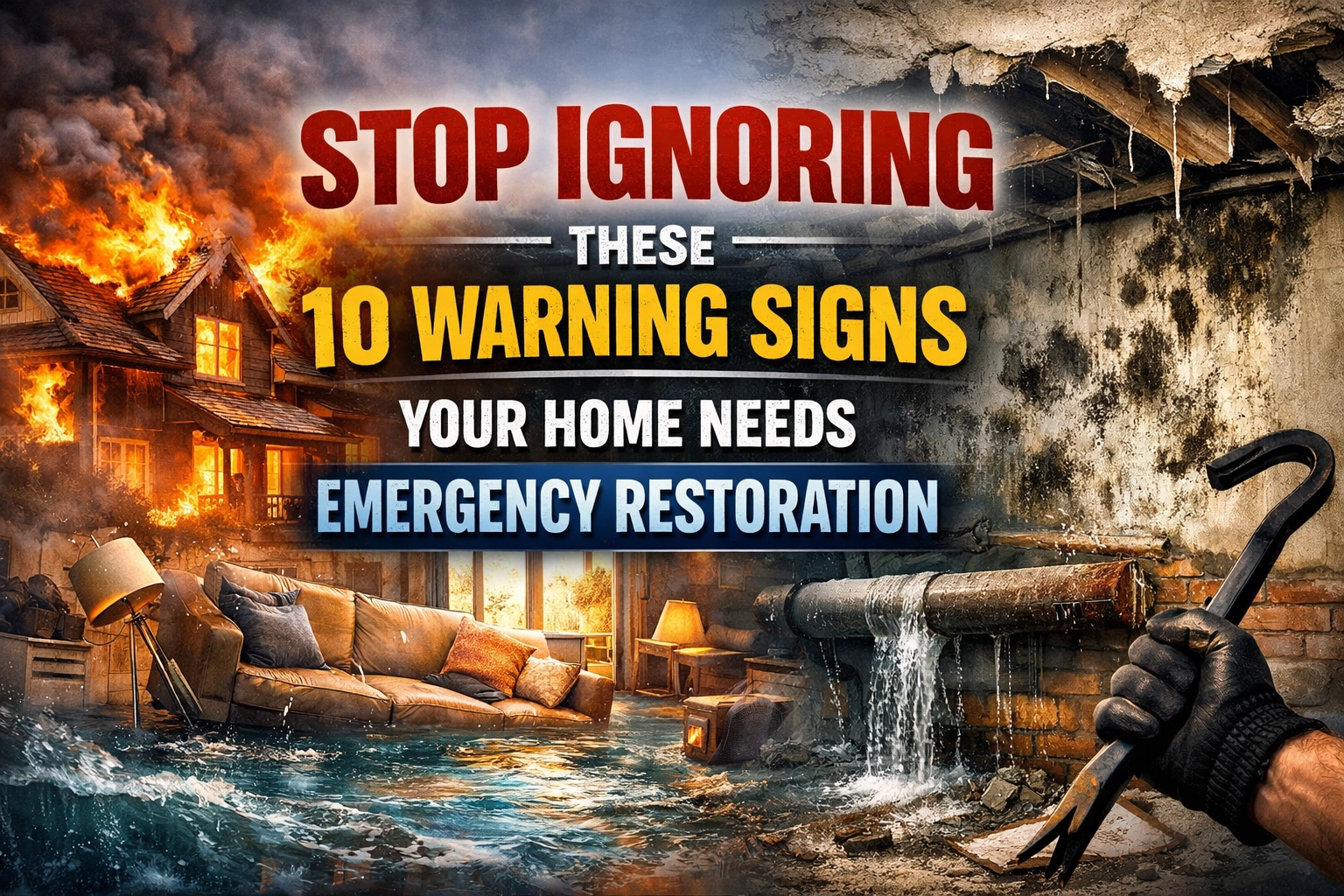
Look, we get it. Nobody wants to deal with home emergencies. They're stressful, expensive, and always seem to happen at the worst possible time. But here's the thing – ignoring the warning signs doesn't make them go away. It just makes everything worse (and way more expensive).
Your home talks to you. It gives you hints when something's wrong. The key is learning to listen before a small problem becomes a full-blown disaster. Let's walk through 10 warning signs that mean you need to call for emergency restoration ASAP.
That small water stain on your ceiling? If it's getting bigger, you've got an active leak. Water doesn't just sit still – it spreads, seeps, and finds its way into every crack and crevice. Today's small brown spot becomes tomorrow's collapsed ceiling.
Water damage restoration isn't something you can put off until next month. Once water gets into your walls, floors, or ceiling, the clock starts ticking. Within 24-48 hours, you're looking at potential mold growth. By day three, you might have structural damage. By week two, you're dealing with serious health hazards and way bigger repair bills.
Your nose knows. If you're smelling something musty or moldy, trust your instincts. That smell means moisture is hiding somewhere, and where there's moisture, mold is probably having a party.
Mold remediation professionals hear this all the time: "I thought it would just go away." It won't. Mold needs three things to thrive – moisture, organic material (like wood or drywall), and time. Your home provides the first two, and ignoring the problem gives it the third.
The tricky part? You might not even see the mold. It loves hiding behind walls, under floors, and in crawl spaces. But your nose will pick up on it before your eyes do.
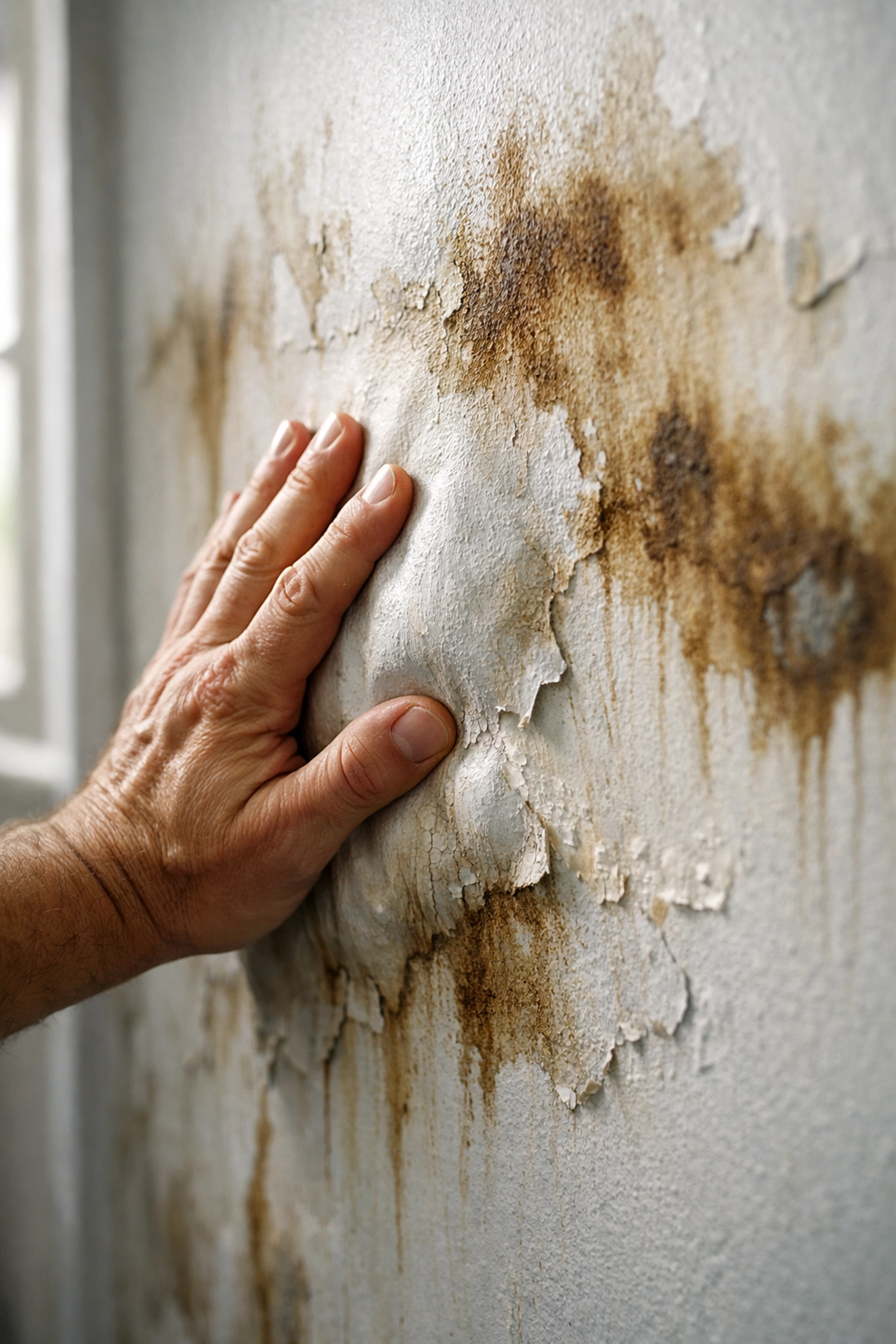
Press gently on your walls. They should feel solid. If they feel soft, spongy, or you see them bulging outward, that's water damage at work. Your drywall is essentially a big sponge – when it gets wet, it loses its structural integrity.
This is a big red flag for emergency restoration. Water-damaged walls can't support themselves for long. Eventually, they'll buckle, sag, or even collapse. Plus, wet drywall is a perfect breeding ground for mold and bacteria.
Had a small fire or even just a cooking incident that created a lot of smoke? If you're still smelling smoke days or weeks later, you need fire damage restoration professionals. Smoke doesn't just disappear – it penetrates everything. It gets into your walls, your HVAC system, your furniture, and even your insulation.
Here's what most people don't realize: smoke and soot are acidic. They actually corrode and deteriorate surfaces over time. That black residue on your walls after a fire? It's actively eating away at your paint, drywall, and metal fixtures.
When doors start sticking, won't latch properly, or randomly swing open on their own, something's shifting in your home's structure. Same goes for windows that become difficult to open or show gaps around the frames.
This could mean foundation problems, water damage causing wood to swell, or structural settling. Either way, it's your home telling you that something significant is happening. Don't ignore it.
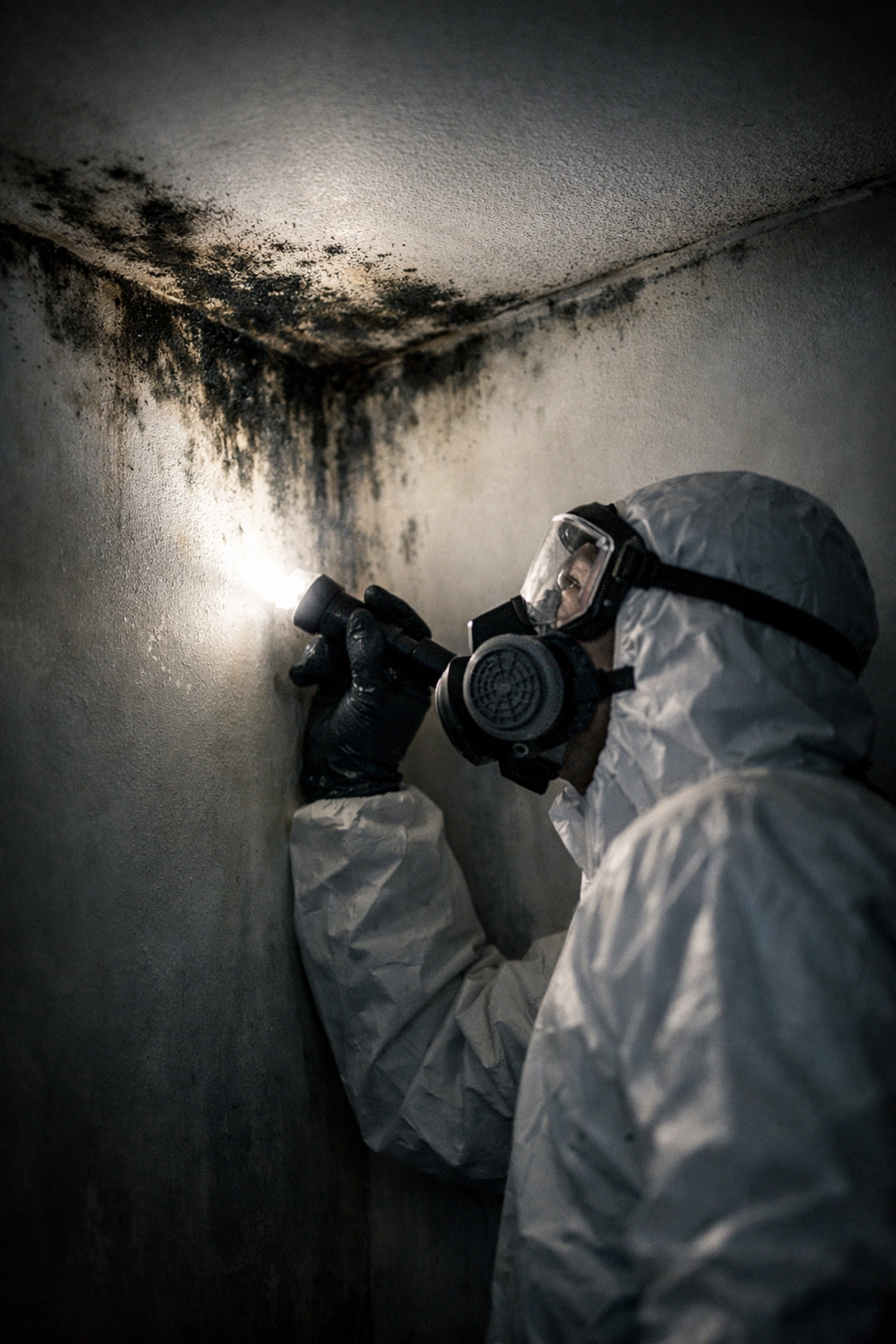
See mold? Call for mold remediation. Period. Don't try to clean it yourself with bleach and call it a day. If you can see mold on the surface, there's usually way more growing behind the walls or under the floors.
The EPA says that if you have mold covering more than one square foot, you need professional help. But honestly? Even smaller patches are worth getting checked out. Mold releases spores into the air, and you're breathing those in. Some types of mold produce mycotoxins that can seriously impact your health.
If your allergies suddenly get worse at home, you're experiencing unexplained headaches, or respiratory issues that improve when you leave the house – mold might be the culprit.
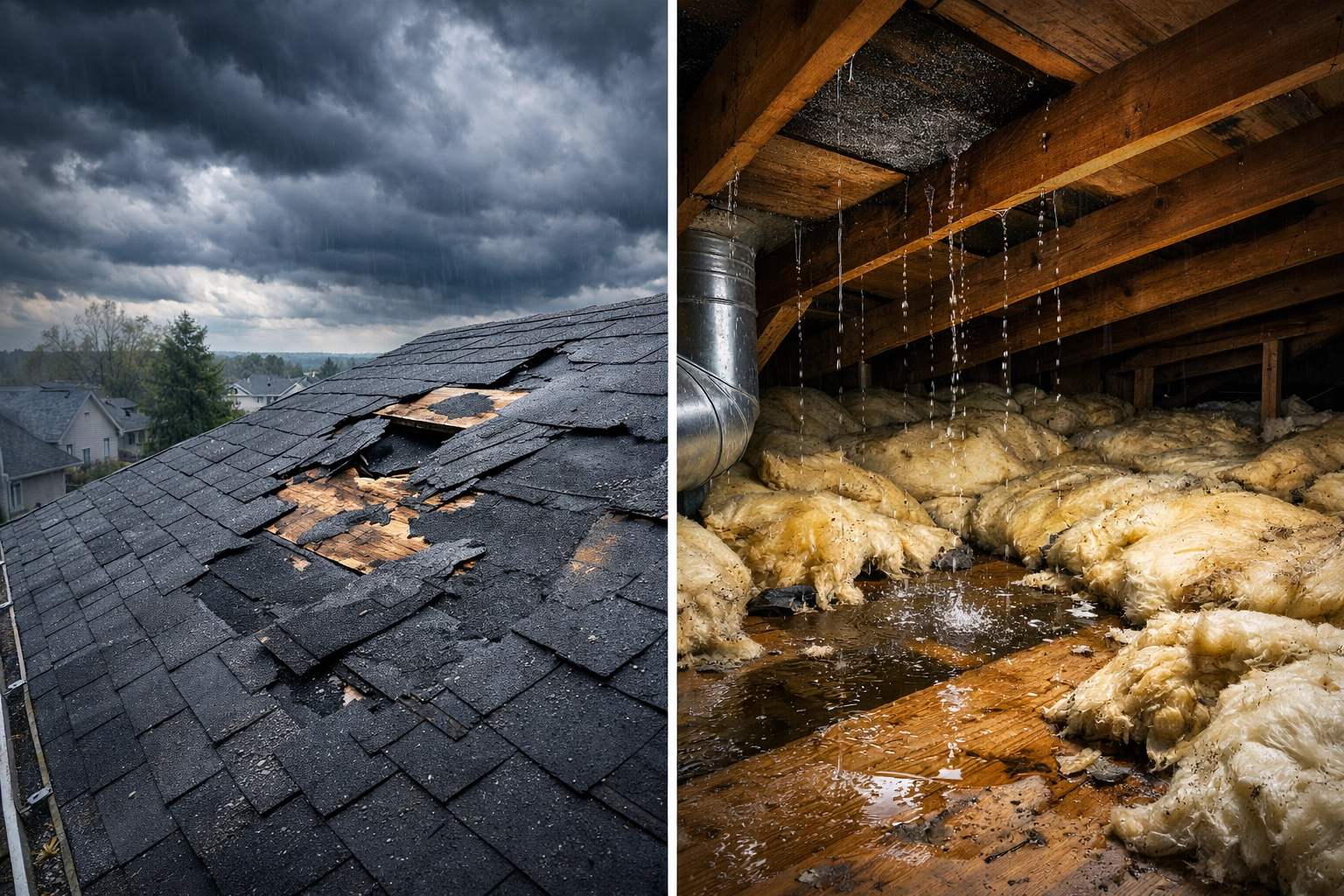
After a storm rolls through, you do a quick inspection. A few missing shingles, a small crack in the window, maybe some debris on the roof. "No big deal," you think. "I'll get to it eventually."
Stop right there. Storm damage is an emergency. Those missing shingles? They're letting water into your roof sheathing and insulation right now. That small crack? It's letting moisture seep in with every rain. Even minor storm damage creates entry points for water, and we've already talked about what water does to your home.
Plus, your homeowner's insurance often has time limits on filing storm damage claims. Wait too long, and you might be paying for everything out of pocket.
This one should be obvious, but we're saying it anyway: sewage backups are a health emergency. That water contains bacteria, viruses, and parasites that can make you seriously sick. Standing water from any source that's been sitting for more than 24 hours is also a problem – it becomes contaminated quickly.
Water damage restoration from sewage or contaminated water requires specialized equipment and safety protocols. This isn't a job for your wet-dry vacuum and determination. The affected areas need to be thoroughly cleaned, disinfected, and dried by professionals wearing proper protective equipment.
Not all cracks are created equal. Small hairline cracks? Usually cosmetic. But cracks that are growing, especially horizontal cracks in your foundation or stair-step patterns in brick, mean structural issues.
Foundation problems don't fix themselves. They get progressively worse. What starts as a small crack can eventually lead to major structural failure, making your entire home unsafe. If you're seeing cracks wider than 1/4 inch or cracks that seem to appear and grow quickly, get a professional assessment immediately.
Your heating and cooling system circulates air throughout your entire home. If it's spreading musty odors, that means it's picking up moisture or mold from somewhere and delivering it to every room. If it's covered in dust despite recent cleaning, you might need air duct cleaning.
But it goes deeper than that. Fire damage restoration often includes cleaning HVAC systems because smoke and soot get pulled into your ductwork. Water damage can affect your HVAC system too, creating the perfect environment for mold growth inside your ducts and air handler.
If your HVAC suddenly starts performing poorly, making strange noises, or spreading weird smells, it could be a symptom of a bigger problem in your home that needs emergency attention.
Here's the reality: every day you wait to address these warning signs, the problem gets worse and more expensive. A small water leak that costs $500 to fix today becomes a $5,000 water damage restoration project next month. A little mold that needs basic remediation becomes a whole-house mold problem that requires moving out during treatment.
At My Water Damage Hero, we've seen it all. We've helped homeowners who caught problems early and those who waited too long. Trust us – the ones who act fast always come out better. They save money, save stress, and protect their home's value.
Your home is probably your biggest investment. It deserves your attention when it's crying out for help. If you're experiencing any of these warning signs, don't brush them off. Call a professional emergency restoration service that can assess the situation properly and prevent a small problem from becoming a catastrophe.
Remember: hoping a problem will go away doesn't make it happen. Taking action does. Your future self will thank you.
Contact us for quick, trusted restoration.
See how we’ve turned tough situations into success stories.

