
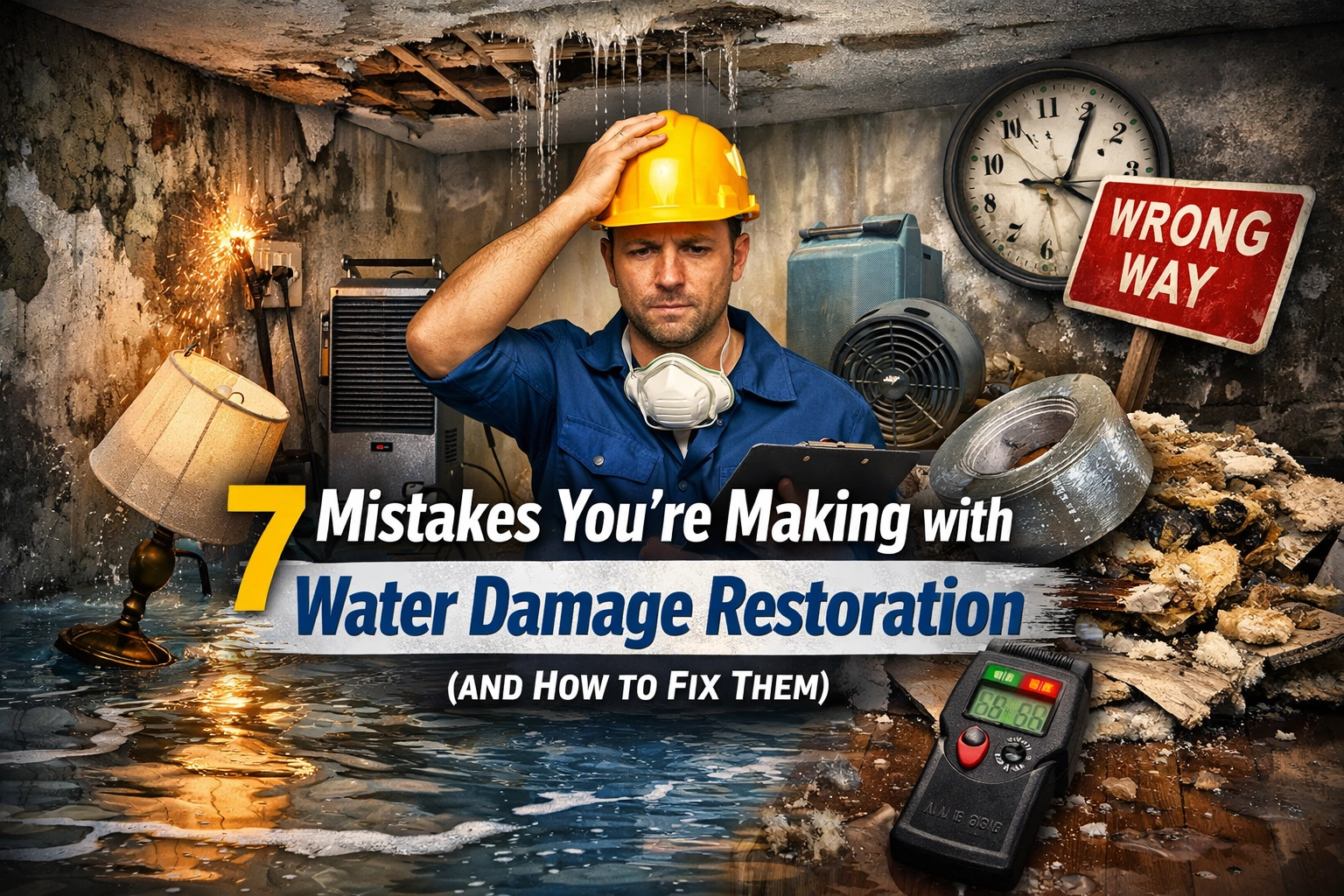
Water damage is one of those home emergencies that can go from bad to worse in a hurry. Whether it's a burst pipe, a leaky roof, or flooding from a storm, how you handle the first few hours and days makes all the difference between a manageable cleanup and a full-blown disaster.
The problem? Most homeowners don't realize they're making critical mistakes until it's too late. These errors can lead to structural damage, sky-high repair bills, and even health hazards like mold growth. Let's walk through the seven most common water damage restoration mistakes: and more importantly, how to avoid them.
Here's the thing about water: it doesn't sit still. While you're figuring out your next move or waiting for your schedule to clear up, that water is spreading. It's soaking into your walls, seeping under your floors, and making itself at home in places you can't even see.
Even a delay of just a few hours gives water enough time to cause serious problems. Wood starts to warp. Drywall begins to break down. And within 24-48 hours, you've created the perfect environment for mold to set up shop.
The fix: Act immediately. The moment you discover water damage, start the clock. If you can safely remove standing water, do it. Then get professional help on the way. Water damage restoration isn't something you want to schedule for next week: it needs to happen now.
We get it. Your first instinct is to grab every fan in the house and point them at the wet spots. Maybe throw down some towels for good measure. It feels productive, right?
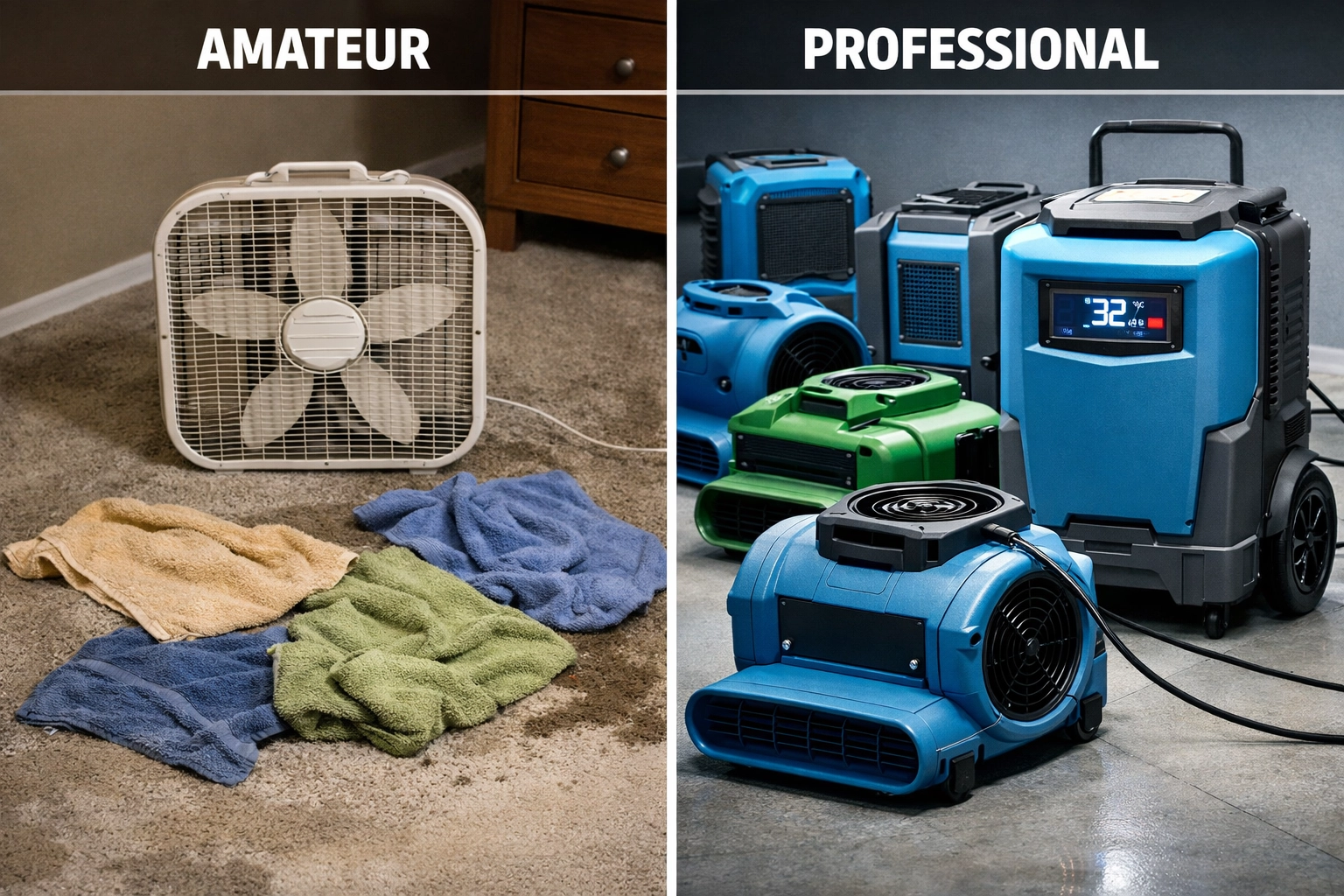
Unfortunately, household fans and towels are like bringing a squirt gun to a forest fire. They might dry the surface, but they're doing nothing for the moisture that's already soaked deep into your building materials. That hidden moisture is where the real problems brew: structural damage, persistent odors, and mold remediation issues down the line.
The fix: Professional water damage restoration requires industrial-grade equipment. We're talking commercial dehumidifiers and high-powered air movers that can actually pull moisture out from inside your walls and floors. This isn't about overkill: it's about getting all the water out, not just the water you can see.
This mistake trips up almost everyone. You clean up the puddle in your basement, dry the visible carpet, and call it a day. Problem solved, right?
Wrong. Water is sneaky. It travels through wall cavities, crawls under flooring, hides in insulation, and spreads to rooms you'd never expect. Those hidden pockets of water are ticking time bombs. They rot wood, weaken structures, and create hidden colonies of mold that you won't discover until you're dealing with a much bigger (and more expensive) problem.
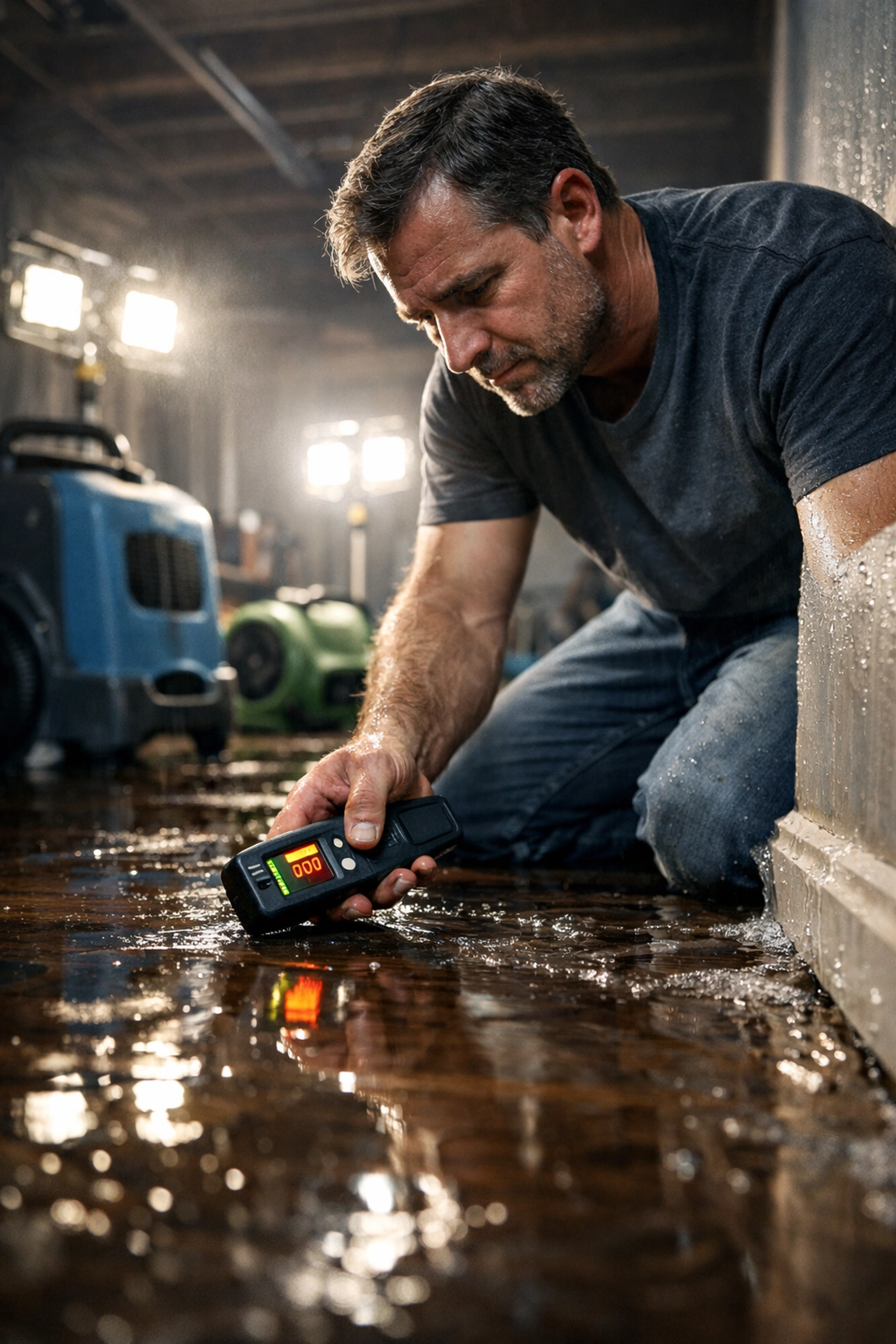
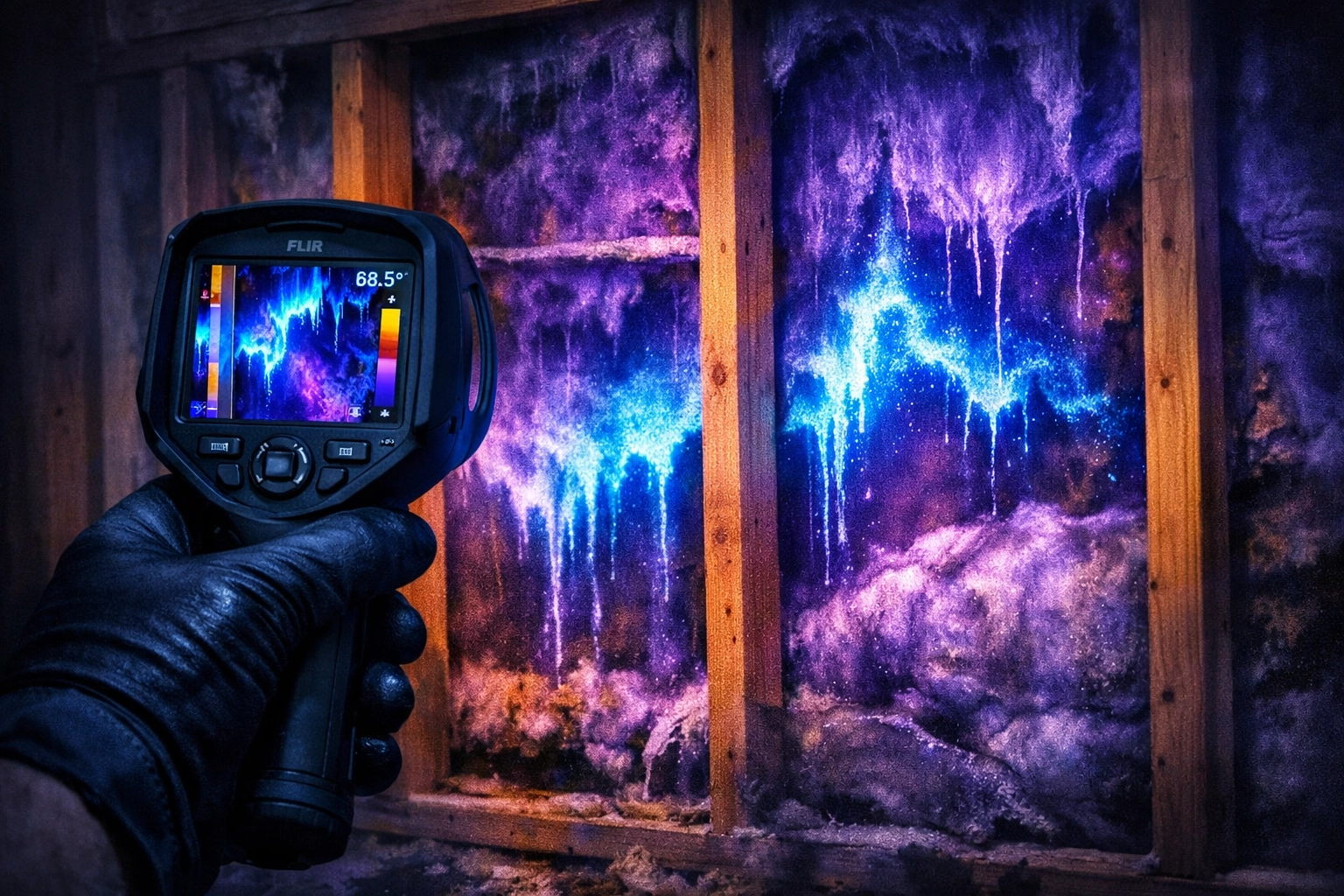
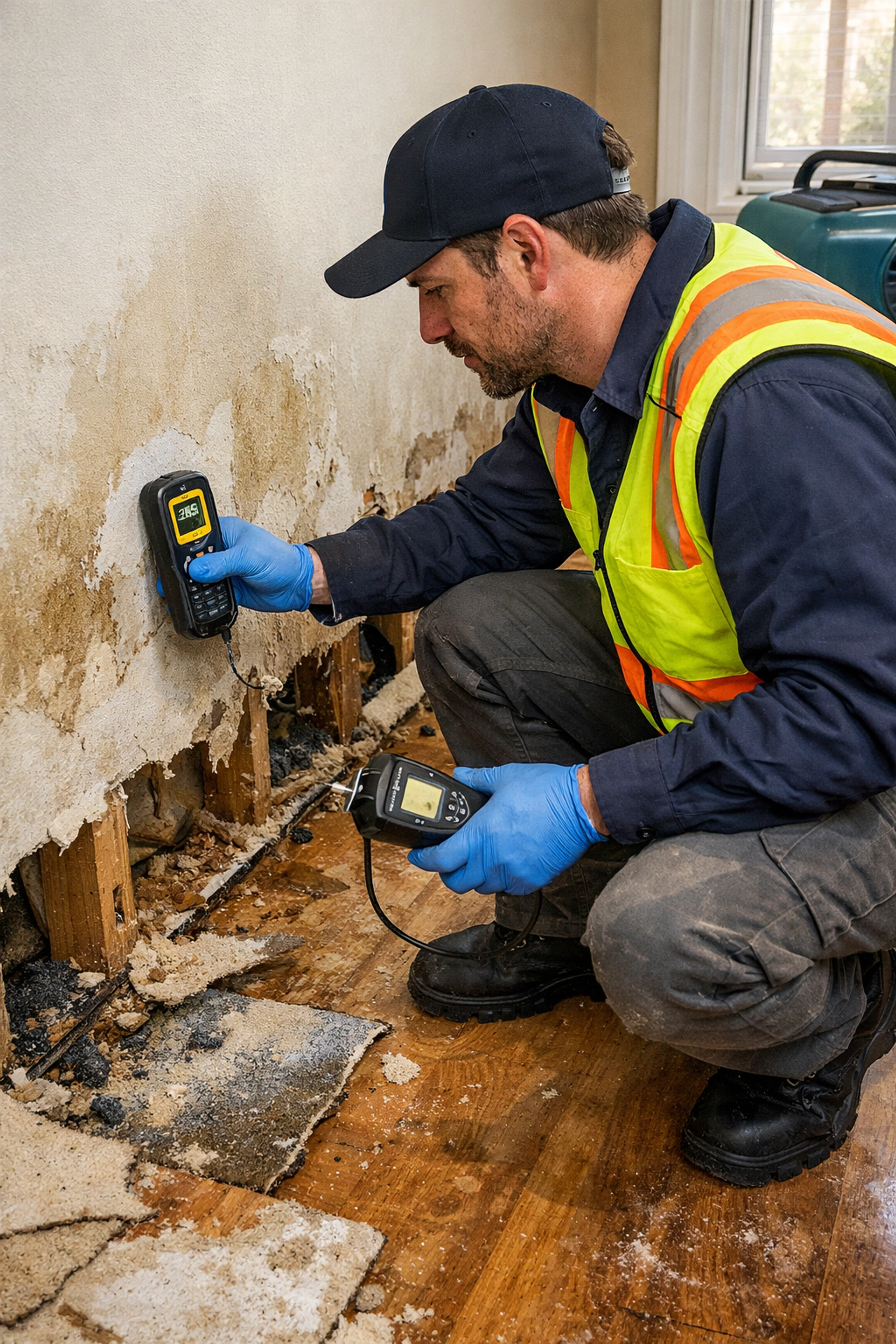
The fix: Inspection is everything. Don't just look at where the water was: track where it went. Check adjacent rooms, basements, crawlspaces, and anywhere water could have traveled. Professional restoration teams use moisture meters and thermal imaging cameras to find these hidden problem areas that the naked eye misses.
There's a time and place for DIY projects. Water damage restoration usually isn't one of them.
Here's a helpful guideline: You can potentially handle water cleanup yourself ONLY if all these conditions are true:
If even one of those conditions doesn't apply, you need professional help. Without proper training and equipment, you'll likely miss critical steps, overlook hidden damage, and fail to address the underlying issues that caused the problem in the first place.
The fix: Call in the pros. Professional water damage restoration teams have the experience, equipment, and expertise to do the job right the first time. They know what to look for, how to prevent secondary damage, and how to make sure your home is truly dry and safe.
Your floors look dry. Your walls feel normal. Everything seems fine. Time to move on, right?
Not quite. Just because surfaces appear dry doesn't mean the job is done. Moisture can remain trapped in building materials for weeks, slowly causing deterioration you won't notice until it's too late. This incomplete drying creates the perfect storm for mold growth, damaged drywall, and rotting wood.
The fix: Thorough drying and dehumidification are non-negotiable. This means running industrial dehumidifiers for days, not hours. It means monitoring moisture levels with professional meters until readings confirm that materials are completely dry: not just dry enough. This step can't be rushed or cut short.
Here's a question that'll save you thousands of dollars: Why did this water damage happen in the first place?
Too many homeowners jump straight to cleanup without ever fixing what caused the problem. Then they're shocked when they're dealing with the same mess a month later. If you don't fix the source, you're just setting yourself up for an endless cycle of water damage and restoration.
The fix: Before you finish restoration, identify and repair the source of the water. Get a plumber to fix those leaky pipes. Have a roofer patch that leak. Replace the faulty appliance. Whatever caused the problem needs to be addressed, or you're just wasting time and money on temporary fixes.
Removing water is only half the battle. That water: especially if it came from flooding, sewage, or contaminated sources: brought bacteria, contaminants, and nasty odors along for the ride. Those don't just disappear when the water dries up.
Many homeowners stop at the drying phase and wonder why their basement still smells musty or why family members keep getting sick. It's because they never actually cleaned and sanitized the affected areas.
The fix: Proper water damage restoration includes thorough cleaning and sanitization. This means disinfecting all affected surfaces, treating materials that absorbed contaminated water, purifying the air, and completely eliminating odors. The goal isn't just dry: it's clean, healthy, and safe.
While we're at it, here are some bonus mistakes to avoid:
Don't use direct heat. Hair dryers, space heaters, and similar quick-fix solutions can actually make things worse by warping wood and accelerating mold growth. Stick with proper drying equipment.
Don't ignore electrical safety. Water and electricity don't mix. If water has reached electrical outlets, wiring, or appliances, shut off power to affected areas and call an electrician before doing anything else.
Don't assume materials are salvageable. Some water-damaged materials: especially porous ones like insulation, carpet padding, and drywall that's been saturated: are better off replaced than restored. A professional can help you make these calls.
Water damage restoration isn't something you want to wing. The mistakes we've covered here aren't just minor inconveniences: they lead to structural damage, health hazards, and repair bills that spiral out of control.
The good news? Most of these mistakes are completely avoidable. Act fast, use the right equipment, check everywhere water could have traveled, fix the source of the problem, and don't skip the sanitization phase. And when in doubt, call in professional help.
Remember, cheap and fast rarely equals good when it comes to water damage restoration. Taking shortcuts now means dealing with bigger problems: and bigger bills: later. Do it right the first time, and you'll save yourself a ton of headaches (and money) down the road.
At My Water Damage Hero, we've seen every water damage scenario imaginable. Whether you're dealing with a small leak or major flooding, getting professional help early can make all the difference between a quick fix and a prolonged nightmare. Don't let these common mistakes turn your water damage into a disaster: reach out to the pros and get it handled right.
Contact us for quick, trusted restoration.
See how we’ve turned tough situations into success stories.

