
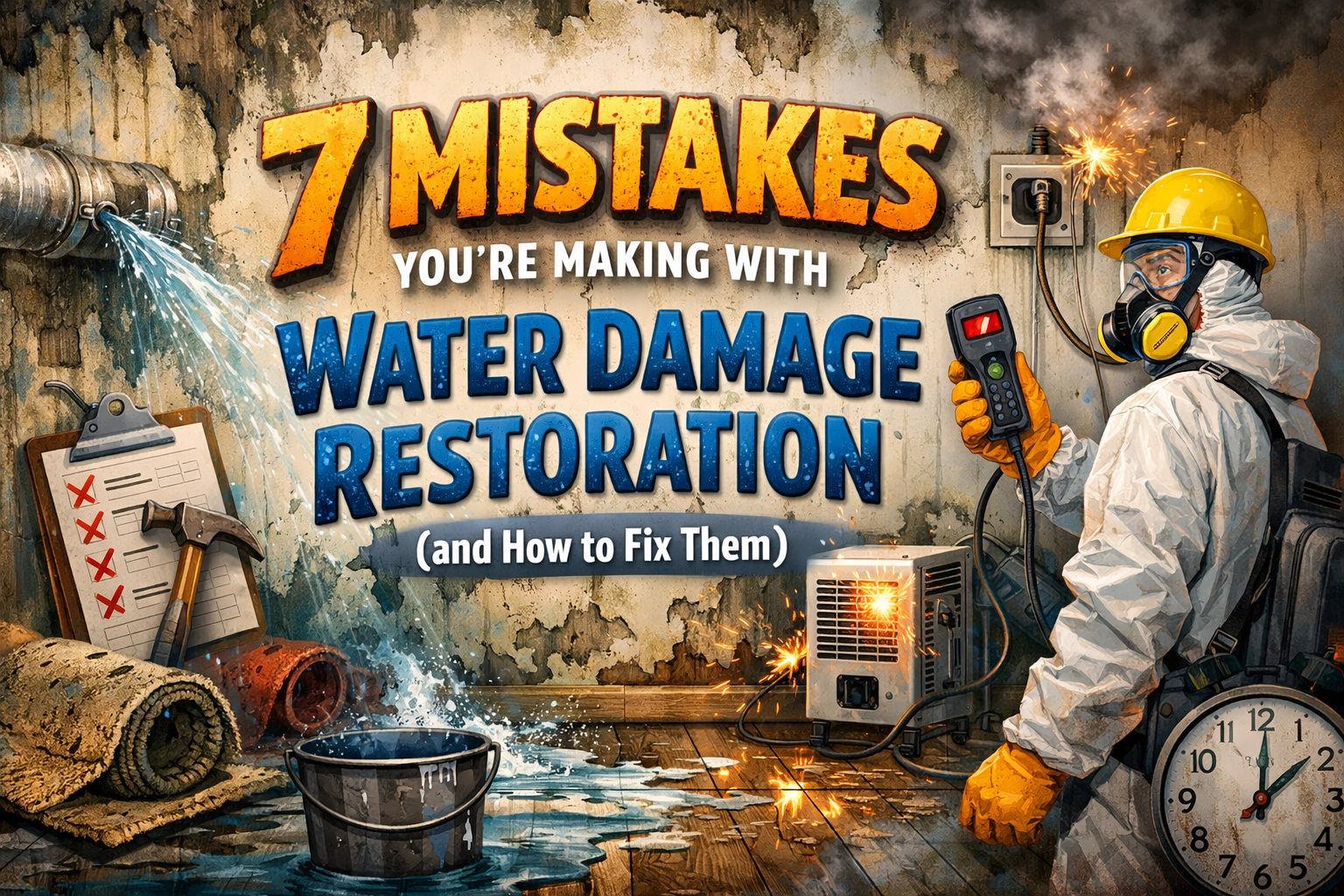
Water damage is one of those things that goes from "minor inconvenience" to "complete disaster" faster than you can say "where's that bucket?" Whether it's a burst pipe, a leaky roof, or an overflowing washing machine, how you handle the cleanup can make or break your home, literally.
The problem? Most homeowners make the same critical mistakes when dealing with water damage restoration. And these slip-ups can cost you thousands of dollars in repairs, create dangerous mold problems, and leave you with long-term structural issues.
Let's break down the seven biggest mistakes people make (you've probably made at least one of them) and how to fix them before things get worse.
Here's the thing: water doesn't wait around, and neither should you. Yet one of the most common mistakes is thinking "I'll deal with it tomorrow" or "It's not that bad."
Spoiler alert: It IS that bad.
Water spreads like wildfire through your floors, walls, and furniture. Within 24 to 48 hours, you're not just dealing with water damage anymore, you're dealing with mold growth, warped wood, and drywall that's basically turned into soggy cereal.
The Fix: The second you notice water damage, take action. Contact a professional water damage restoration team immediately. Every hour you wait multiplies the damage and the bill. Think of it like a leak in a boat, you wouldn't wait until you're underwater to start bailing, right?
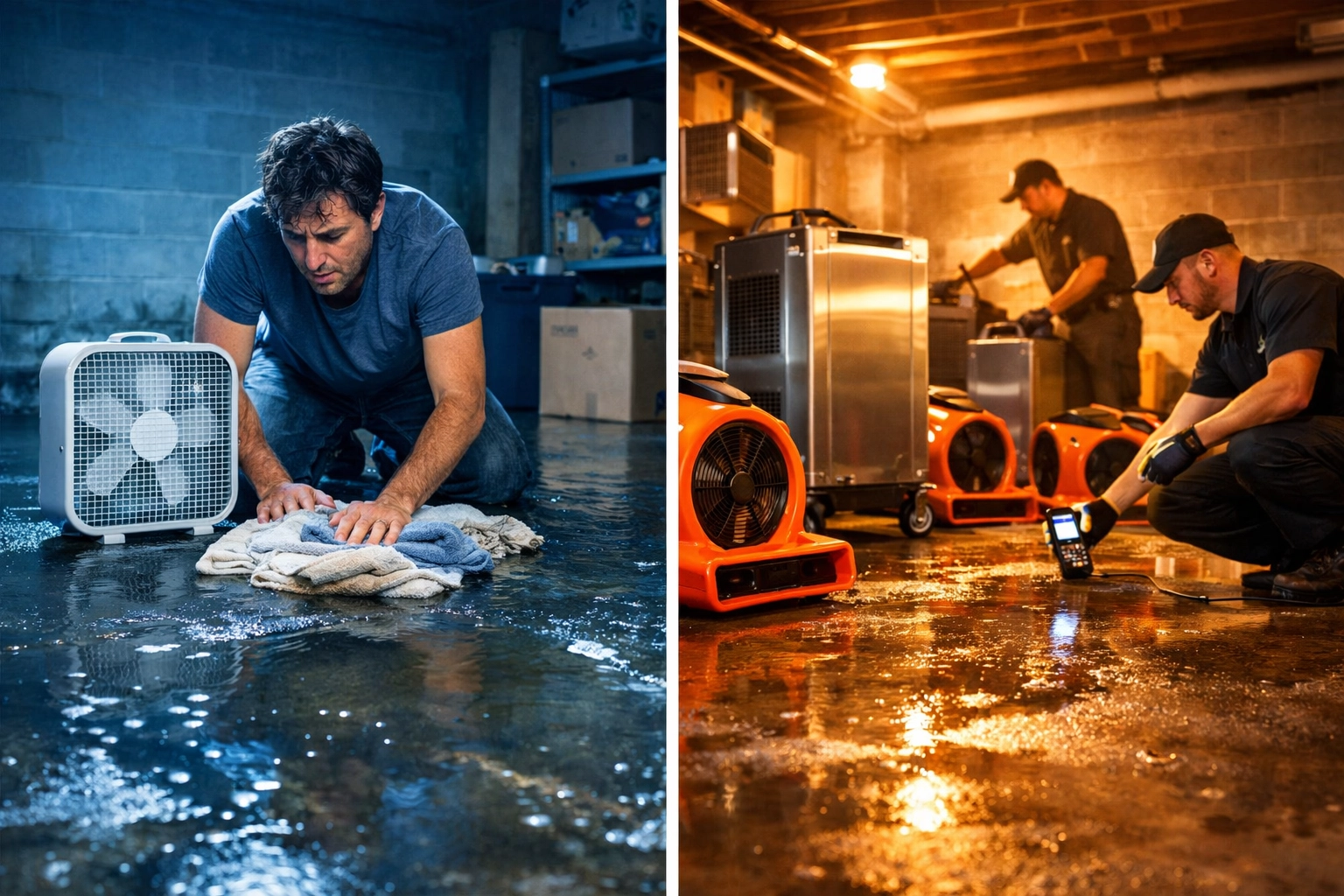
We get it. You see water on the floor, grab every towel you own, and point your trusty box fan at the wet spot. Seems logical, right?
Wrong.
Household fans and regular towels are basically bringing a squirt gun to a forest fire. They can't reach the moisture that's already soaked into your carpet padding, beneath your floorboards, or inside your walls. In fact, standard fans can actually push water deeper into materials, making the problem worse.
The Fix: You need industrial-grade equipment, dehumidifiers, commercial air movers, and moisture meters that can detect hidden dampness. Professional restoration companies have specialized extraction tools that can actually remove water from places you can't even see. Don't mess around with amateur hour equipment when your home's at stake.
"If I can't see it, it's not a problem." Famous last words.
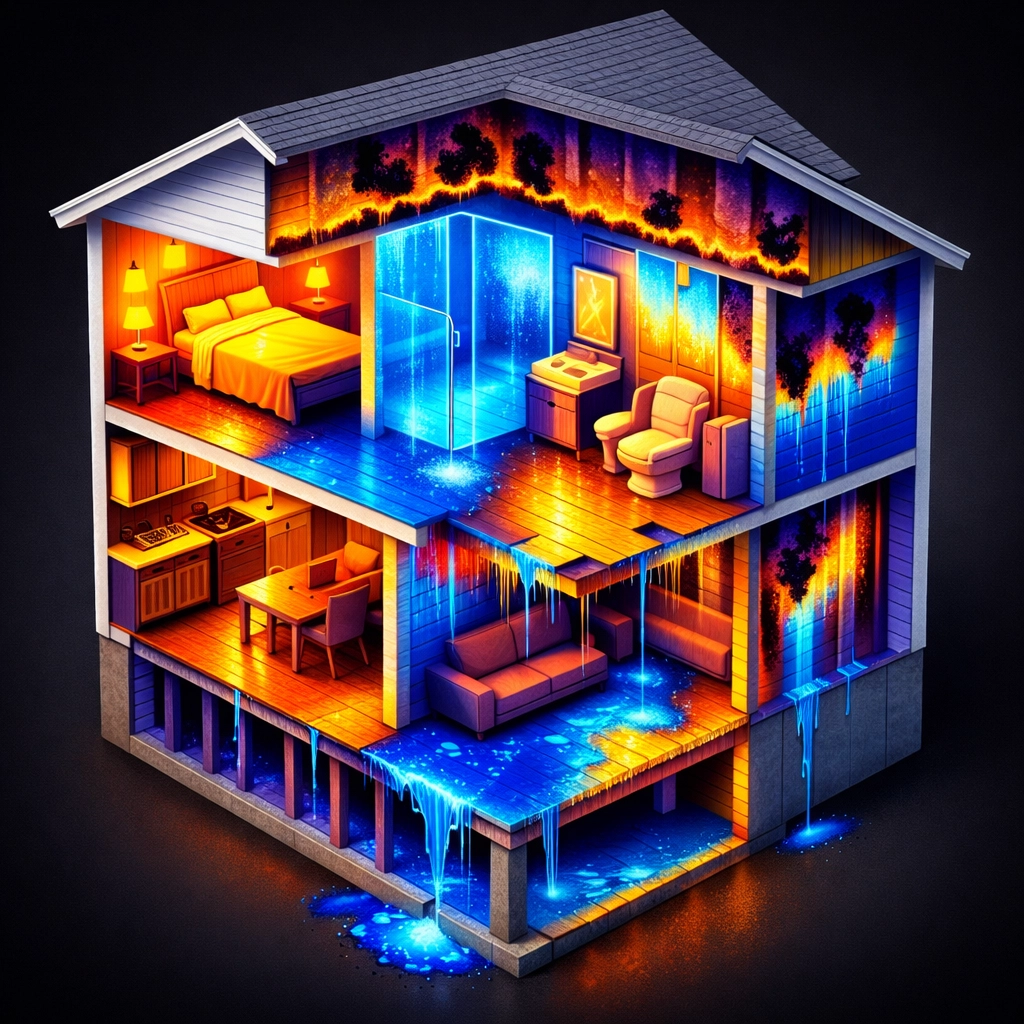
Water is sneaky. Just because your living room looks dry doesn't mean water hasn't crept behind your walls, under your floors, or into your insulation. Hidden moisture is like a silent destroyer, weakening your home's structure, rotting wood, and creating the perfect breeding ground for mold.
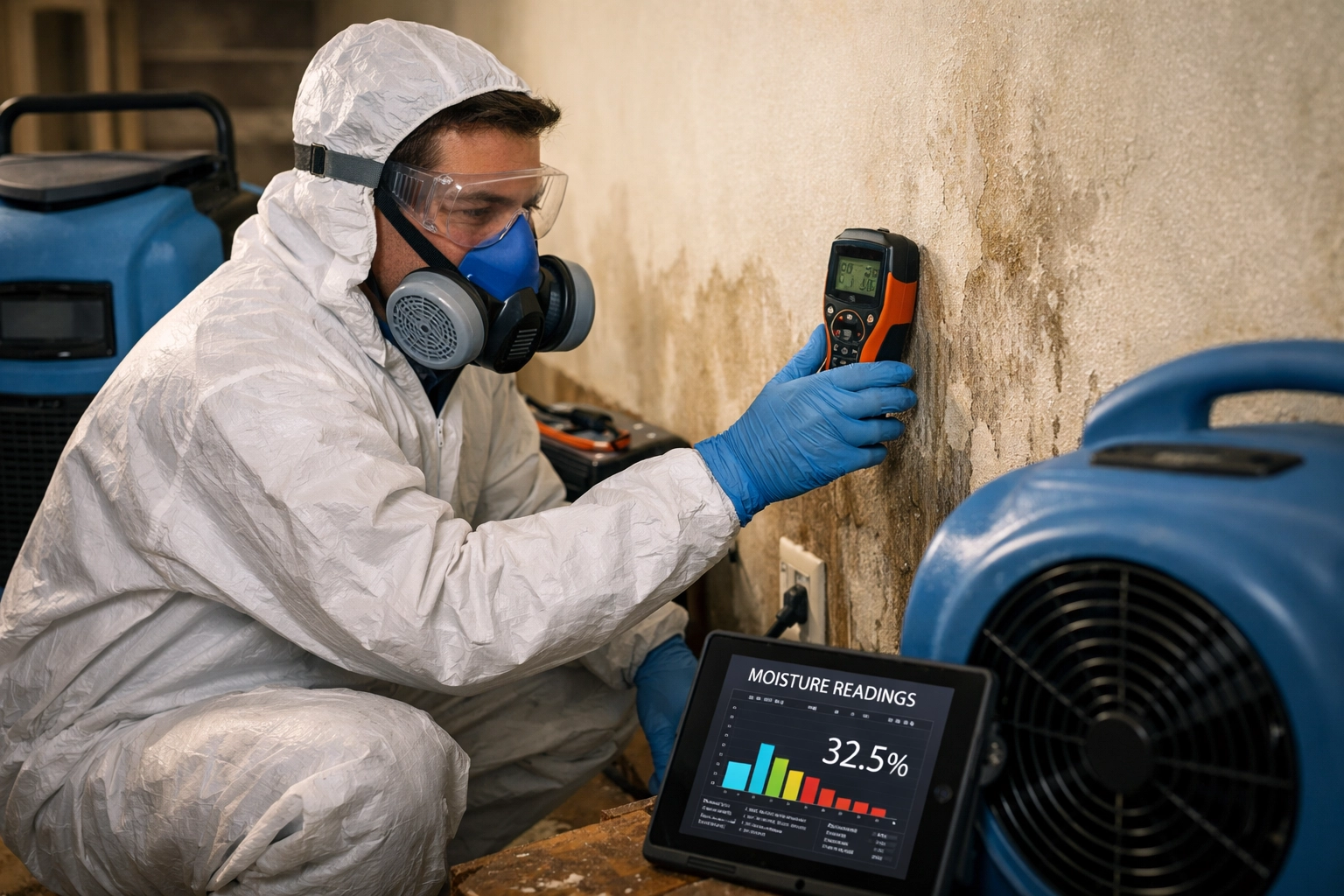
The Fix: Get a thorough inspection using professional tools like moisture meters and infrared cameras. These gadgets can spot water intrusion that's completely invisible to the naked eye. This is especially crucial if you have an older home where water can hide in all sorts of concealed spaces. Don't guess, test.
Picture this: You clean up all the water damage, dry everything out, pat yourself on the back… and then three weeks later, it happens again.
Why? Because you never fixed whatever caused the water damage in the first place. Maybe it's a leaky roof, a faulty appliance, or pipes that are basically held together with hope and duct tape.
The Fix: Before you even think about restoration, identify and repair the source of the water intrusion. Get a contractor to inspect your roof, check your appliances, and make sure your plumbing isn't one flush away from disaster. Fixing the root cause saves you from living in a never-ending cycle of water damage and cleanup bills.
Look, we love a good DIY project as much as the next person. But water damage restoration isn't the time to channel your inner home improvement guru.
DIY restoration almost always leads to incomplete work, missed hidden damage, and violations of local safety regulations. Plus, most homeowners simply don't have the training to spot the early warning signs of serious damage or execute proper mold remediation techniques.
The Fix: Call in the professionals. Yes, it costs money upfront, but it saves you a fortune in the long run. Professional water damage restoration services have the expertise, equipment, and experience to assess the full scope of damage and prevent future problems. They know what to look for, how to dry properly, and how to make sure your home is actually safe: not just "looks okay."
So you've got some fans running and maybe cracked a window. Job done, right? Not even close.
Basic fans and open windows can't handle moisture trapped in walls, under flooring, or in other hidden areas. Plus, if you use too much heat or try to speed-dry everything, you'll end up warping wood and actually accelerating mold growth instead of preventing it.
The Fix: Use proper drying methods with industrial dehumidifiers and strategically placed air movers. But here's the key: you need to do post-restoration moisture testing to verify that everything is actually dry. You can't just eyeball it. Professionals know exactly how to configure equipment for maximum effectiveness without damaging your materials. And they'll test, test, and test again to make sure there's no hidden moisture lurking around.
Here's a shocker: Getting rid of the water is only half the battle. Maybe even less than half.
Floodwater and leaks carry all kinds of nasty stuff: bacteria, contaminants, and odors that stick around long after everything's dry. Just drying out the space doesn't make it safe or healthy to live in. Plus, if you don't properly clean and sanitize, you're leaving the door wide open for mold and bacteria to throw a party in your home.
The Fix: Implement comprehensive sanitization that includes deep cleaning, disinfection of all affected surfaces, air purification, and complete odor elimination. This is another area where professional restoration services shine. They don't just make your home dry: they make it clean, healthy, and safe for your family.
Water damage restoration isn't something you want to wing. The mistakes we've covered here: delaying action, using inadequate equipment, missing hidden damage, ignoring the root cause, going DIY, using poor drying techniques, and skipping proper sanitization: can turn a manageable situation into a full-blown catastrophe.
The good news? Now you know what NOT to do. And if you're currently dealing with water damage, you know exactly what steps to take to fix it the right way.
Remember: Acting fast, using professional equipment, conducting thorough inspections, fixing the source, calling in experts, drying properly, and sanitizing completely are your tickets to successful water damage restoration. Skip any of these steps, and you're basically just putting a Band-Aid on a bullet wound.
Don't let water damage win. Learn from these common mistakes, avoid them like the plague, and protect your home the right way. Your future self (and your wallet) will thank you.
Need help with water damage restoration? Visit My Water Damage Hero to connect with professionals who can handle the job right the first time.
Contact us for quick, trusted restoration.
See how we’ve turned tough situations into success stories.

