
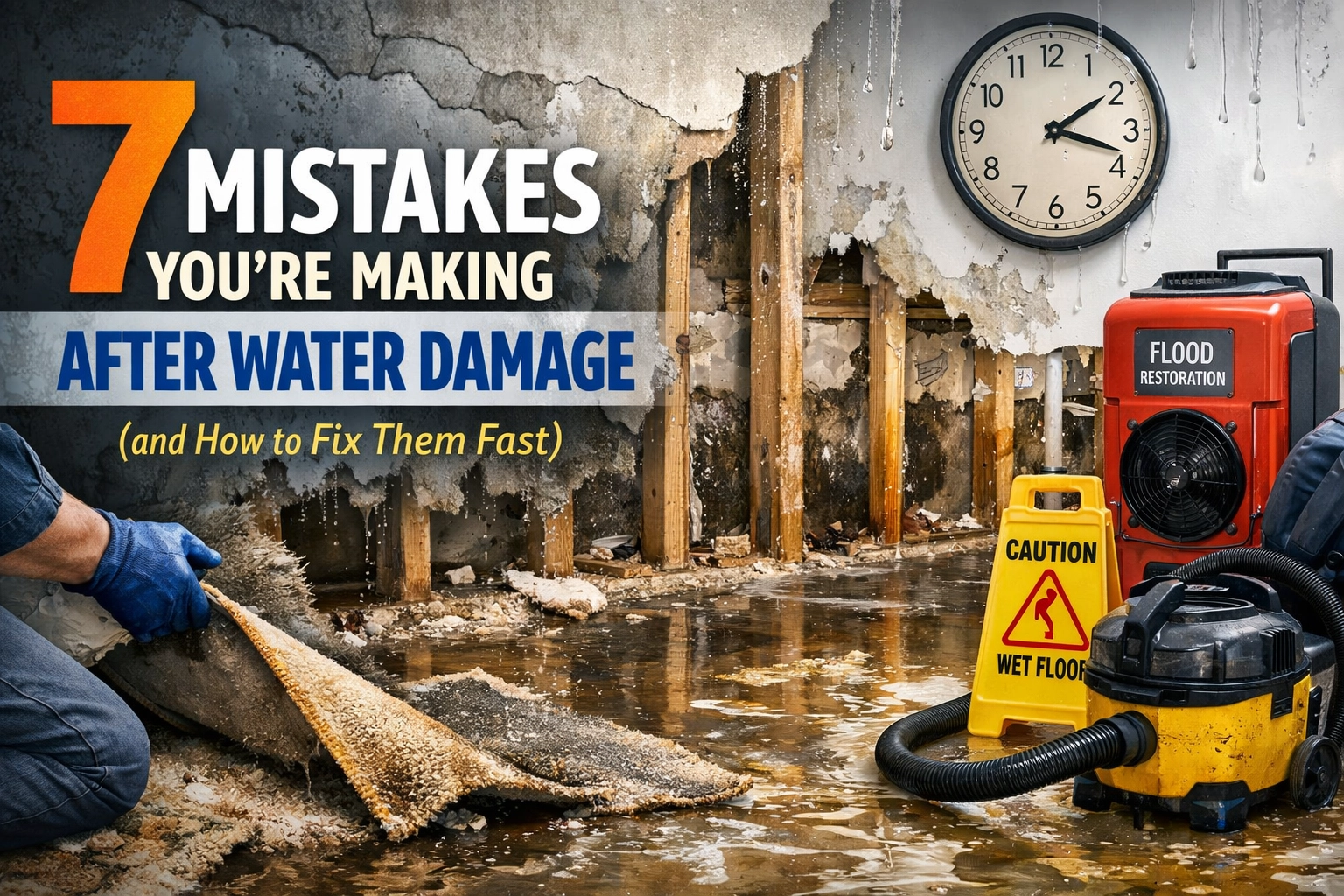
Water damage is a nightmare no homeowner wants to deal with. But here's the thing, what you do in those first few hours after discovering water damage can make the difference between a quick fix and a complete disaster.
Most people panic and either do nothing or do the wrong thing. Both options can cost you thousands of dollars and put your family's health at risk. Let's talk about the seven biggest mistakes homeowners make after water damage, and more importantly, how to avoid them.
This is the big one. You notice water in your basement, think "I'll deal with it tomorrow," and go to bed. Bad idea.
Water damage doesn't take a day off. Every hour you wait, water is seeping deeper into your walls, floors, and insulation. Within 24 to 48 hours, mold starts growing. And once mold sets up shop, you're looking at a whole different (and more expensive) problem.
Here's what makes this worse: your insurance company might not cover damage if they think you waited too long to act. They expect you to mitigate the damage immediately.
The fix: Call a water damage restoration professional the moment you discover the problem. Yes, even if it's 2 AM. Most restoration companies offer 24/7 emergency services for exactly this reason. Quick action prevents mold growth, stops structural damage from getting worse, and keeps your insurance claim valid.
You grab every towel in the house, mop up the water, and call it a day. Problem solved, right? Not even close.
If you don't figure out why the water got there in the first place, you're just setting yourself up for round two. Maybe it's a leaky pipe hiding in your wall, a failing appliance, clogged gutters causing overflow, or a damaged roof letting water sneak in.
The fix: Don't just clean up the mess, find the source. A professional water damage restoration team can identify what caused the flooding and help you get it fixed permanently. Otherwise, you'll be dealing with this same headache next month.
Here's a scary thought: the water you can see is probably only part of the problem.
Water is sneaky. It travels behind walls, under flooring, and into insulation where you can't spot it with a quick visual check. That hidden moisture keeps working its magic, rotting wood, rusting metal, and growing mold in places you won't notice until it's a major health hazard.
Homeowners who skip a proper inspection end up with surprise mold problems months later, or worse, structural damage that could've been prevented.
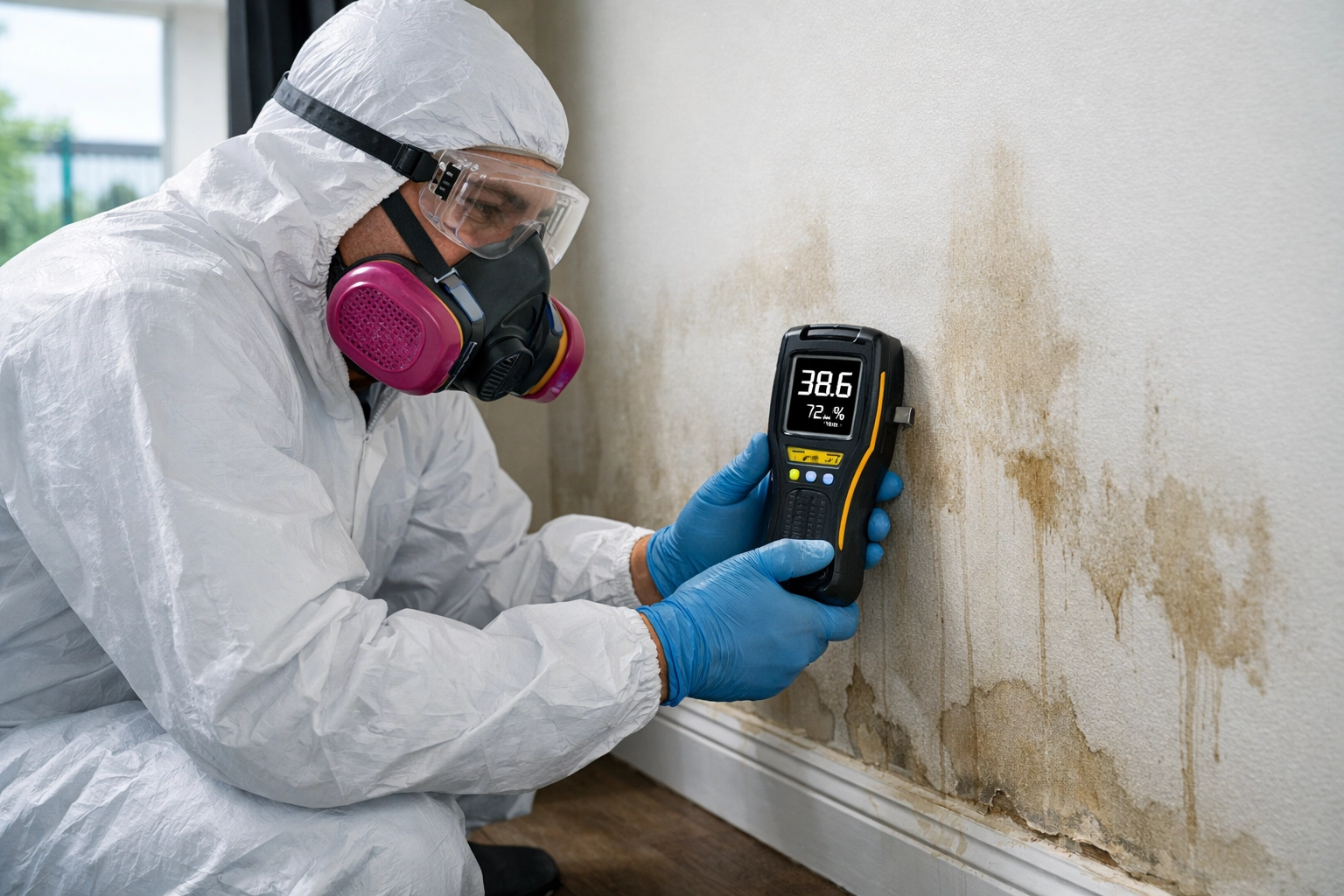
The fix: Get a comprehensive professional inspection. Restoration experts use moisture meters and infrared cameras to detect water you can't see. They'll check behind walls, under floors, and in crawl spaces to make sure every drop gets addressed.
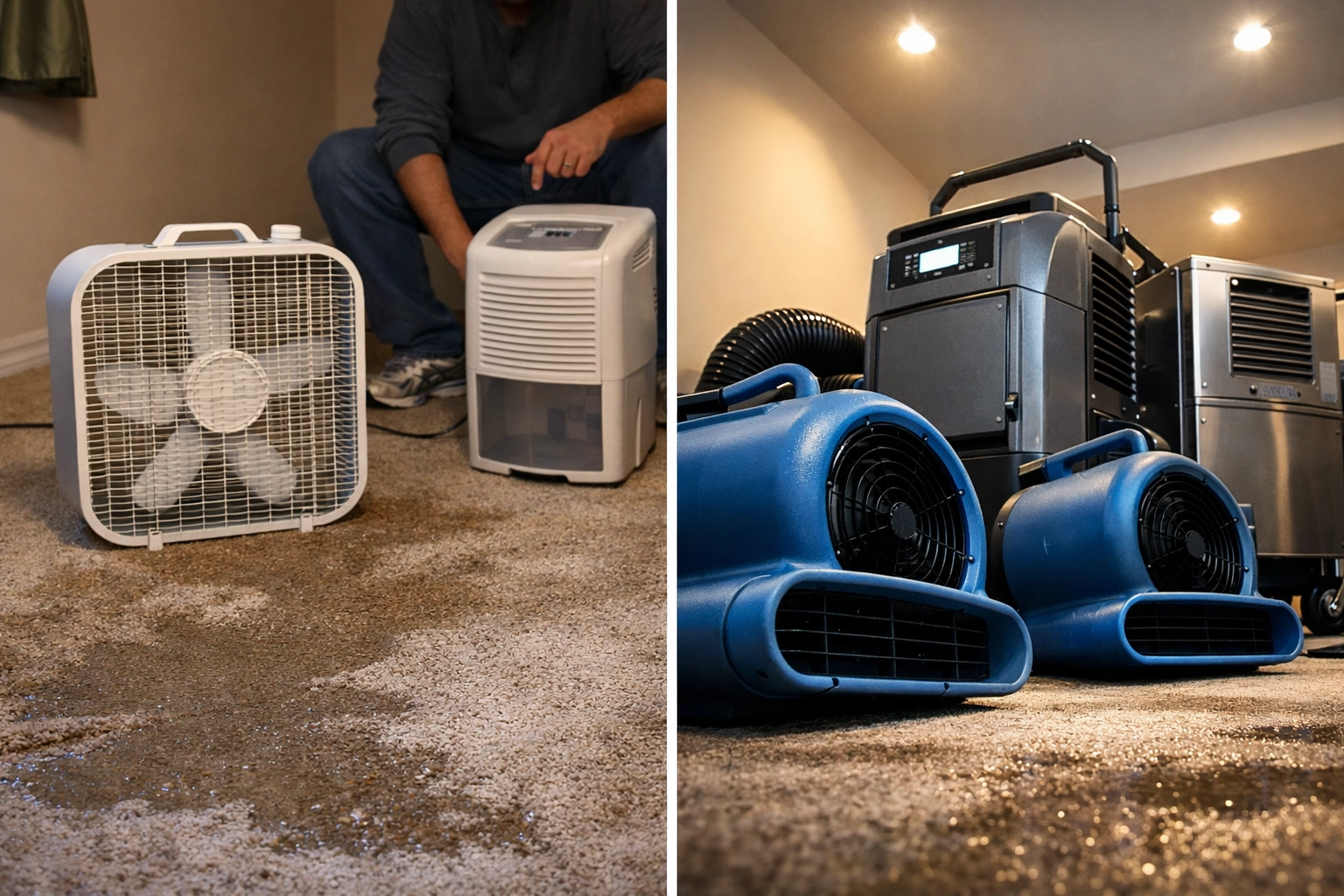
You might think pointing a few fans at the wet spots and cracking some windows will dry everything out. It won't.
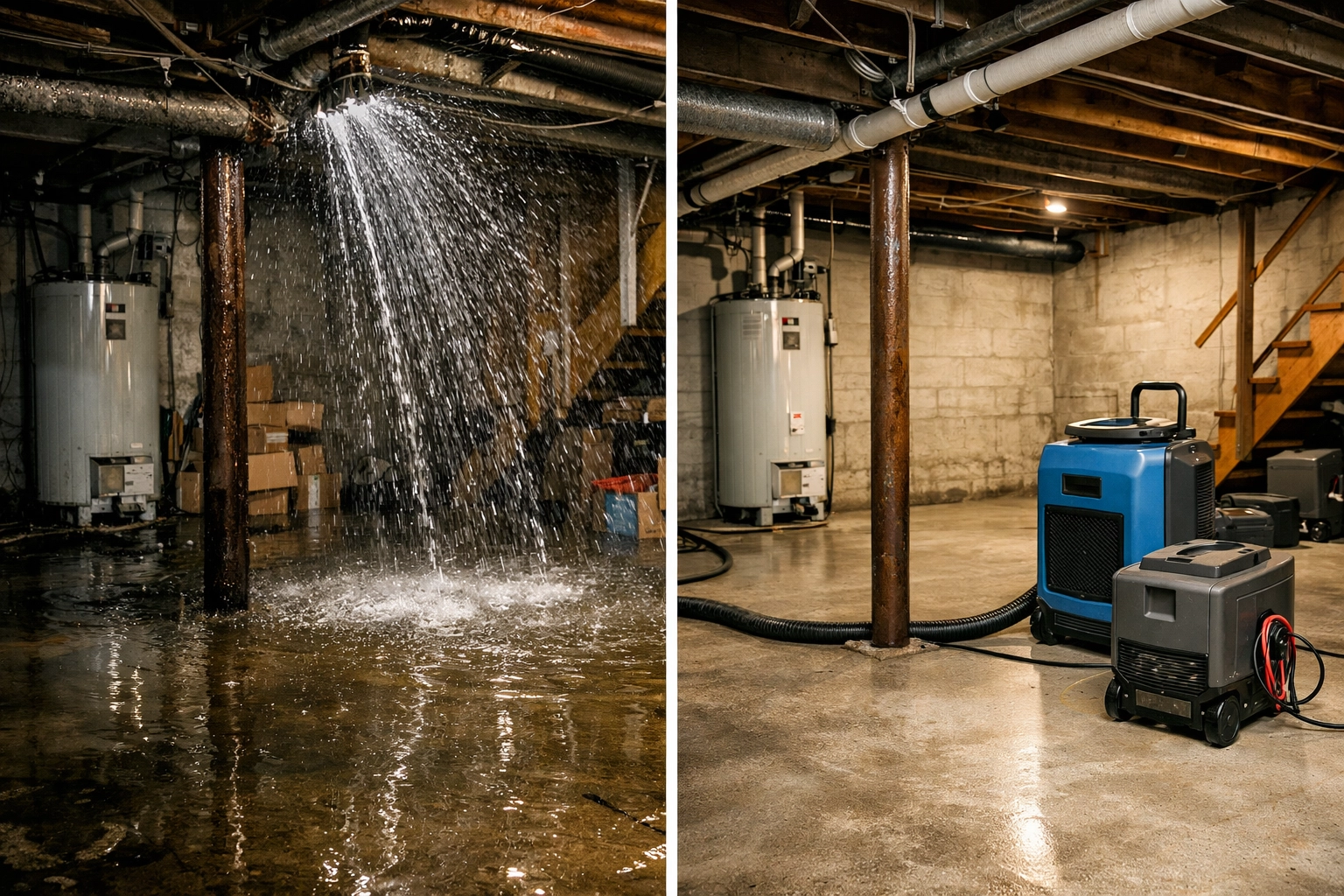
Standard household fans and dehumidifiers aren't designed to handle serious water damage. They can't extract moisture trapped deep inside walls, carpet padding, or insulation. Even worse, using the wrong equipment can actually push water deeper into your floors and walls, making the problem worse.
Think of it like trying to drain a swimming pool with a straw. Sure, technically you're removing water, but you'll be there for about three years.
The fix: Professional water damage restoration companies use industrial-grade equipment, powerful air movers, commercial dehumidifiers, and specialized extraction tools that actually get the job done. These machines are designed specifically to pull moisture from materials that regular fans can't touch.
Mold is the silent consequence of water damage. You can't always see it, but if there's been moisture in your home for more than a day or two, there's a good chance mold is starting to grow.
Mold loves damp, dark places. It'll grow behind walls, under carpets, and in air ducts where you'll never spot it during a casual inspection. By the time you notice that musty smell or see visible mold, you've already got a significant problem.
And let's be clear, mold isn't just gross. It's a health hazard, especially for kids, elderly family members, or anyone with respiratory issues.
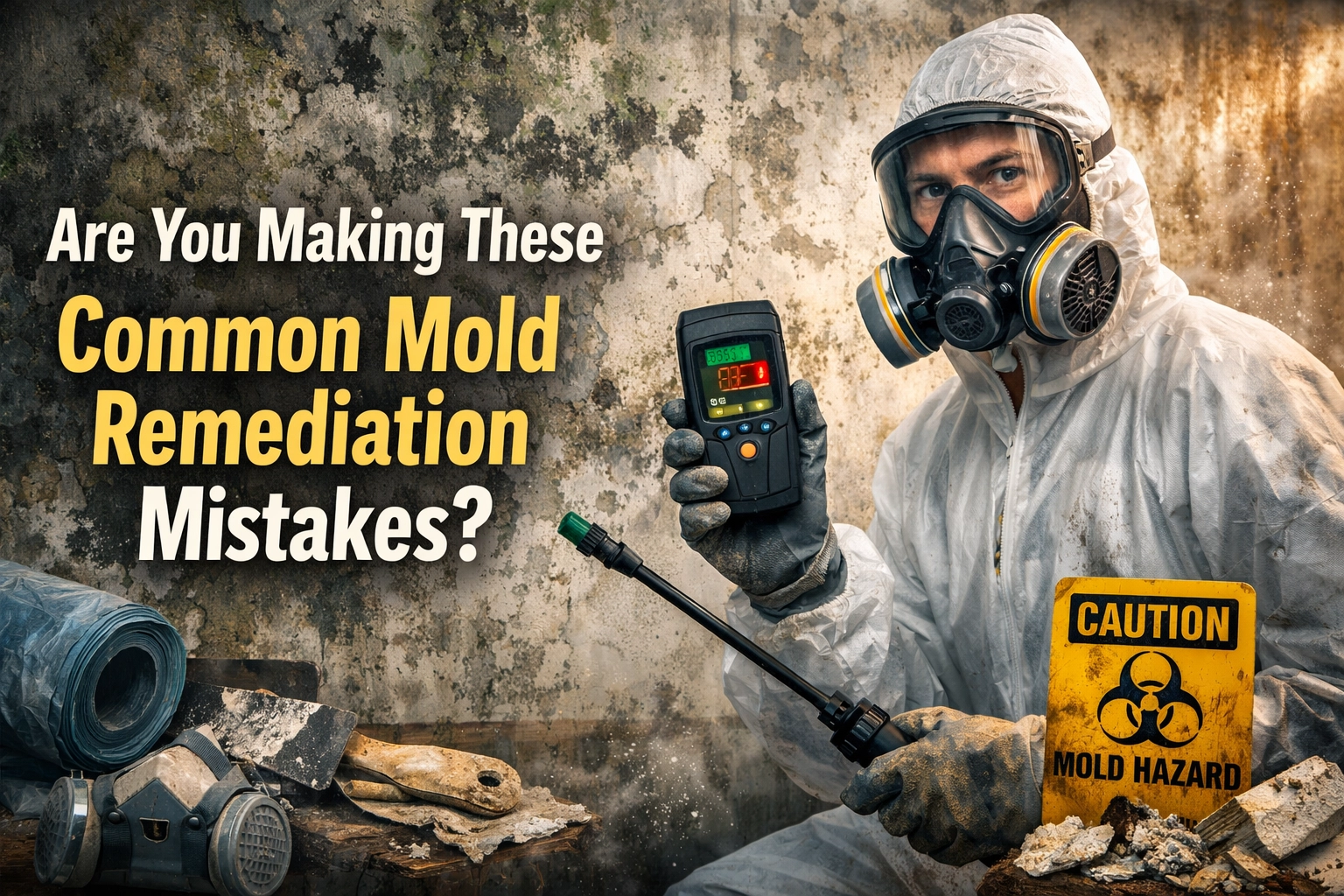
The fix: Always include mold inspection and remediation as part of your water damage restoration. Professionals can detect mold growth in hidden areas and safely remove it before it becomes a bigger issue. Don't wait for symptoms to appear, be proactive.
Look, we get it. Hiring professionals costs money, and you're thinking you can handle this yourself with some YouTube tutorials and elbow grease.
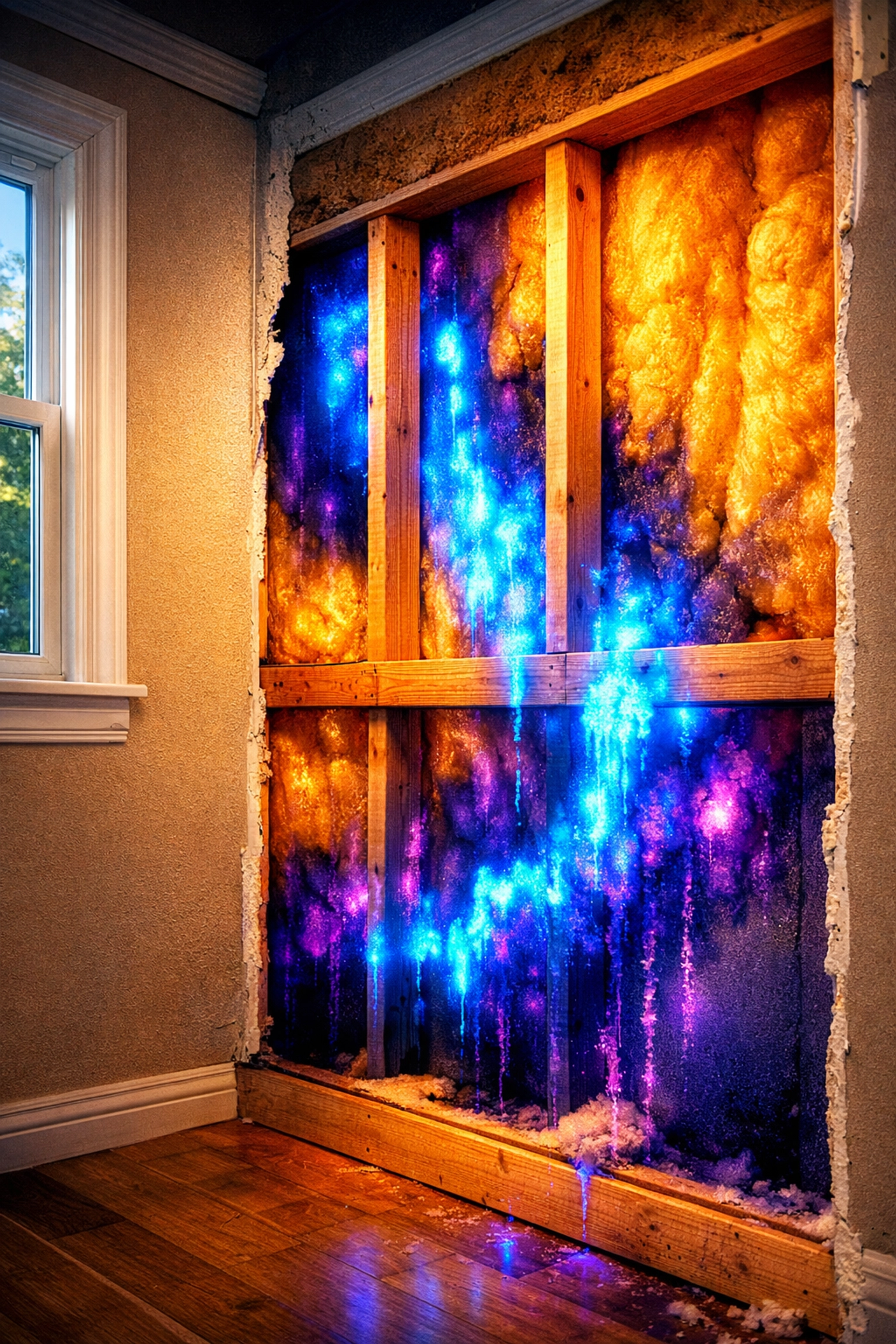
But water damage restoration isn't like painting a room or fixing a leaky faucet. There's hidden damage to find, contamination risks to manage, structural issues to assess, and specialized equipment required. DIY restoration usually means incomplete drying, missed damage, and potential violations of local building codes.
Plus, if you file an insurance claim, they're going to want documentation from licensed professionals. Your iPhone photos and good intentions won't cut it.
The fix: Call the professionals at My Water Damage Hero. Yes, it costs money upfront, but it saves you thousands in the long run by preventing mold growth, structural damage, and insurance headaches. We have the training, equipment, and expertise to do it right the first time.
Water and electricity don't mix. Neither do water and your health when it comes from contaminated sources.
If water has reached electrical outlets, appliances, or your electrical panel, you're at risk of electrocution. If the water came from outside flooding, sewage backup, or burst pipes carrying waste, you're dealing with hazardous contamination that requires special handling.
Walking into a flooded area without understanding these risks is downright dangerous.
The fix: Turn off power to affected areas immediately. Don't enter flooded spaces without professional guidance. If you suspect contamination (especially from sewage or outside flooding), stay out entirely and let restoration experts handle it. They have the protective equipment and training to work safely in hazardous conditions.
Water damage puts you in a tough spot emotionally. That soggy couch holds memories, and you desperately want to save it. Meanwhile, you're tossing items that professionals could've actually restored.
Some homeowners try to save everything, leaving mold-contaminated items in the home. Others panic and throw out belongings that could've been salvaged with proper drying and cleaning.
The fix: Let restoration professionals assess what can be saved. They have specialized equipment for content restoration: drying chambers, ozone treatment, and professional cleaning methods that can save items you'd assume are total losses. Don't make emotional decisions in the heat of the moment.
Water damage is stressful enough without making mistakes that turn a bad situation into a complete catastrophe. The key is acting fast, calling professionals, and resisting the urge to handle everything yourself.
Remember: every hour counts when it comes to water damage restoration. Mold doesn't wait, structural damage gets worse, and insurance coverage has time limits.
If you're dealing with water damage right now, stop reading and make the call. Future you will thank present you for taking action today.
Contact us for quick, trusted restoration.
See how we’ve turned tough situations into success stories.

