
Look, dealing with water damage is stressful enough without making it worse. But here's the thing, most homeowners make the same mistakes when their basement floods or a pipe bursts. And those mistakes? They can turn a manageable problem into a nightmare that costs thousands of dollars more than it should.
Let's talk about the seven biggest water damage restoration mistakes people make, and more importantly, how you can avoid them.
This is the big one. You discover water in your basement or notice a leak, and you think, "I'll deal with it this weekend" or "Let me just grab some towels first."
Here's what's actually happening while you wait: water is spreading into your walls, soaking into your subfloors, and creating the perfect environment for mold to set up camp. We're talking hours, not days. Water moves fast, and it doesn't care about your schedule.
The fix: Act immediately. Like, right now. Call a professional water damage restoration company as soon as you spot the problem. Every hour you wait is costing you more money and more damage. Think of it like this, you wouldn't wait to treat a cut that's bleeding, right? Same principle.
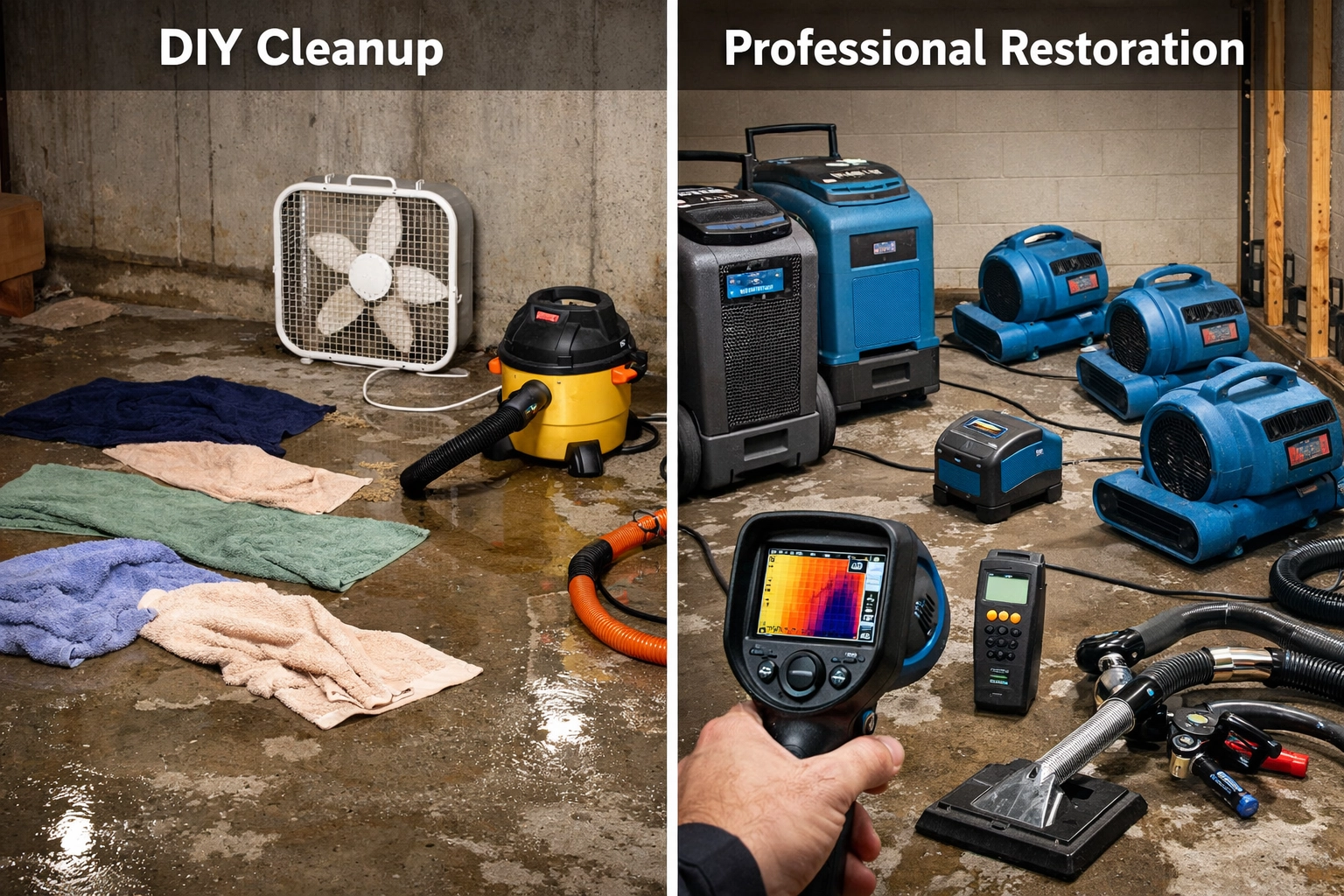
We get it. You've got a fan in the garage and some towels. Maybe even a wet-vac if you're fancy. But here's the truth bomb: your household equipment isn't cutting it.
Those fans might dry the surface, but water has already soaked deep into your drywall, under your flooring, and into places you can't even see. That hidden moisture? It's sitting there, waiting to cause problems like warped wood, ruined subflooring, and, you guessed it, mold growth.
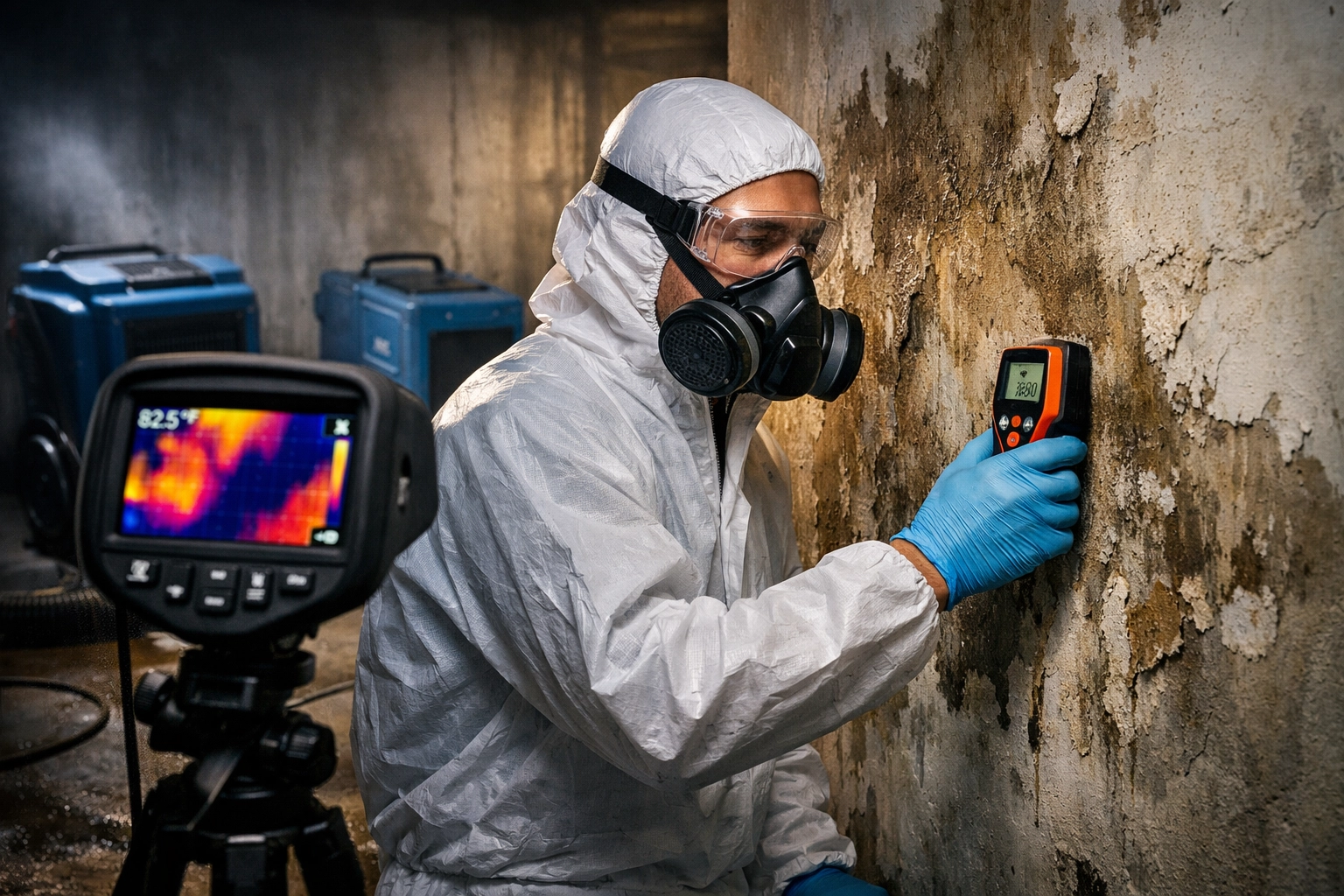
The fix: Industrial-grade equipment exists for a reason. Professional water damage restoration teams use powerful dehumidifiers, commercial air movers, and moisture meters that actually detect where the water is hiding. These aren't available at your local hardware store, and they're essential for getting your home truly dry.
You cleaned up the puddle on your floor. Problem solved, right? Wrong.
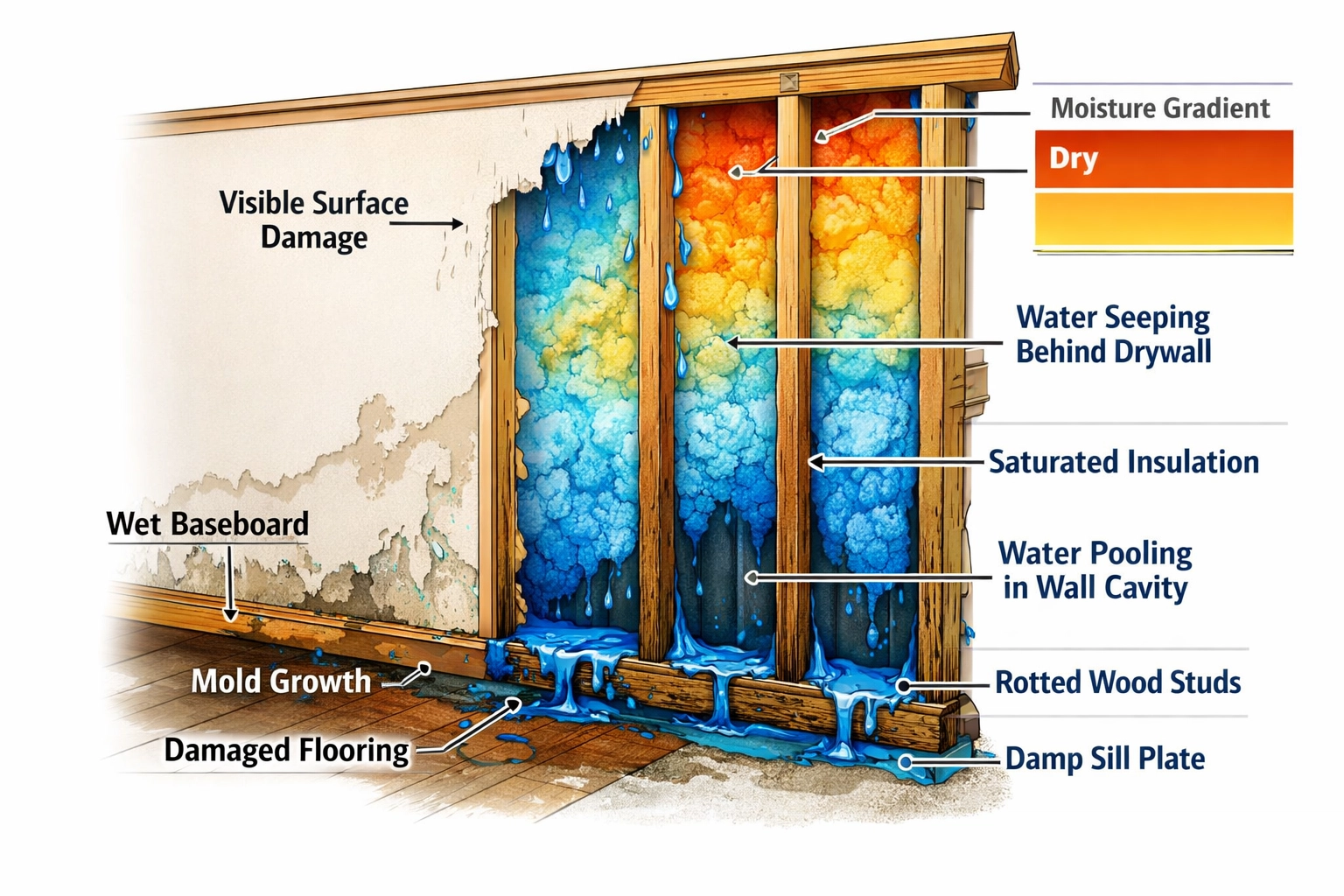
Water is sneaky. It travels behind walls, under baseboards, into ceiling cavities, and through insulation. You might not see it, but it's there, weakening your home's structure and creating mold colonies in the dark. In fact, water can wick up through drywall more than two feet above where you see standing water.
The fix: Don't trust your eyes alone. Professional restoration crews use infrared cameras and moisture meters to find water you can't see. If you had standing water on your floor, assume it got behind your walls. Sometimes that means cutting small inspection holes to check, and yes, that's worth it to avoid bigger problems down the road.
So you removed the water. Great first step! But here's what many people don't realize: just drying things out isn't enough.
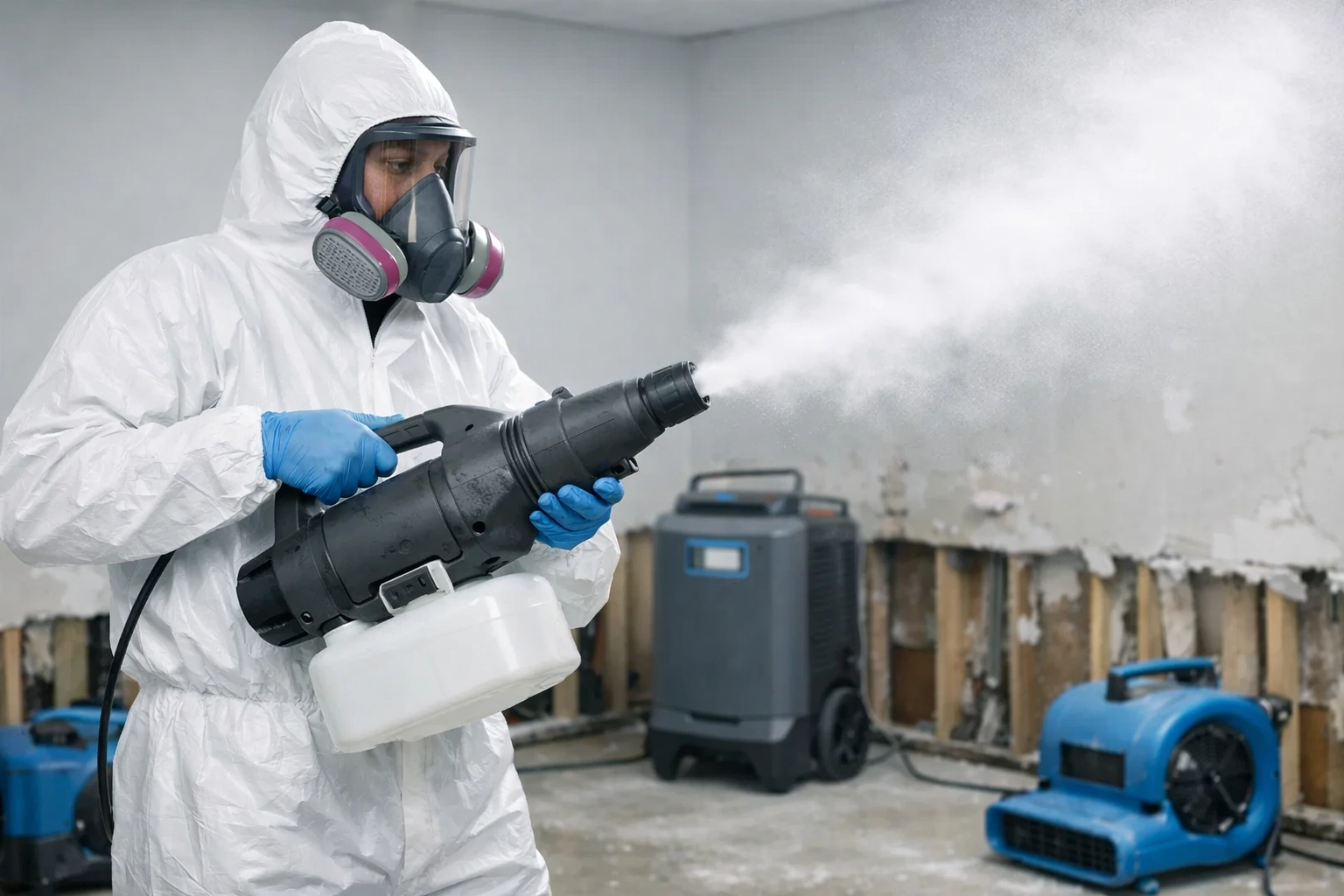
Water: even from a "clean" source like a broken pipe: picks up contaminants as it travels through your home. We're talking bacteria, chemicals from cleaning products, dust, and all sorts of nasty stuff. Floodwater? That's even worse, carrying sewage and toxins that can make you seriously sick.
The fix: After water removal comes cleaning and sanitization. Every surface that got wet needs to be properly disinfected. This isn't just spraying some Lysol and calling it good: it's a thorough cleaning process that eliminates bacteria, removes odors, and makes your home safe again. Professional water damage restoration includes this crucial step.
We admire the enthusiasm, really. But rushing into cleanup without assessing the situation first is dangerous and often makes things worse.
You might have wet electrical wiring behind those walls. The water source could still be active. You might not spot structural damage that makes certain areas unsafe. Plus, most homeowners simply don't have the training to identify all the issues that water damage creates.
The fix: Start with a proper assessment. Before you do anything, figure out where the water came from and shut it off if possible. Check for electrical hazards. Map out the full extent of the damage. This is where calling professionals really pays off: they're trained to spot problems you'd never notice until they become disasters.
Look, we love a good DIY project as much as the next person. But water damage restoration isn't like painting a room or building a deck. It's specialized work that requires specific knowledge, certifications, and equipment.
DIY water damage cleanup usually ends up incomplete. You miss hidden moisture, fail to sanitize properly, or don't fully dry structural materials. Then a few weeks later, you're dealing with mold remediation on top of the original problem. Now you're paying for two problems instead of one.
The fix: Here's when DIY might be okay: if you know the water source, it came from a clean source (like a supply line), the damage happened all at once, water didn't get behind walls or ceilings, and it was present for less than 24 hours. If any of those conditions aren't met, call the pros. They have the training and tools to do it right the first time.
This mistake is more common than you'd think. You run fans for a few days, everything feels dry to the touch, and you figure you're done. Mission accomplished!
Except hidden moisture is still there. And within 48 hours, mold starts growing in those damp spots you couldn't feel. Before you know it, you're looking at a mold problem that requires professional mold remediation.
The fix: Use a moisture meter. These devices tell you the actual moisture content in your materials, not just how they feel. Keep drying until the readings are normal, which often means continuing well after surfaces feel dry. Professional restoration teams do post-restoration testing to verify everything is completely dry before wrapping up the job.
Water damage restoration isn't something to take lightly or try to handle with whatever's in your garage. The mistakes we've covered here: waiting too long, using inadequate equipment, missing hidden damage, skipping sanitization, rushing the assessment, going full DIY, and stopping before complete dryness: can all lead to bigger problems and bigger bills down the road.
The good news? Now you know what to avoid. When water damage strikes, act fast, call professionals who know what they're doing, and make sure the job is done completely. Your home (and your wallet) will thank you.
If you're dealing with water damage right now, don't wait another minute. Get professional help and do it right. Visit My Water Damage Hero to connect with experts who can handle your water damage restoration properly: the first time.
Remember: water damage restoration is about more than just drying things out. It's about protecting your home's structure, preventing mold growth, and keeping your family safe. Don't learn these lessons the hard way.
Contact us for quick, trusted restoration.
See how we’ve turned tough situations into success stories.

