
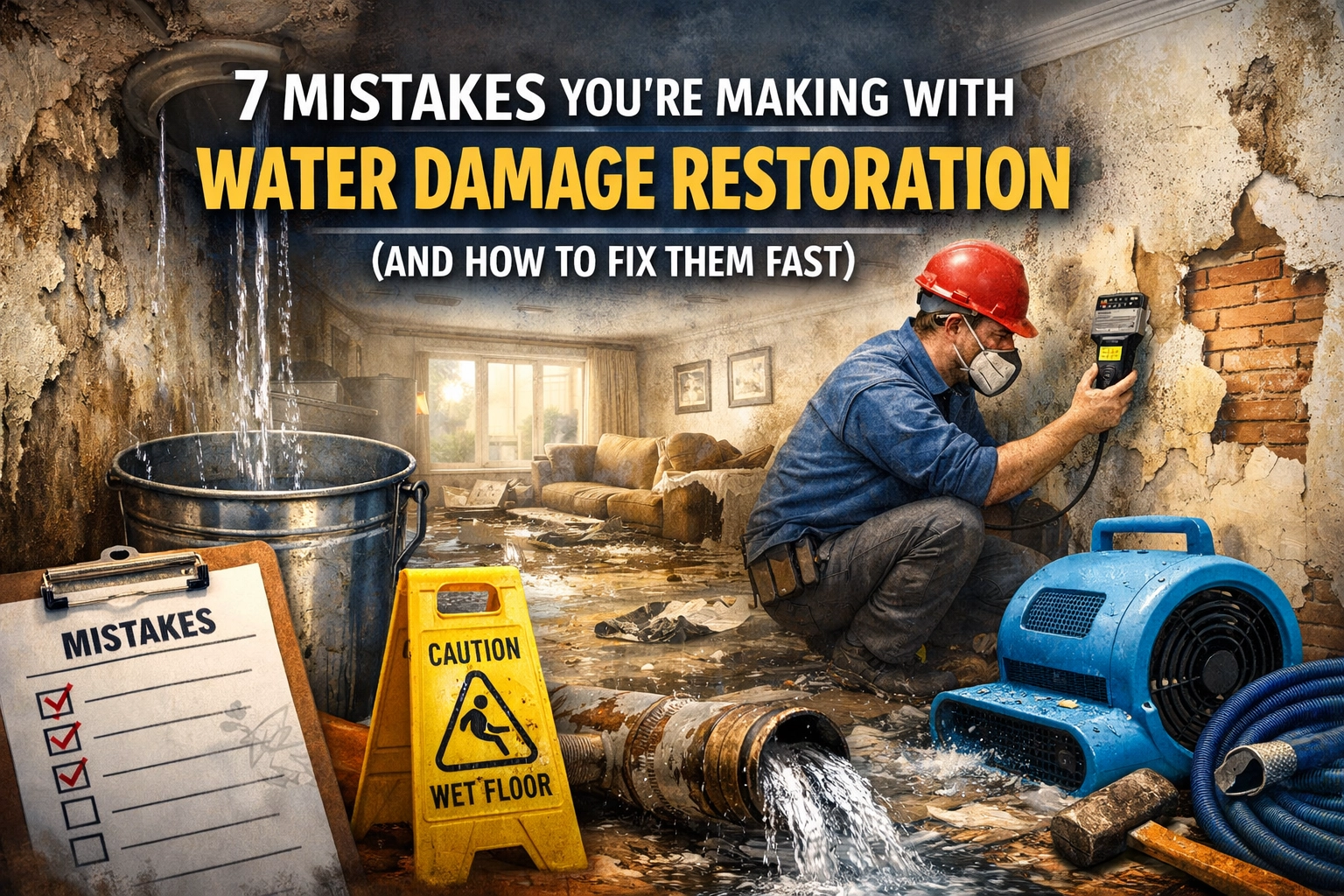
Water damage is one of those things that can go from "Ugh, what a mess" to "Oh no, how much is this gonna cost?" real quick. Whether you're dealing with a burst pipe, a leaky roof, or a flooded basement, how you handle water damage restoration in the first 24-48 hours makes all the difference.
Here's the thing: most homeowners mean well but end up making mistakes that turn a manageable water damage situation into a full-blown disaster involving mold remediation, structural repairs, and a whole lot of regret. Let's talk about the seven biggest water damage restoration mistakes people make: and how you can avoid them.
This is the big one. We get it: you're hoping the water will just dry on its own, or you're trying to figure out if your insurance will cover it, or maybe you're just overwhelmed and don't know where to start.
The problem: Mold can start growing within 24 to 48 hours of water exposure. The longer water sits in your home, the deeper it seeps into your floors, walls, and furniture. What started as a surface-level problem becomes structural damage that requires serious repairs.
The fix: As soon as you spot water damage, take action. Call a professional water damage restoration company immediately. The faster you respond, the less damage you'll have to deal with: and the lower your repair costs will be. Seriously, those first few hours matter more than you think.
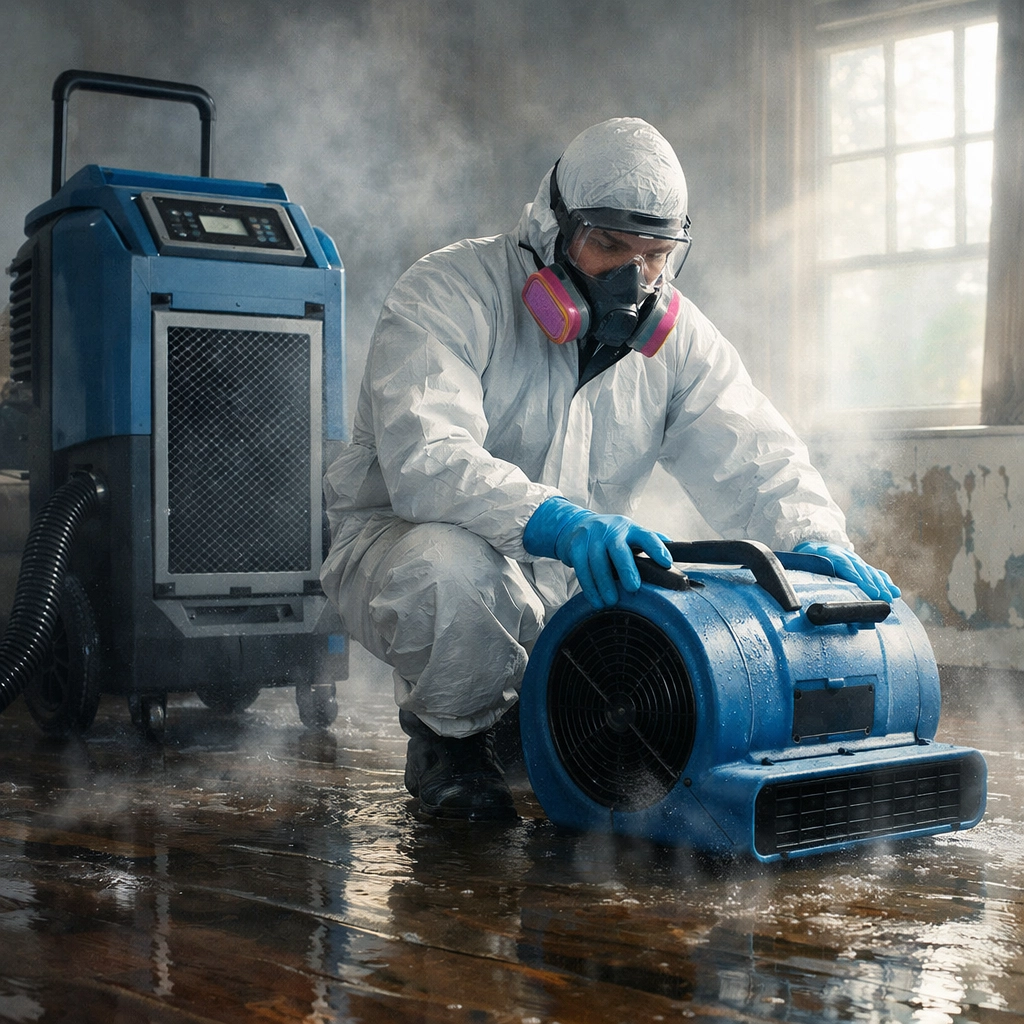
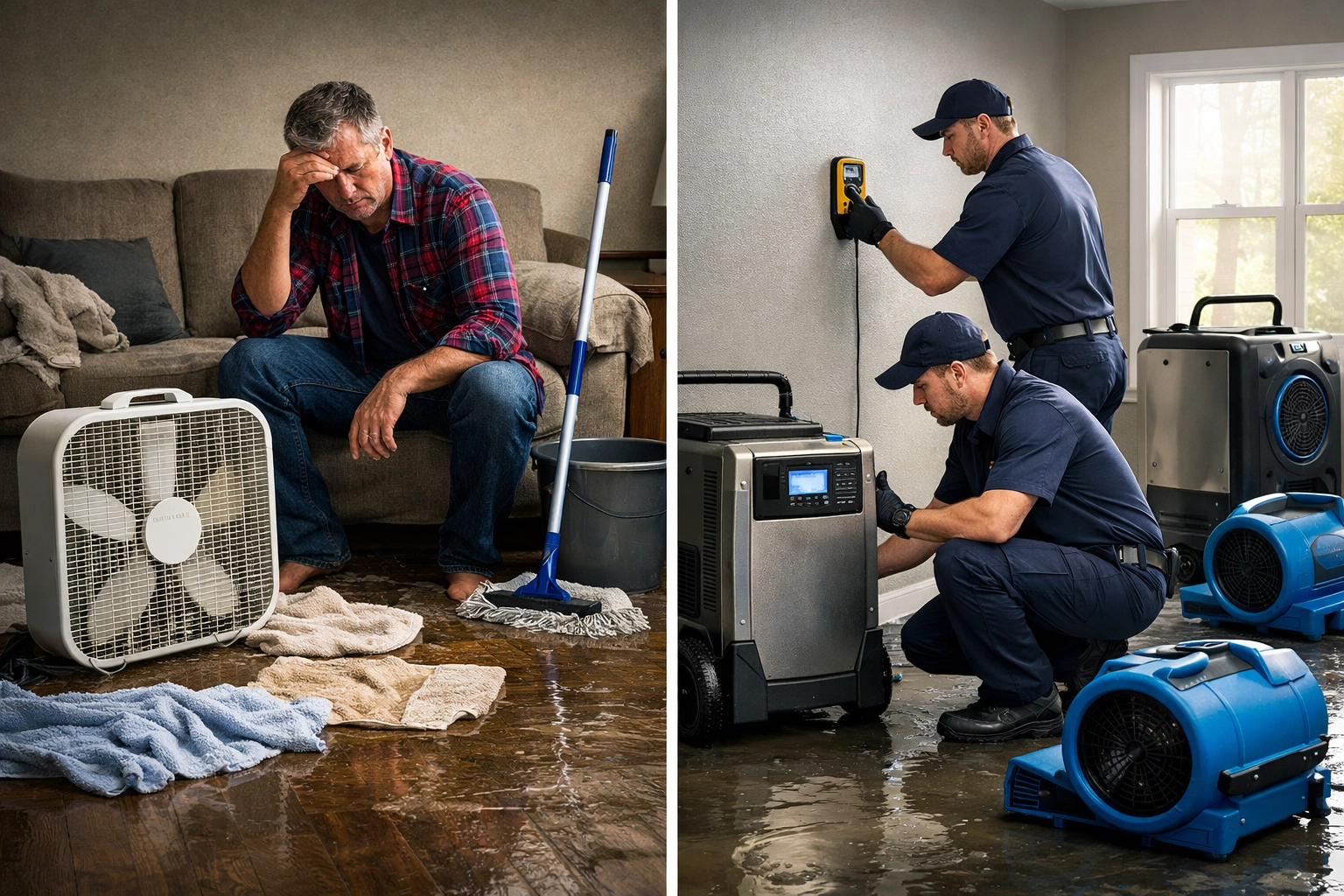
Grab a bunch of towels, set up some box fans, maybe pull out your household vacuum: problem solved, right? Not quite.
The problem: Household equipment just isn't designed for serious water damage restoration. Those towels and fans might get the surface dry, but moisture stays trapped deep in your carpet padding, subfloors, drywall, and insulation. That hidden moisture is a ticking time bomb for mold growth and musty odors.
The fix: Professional restoration companies use industrial-grade dehumidifiers, commercial air movers, and moisture meters to track down and eliminate every bit of water: even the stuff you can't see. This equipment is specifically designed for water extraction and moisture removal, and it works way faster and more thoroughly than anything you've got in your garage.
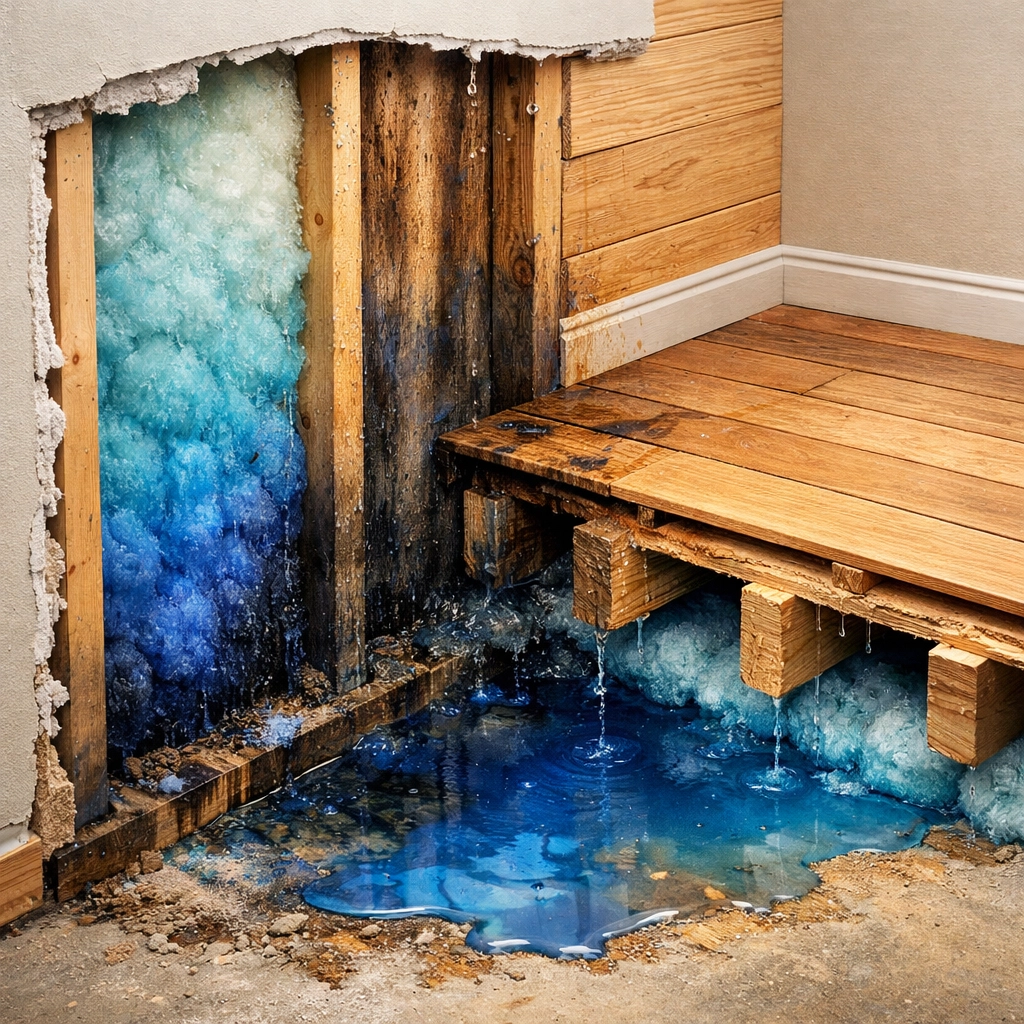
Water is sneaky. It doesn't just sit on your kitchen floor: it runs behind your walls, under your flooring, into your insulation, and anywhere else gravity takes it.
The problem: You might clean up the visible water and think you're done, but meanwhile, water is soaking into hidden areas where it's quietly causing rot, weakening your home's structure, and creating the perfect environment for mold remediation needs down the line.
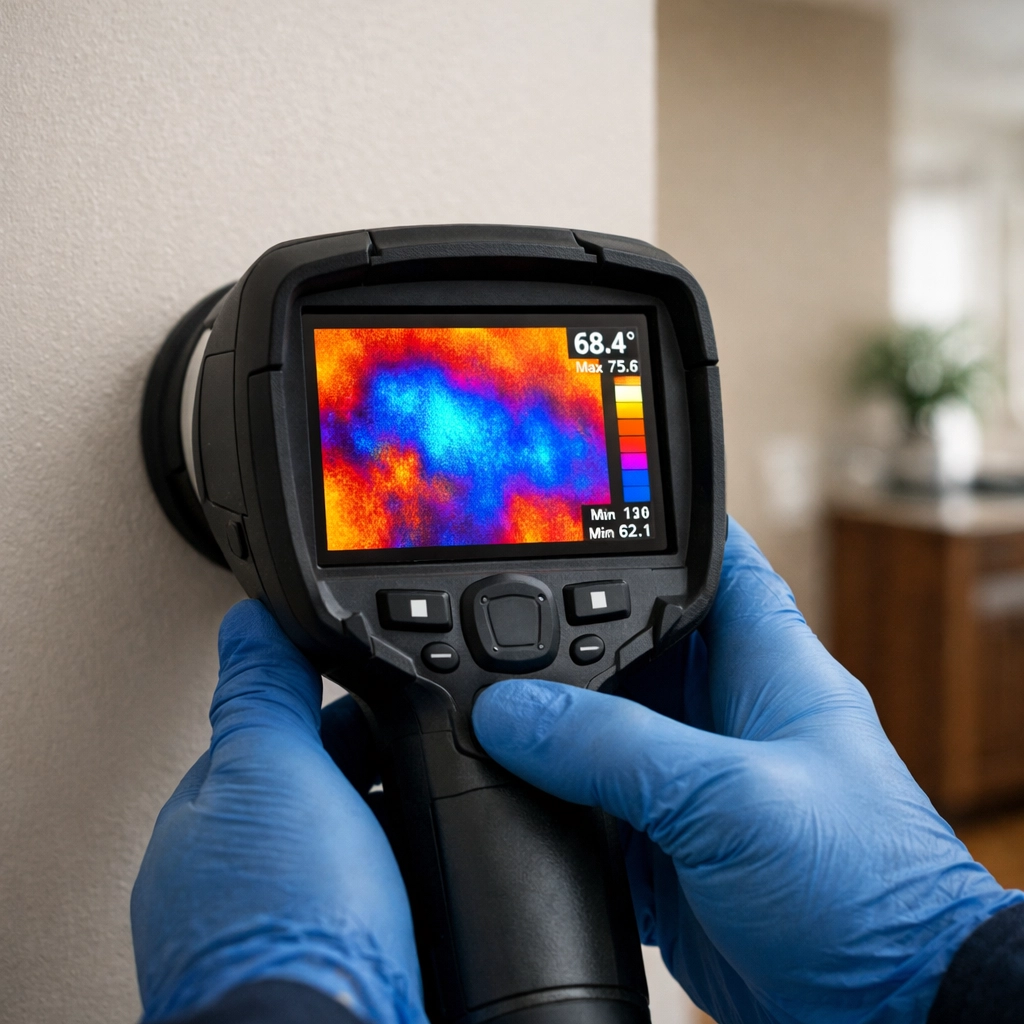
The fix: Professionals use moisture meters and infrared cameras during water damage restoration to detect moisture in places you'd never think to check. This technology finds hidden water pockets before they become serious (and expensive) problems. Don't skip the inspection: it's one of the most important steps in the entire process.
So you've mopped up the water from that burst pipe. Great! But did you actually fix the pipe? Or that leaky roof? Or whatever caused the flooding in the first place?
The problem: Tons of homeowners focus all their energy on cleaning up the mess but never address why the mess happened. If you don't fix the root cause, you're basically guaranteed to deal with the same water damage again: maybe next week, maybe next month, but it's coming back.
The fix: Before you even start the restoration process, identify and repair the source of the water. Get a plumber to fix that pipe, have a roofer patch that leak, or replace that faulty appliance. Water damage restoration is pointless if you're just setting yourself up for round two.
Drying out your home is important, but it's only half the battle when it comes to water damage restoration.
The problem: Water: especially from floods, sewage backups, or outdoor sources: carries bacteria, contaminants, and all sorts of nasty stuff you don't want in your home. Even after everything's dry, those germs and odors stick around, creating health risks for your family.
The fix: Professional water damage restoration includes thorough cleaning and sanitization of all affected surfaces. This means disinfecting floors and walls, treating materials to prevent mold growth, and using air purification to eliminate odors and airborne contaminants. It's not just about getting things dry: it's about making your home clean and safe again.
Look, we love a good DIY project as much as the next person. But water damage restoration is one area where trying to save a few bucks upfront can cost you big time later.
The problem: Without professional equipment and expertise, DIY efforts usually result in incomplete drying, missed damage, and secondary problems like mold remediation needs and structural issues. What you "save" on professional services, you'll spend ten times over fixing the problems your DIY attempt created.
The fix: Only handle water damage yourself if ALL of these things are true: you know exactly where the water came from, it's from a clean source (not sewage or outdoor flooding), the damage happened suddenly (not slowly over time), water didn't get into your walls or ceilings, and water was only present for less than 24 hours. If even one of those doesn't apply, call the pros. Trust us on this one.
This one surprises people. It seems like common sense: crank up the heat, blast those fans, dry everything super fast, right?
The problem: Using direct heat (like hair dryers or space heaters) or placing wet items in direct sunlight can actually warp wood, crack materials, and: here's the kicker: create conditions that accelerate mold growth instead of preventing it. Too much heat, too fast, causes more problems than it solves.
The fix: Water damage restoration requires controlled temperature and carefully managed airflow patterns. Professional restoration companies understand the science behind proper drying: they know exactly how to balance temperature, humidity, and air movement to maximize drying while minimizing the risk of mold growth and material damage.
Here's the bottom line: water damage restoration isn't something you want to mess around with. Between the risk of mold remediation needs, structural damage, and the complexity of properly drying and sanitizing your home, professional help is usually your best bet.
At My Water Damage Hero, we've seen every water damage scenario you can imagine: and we know exactly how to fix them fast. Our team uses professional-grade equipment, conducts thorough inspections, and handles everything from water extraction to final sanitization.
Don't let water damage turn into a bigger disaster. The sooner you get help, the easier (and cheaper) the restoration process will be. Whether you're dealing with a minor leak or major flooding, quick action and professional expertise make all the difference.
Got water damage? Don't wait: reach out to a restoration pro today and save yourself from these common mistakes. Your home (and your wallet) will thank you.
Contact us for quick, trusted restoration.
See how we’ve turned tough situations into success stories.

