
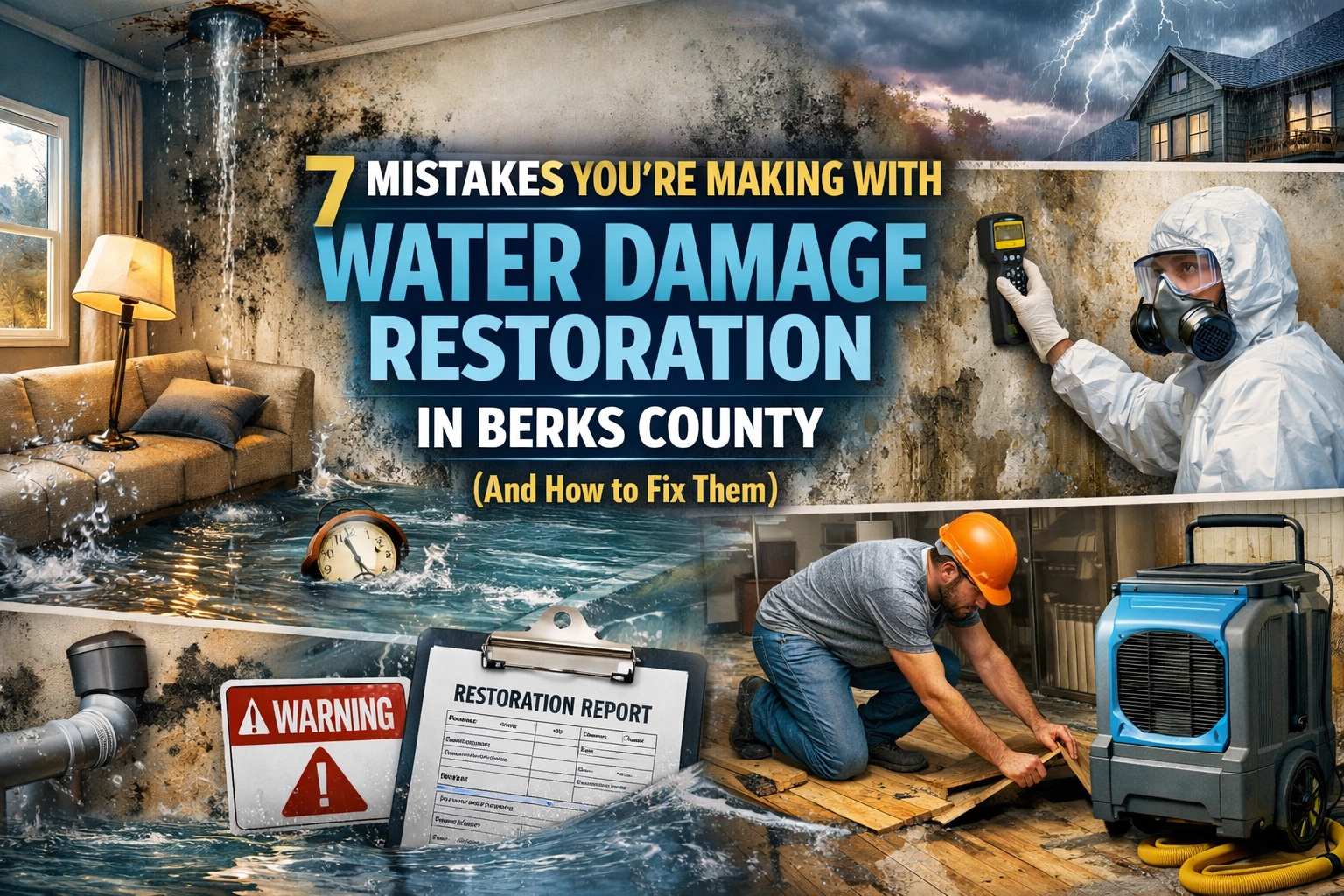
Dealing with water damage in your home is never on anyone’s "fun" list for the weekend. Whether it’s a burst pipe in Reading, a flooded basement in Wyomissing, or a leaky roof after a heavy Pennsylvania storm, the stress can be overwhelming. When you see water where it shouldn’t be, your first instinct is probably to grab every towel in the house and start soaking it up.
But here’s the thing: water damage restoration is a lot more complicated than just drying the floor. In fact, many well-meaning homeowners in Berks County end up making things worse by trying to handle it themselves or skipping crucial steps.
At My Water Damage Hero, we’ve seen it all. We want to help you avoid the common pitfalls that lead to expensive repairs and health hazards. Here are the seven biggest mistakes people make: and, more importantly, how you can fix them.
The "I'll deal with it tomorrow" attitude is the absolute worst enemy of your home. We get it: life is busy, and maybe the leak looks "small." But in the world of water damage, time is literally money. Water doesn't just sit there; it travels. It seeps into your baseboards, gets wicked up by your drywall, and finds its way into the subfloor.
In the humid climate we often experience here in Berks County, even a tiny bit of moisture can turn into a massive headache within hours. If you wait more than 24 hours, you’re no longer just dealing with water; you’re dealing with structural damage and the start of a biological problem.
The Fix: As soon as you spot water, act. Shut off the main water valve if it’s a plumbing issue. Call a professional water damage restoration team immediately. The sooner the water is extracted, the less likely you are to need a full-scale renovation.
A lot of people think mold is something that happens weeks after a flood. We wish that were true. In reality, mold spores can start colonizing in as little as 24 to 48 hours. If you have wet carpet or damp drywall sitting in a warm room, you’ve basically built a five-star hotel for mold.
Homeowners often try to "clean" visible mold with some bleach and a scrub brush. This is a huge mistake. Scrubbing mold actually releases spores into the air, where they can travel through your HVAC system and settle in other parts of the house. This is why mold remediation should always be handled by pros who have the right containment gear.
The Fix: Treat every water incident as a potential mold incident. Check hidden areas and keep the air moving. If you see or smell something musty, don't DIY it. Get a professional mold remediation assessment to ensure your family is breathing clean air.
We love a good DIY project, but drying out a house isn’t one of them. Setting up a couple of household fans and opening the windows might make the surface of your carpet feel dry, but what about the padding underneath? What about the wooden studs inside your walls?
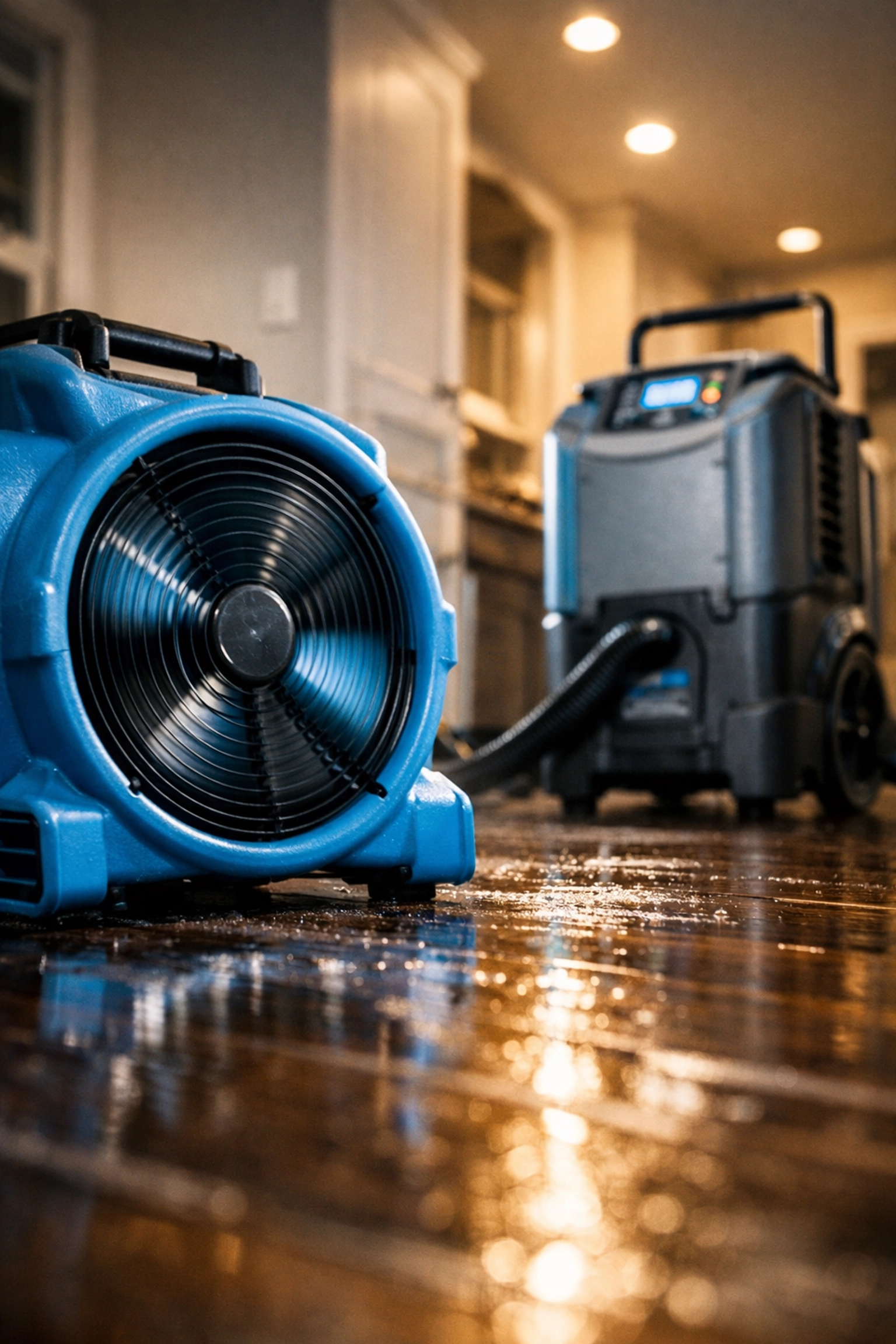
Standard fans don’t have the "oomph" to pull moisture out of dense materials. Professional water damage restoration requires industrial-grade air movers and LGR (Low Grain Refrigerant) dehumidifiers. These machines are designed to pull gallons of water out of the air and the structure itself.
The Fix: Don’t rely on your hardware store fans. Professionals use moisture meters and infrared cameras to find exactly where the water is hiding and use high-powered equipment to ensure the "dry" is deep-down, not just surface-level.
Water is like a ninja; it’s excellent at hiding. You might see a puddle on the kitchen floor, but you don't see the water that ran under the cabinets and is currently rotting the kickplates. You might see a stain on the ceiling, but you don't see the pool of water sitting on top of the insulation in the attic.
If you only clean up what you can see, the "unseen" water will continue to cause damage. This leads to warped hardwood floors, sagging ceilings, and that "old house" smell that never seems to go away.
The Fix: Be a detective. Check behind appliances, inside closets, and under stairs. Better yet, have a restoration expert use thermal imaging. This technology allows us to "see" through walls to find moisture pockets without having to tear your house apart.
When your basement is flooded, your first thought is usually your stuff: your photo albums, your tools, your holiday decorations. But the first thing you should think about is your safety.
Standing water and electricity are a deadly combination. If the water has reached your electrical outlets or your circuit breaker, the entire area could be electrified. Additionally, if the water came from a sewage backup (Category 3 water), it’s filled with bacteria and pathogens that can make you seriously ill.
The Fix: Never walk into standing water until you are 100% sure the power is off. If the water is murky or smells like sewage, stay out. Wear protective gear (boots, gloves, masks) and let the experts handle the "black water" cleanup.
Many homeowners assume that every type of water damage is covered by their standard insurance policy. Unfortunately, that’s not always the case. For example, "gradual" damage (like a pipe that’s been leaking for months) is often denied, while "sudden and accidental" damage (like a pipe bursting) is usually covered.
Furthermore, standard policies often don't include flood insurance (water coming from the ground up) unless you've added a specific rider. Failing to understand your coverage: and failing to document the damage properly: can leave you paying thousands out of pocket.
The Fix: Call your insurance agent before an emergency happens to see what’s covered. When a disaster does strike, take tons of photos and videos before any cleanup starts. This documentation is your best friend when filing a claim for water damage restoration.
Once the water is gone and the walls are dry, many people think the job is done. But water damage often affects your entire home environment. Dust and debris from the restoration process can clog your vents. Lingering moisture can get trapped in your carpets, leading to odors later on.
Neglecting the finishing touches like carpet cleaning and air duct cleaning can lead to poor indoor air quality and secondary damage down the road.
The Fix: Think of restoration as a total home "reset." Once the structural drying is complete, schedule a professional carpet cleaning to remove any remaining sediment. It’s also the perfect time for air duct cleaning to ensure that no mold spores or dust were kicked up into your ventilation system during the repair process.
We aren't just a cleaning company; we’re your neighbors. We know the local building styles, the common plumbing issues in older Berks County homes, and exactly how the local weather affects your property.
Our services go beyond just fixing leaks. We offer comprehensive solutions including:

Mistakes happen, but they don't have to ruin your home. By acting fast, prioritizing safety, and calling in the pros when things get over your head, you can protect your investment and your family’s health.
Got water? Don't wait! Whether it's a small leak or a major flood, My Water Damage Hero is ready to jump into action. We’re here for Berks County 24/7. Give us a call today and let us be the heroes your home deserves!
Contact us for quick, trusted restoration.
See how we’ve turned tough situations into success stories.

