
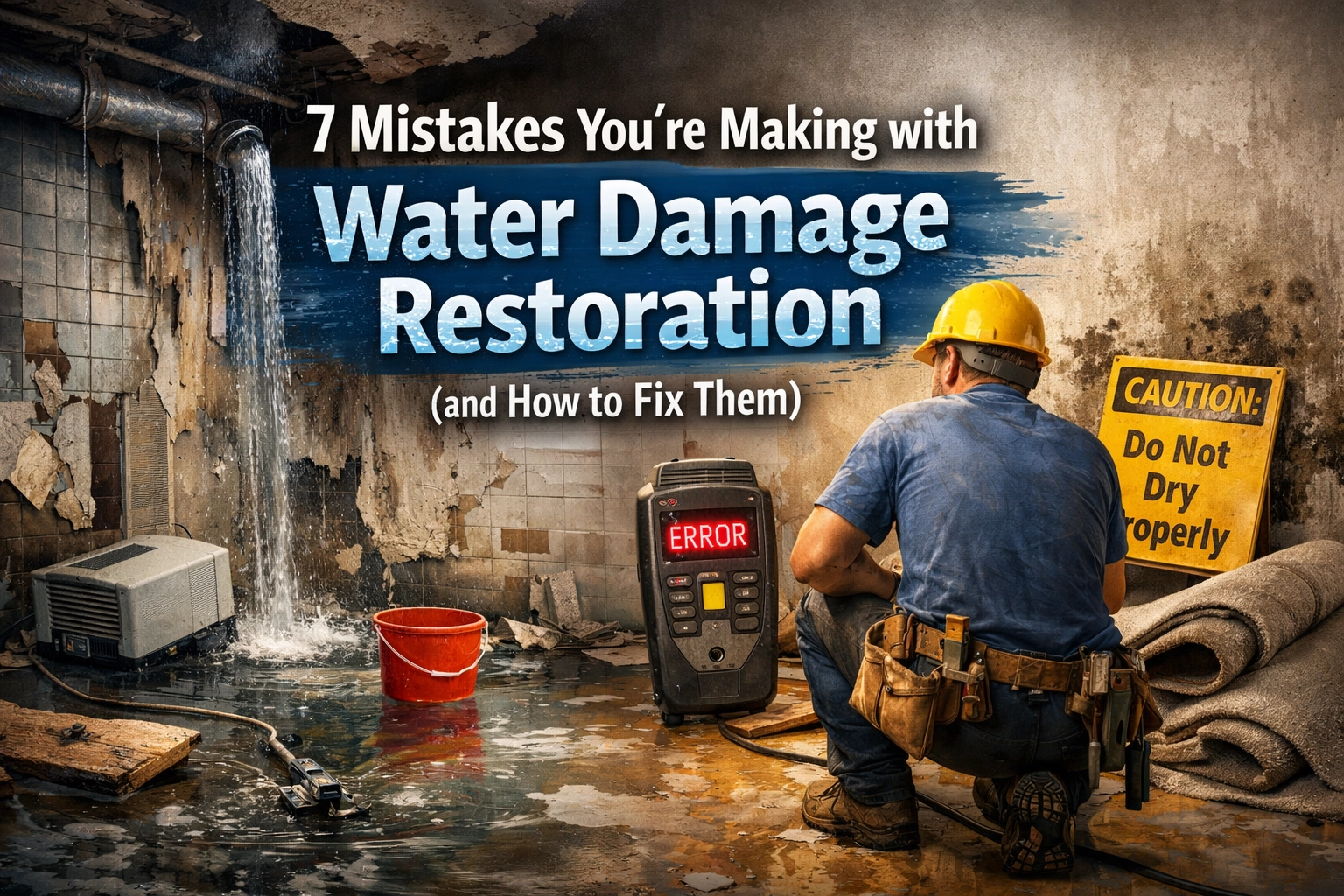
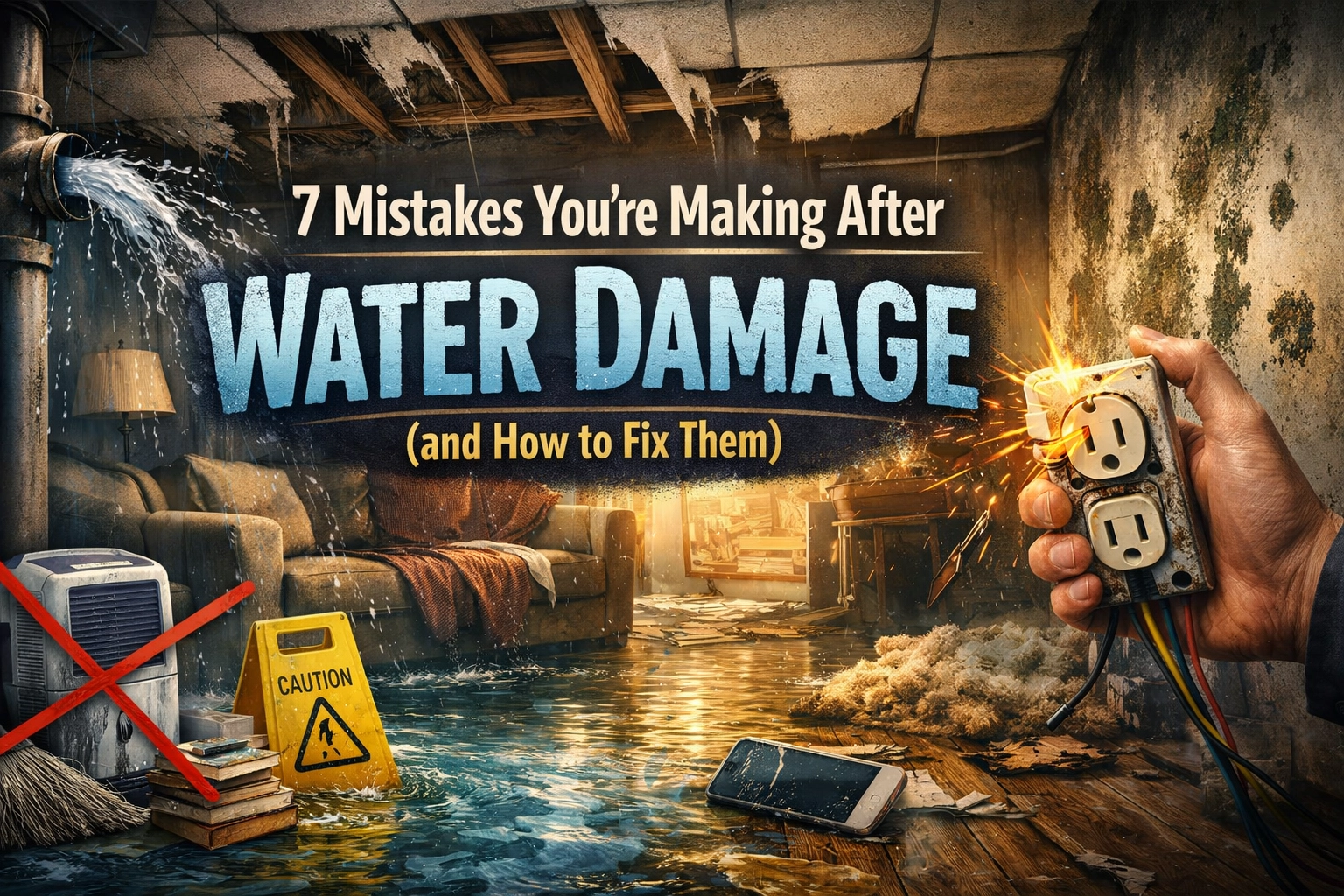
Water damage can turn your home into a nightmare in just a few hours. Whether you're dealing with a burst pipe in Bucks County, basement flooding in Delaware, or storm damage in Chester County, how you respond in those first critical moments makes all the difference. But here's the thing: most homeowners are making mistakes that actually make water damage restoration harder, more expensive, and way more stressful than it needs to be.
If you've ever dealt with water damage, you know that sinking feeling when you see water creeping across your floor. Your first instinct might be to grab towels, turn on fans, and hope for the best. Unfortunately, that DIY approach often creates bigger problems down the road. Let's talk about the seven biggest water damage restoration mistakes people make and: more importantly: how to fix them fast.
The biggest mistake? Thinking you have time to "figure it out" before calling professionals. Spoiler alert: you don't.
Here's what most people don't realize about water damage restoration: mold starts growing within 24 to 48 hours. That's barely two days! And water doesn't just sit on the surface. It's actively seeping into your walls, floors, subflooring, and furniture every single minute you wait.
The Fix: Call a professional water damage restoration company in Delaware or wherever you're located the moment you discover water. Not after you've mopped up. Not after you've tried drying things yourself. Immediately. The faster professionals get to work with industrial-grade water extraction equipment, the less damage you'll face overall. Think of it like this: every hour you wait is money out of your pocket later.
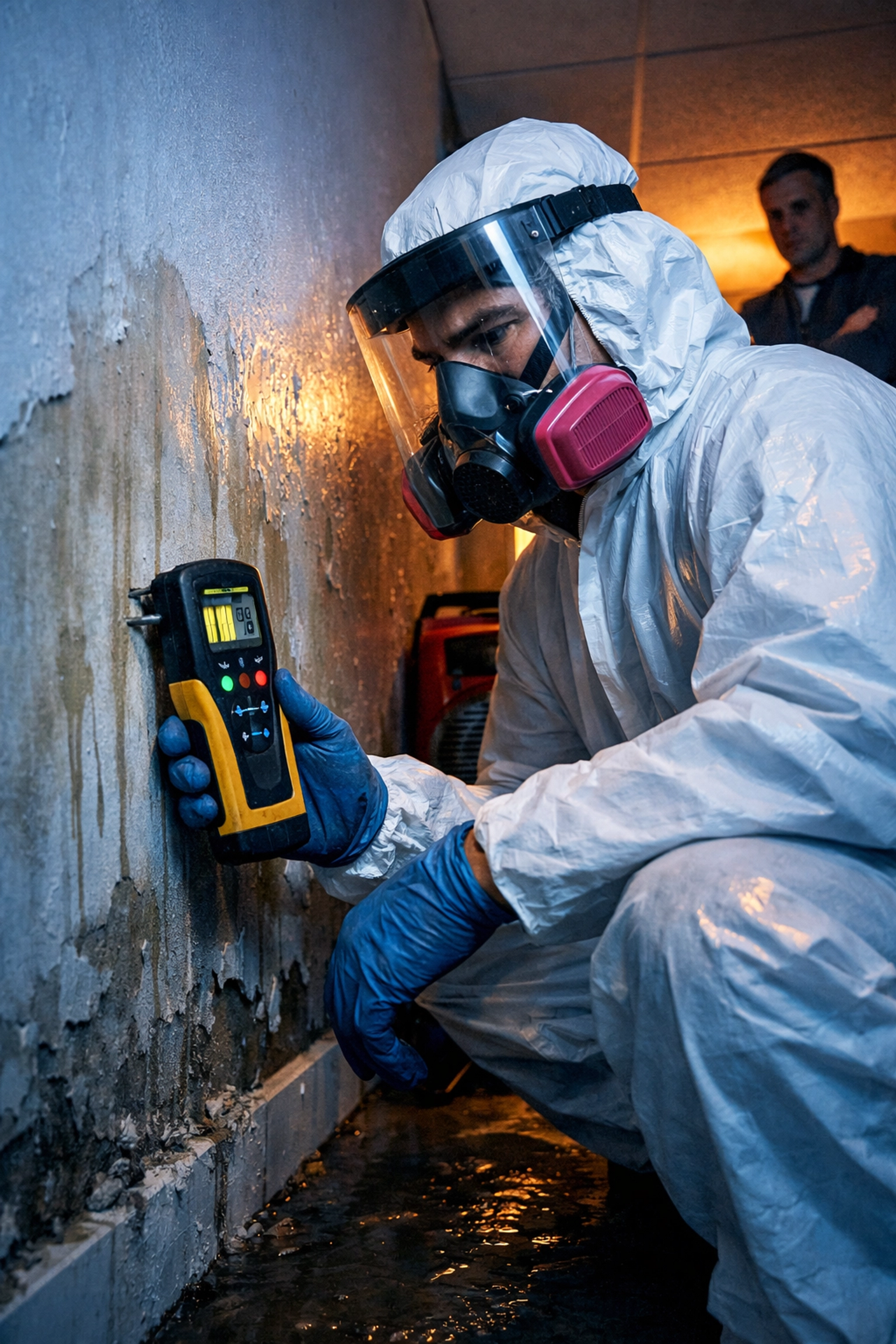
We get it. You see water, so you grab the household fans, a mop, and every towel you own. Makes sense, right? Wrong.
Standard household equipment like fans and towels actually push water deeper into materials like carpet padding, hardwood floors, and drywall. You might think you're drying things out, but moisture is just hiding in places you can't see: behind walls, under floors, inside insulation. That hidden moisture is a ticking time bomb for mold remediation problems later.
The Fix: Professional water damage restoration requires industrial-grade dehumidifiers and air movers specifically designed to extract moisture from deep within building materials. These machines don't just move air around: they literally pull water out of places your Shop-Vac could never reach. Companies offering water damage restoration services in Bucks County use moisture meters and thermal imaging to make sure every drop is accounted for.
You can see the water pooling on your basement floor, so you clean that up and call it a day. Problem solved, right? Not even close.
Water is sneaky. It travels through walls, creeps under baseboards, and settles into crawl spaces you probably haven't looked at in years. That hidden water weakens your home's structure, promotes wood rot, and creates the perfect environment for black mold remediation needs down the line.
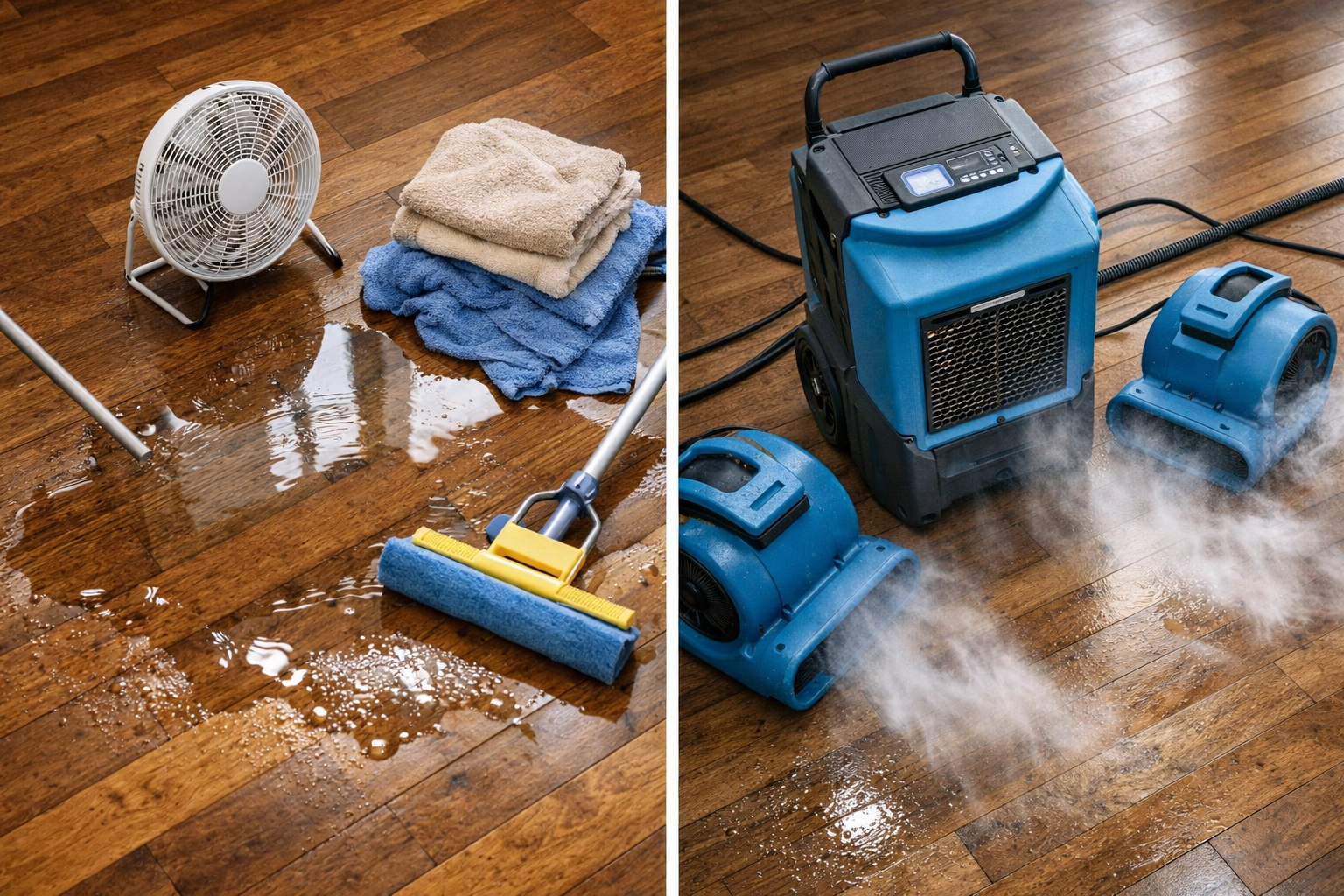
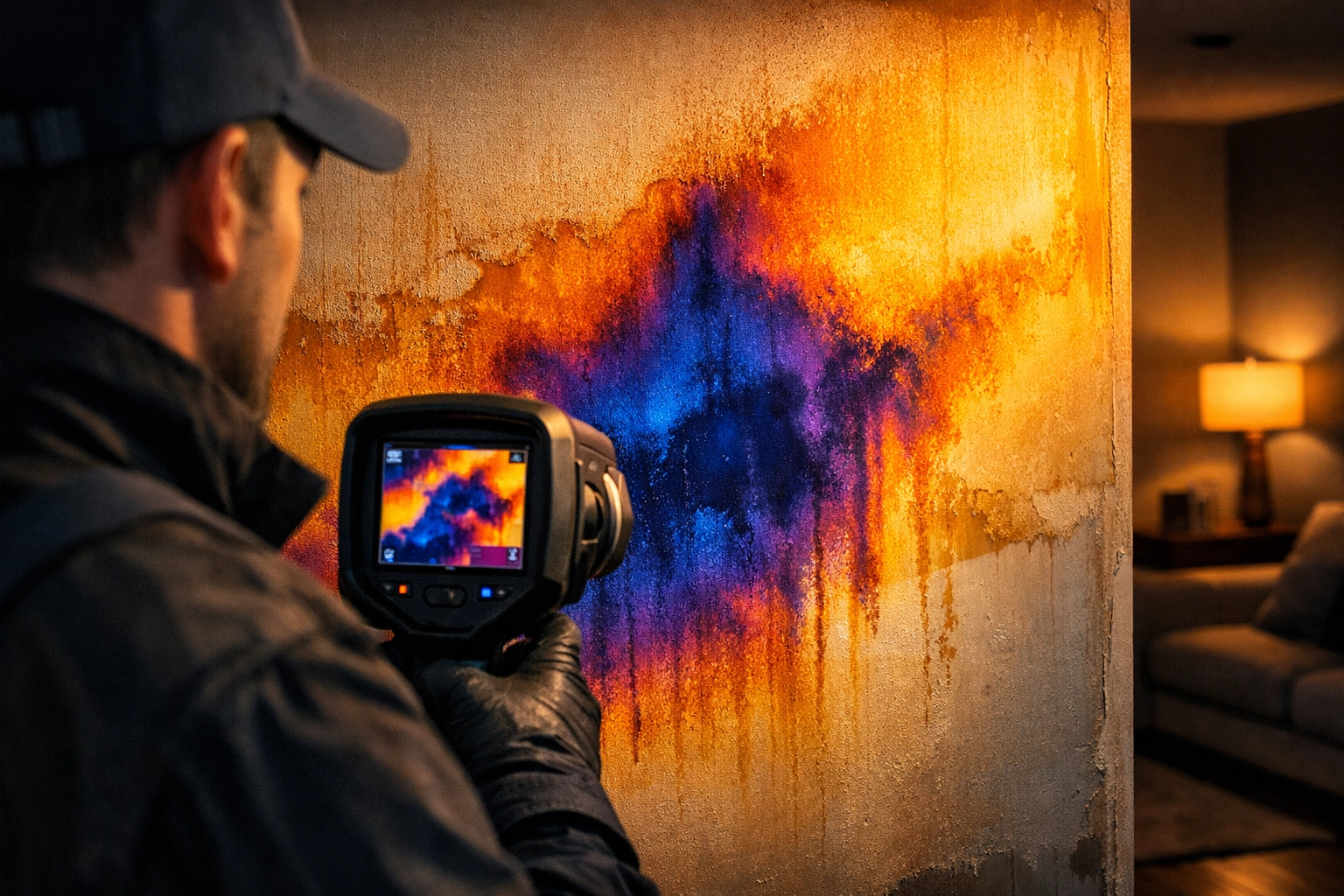
The Fix: Professional water damage restoration companies use specialized tools like moisture meters and infrared cameras to detect water you can't see. This isn't about being paranoid: it's about catching problems before they turn into expensive structural repairs or toxic mold cleanup situations. If you're in Chester County or Montgomery County, don't skip this step. Hidden damage is real damage.
Here's a scenario we see all the time: Someone deals with water damage from a leaking pipe, cleans up the mess, and moves on. Three months later, the same pipe leaks again because no one actually fixed the original problem.
Treating the symptoms without addressing the root cause means you're just delaying the inevitable. Whether it's a roof leak, a faulty appliance connection, or foundation cracks letting groundwater in, that source needs attention now.
The Fix: While you're dealing with water damage restoration, have a contractor or plumber identify and repair the actual source of the water intrusion. If it's storm damage, get that roof patched. If it's a burst pipe, replace the damaged section. This prevents repeated water damage and saves you from needing emergency water removal services again next month.
You extracted the visible water. The carpet looks dry. You're thinking, "Mission accomplished!" But here's the reality: if you're using basic equipment, you probably didn't get it all.
Water soaks deep into carpet padding, drywall, subflooring, and insulation. That leftover moisture creates long-term structural issues and sets the stage for serious mold growth. Incomplete water extraction is one of the main reasons people end up needing professional mold removal services weeks after they thought the water damage was handled.
The Fix: Thorough water extraction services use powerful extraction equipment that doesn't just remove surface water: they pull moisture from layers deep within affected materials. Then, they follow up with professional structural drying services to ensure every bit of moisture is eliminated. This is especially critical for basement water removal and flood damage repair situations where water has had time to really soak in.
Let's be real: water isn't always "clean" water. Even if it started as clean water from a burst pipe, once it's been sitting in your home picking up dirt, bacteria, and who knows what else, it's contaminated. And if you're dealing with sewage backup cleanup or flood water? That's a whole different level of nasty.
Drying everything out without properly cleaning and sanitizing leaves bacteria, odors, and potential health hazards behind. You might not smell anything immediately, but give it time. Musty odors and air quality problems will show up.
The Fix: Professional water damage mitigation includes thorough cleaning and sanitization of all affected areas. This means disinfecting surfaces, treating materials to prevent mold growth, and using air scrubbers to remove contaminants from the air. If you're dealing with water damage in Delaware or any surrounding county, don't skip this step. Your family's health depends on it.
We love a good DIY project as much as anyone, but water damage restoration isn't the place to test your skills. Here's why: you don't have the specialized equipment, the training to assess hidden damage, or the knowledge to prevent secondary issues like mold growth and structural weakening.
DIY attempts often use techniques that actually make things worse. Using heat sources like hair dryers or space heaters to speed up drying? That can accelerate mold growth. Ripping out materials without understanding moisture migration patterns? You might be creating bigger problems in adjacent areas. It's just not worth the risk.
The Fix: Hire certified water damage restoration professionals who have the tools, training, and experience to do it right the first time. Look for companies offering 24/7 emergency water removal services, especially if you're searching for "water damage restoration near me" in the middle of a crisis. Professional restoration teams assess the full scope of damage, create a comprehensive plan, and execute it efficiently. They also work with your insurance company to document everything properly.
The money you think you're saving by going DIY? You'll likely spend it (and more) fixing problems you created or missed. Professional water damage restoration contractors in Bucks County, Delaware, Chester County, and throughout the region exist for a reason: they prevent costly mistakes and get your home back to normal faster.
Water damage restoration isn't something to mess around with. Between hidden moisture, mold risks, structural concerns, and the need for specialized equipment, this is one situation where professional help isn't optional: it's essential.
If you're currently dealing with water damage, don't make these seven mistakes. Call a reputable restoration company immediately, let them handle the heavy lifting, and follow through with repairs to prevent future issues. Your home (and your wallet) will thank you.
Need help with water damage restoration in Delaware, Bucks County, or the surrounding areas? My Water Damage Hero is here 24/7 for emergency water removal, mold remediation, and complete restoration services. Don't wait( every minute counts.)
Contact us for quick, trusted restoration.
See how we’ve turned tough situations into success stories.

