
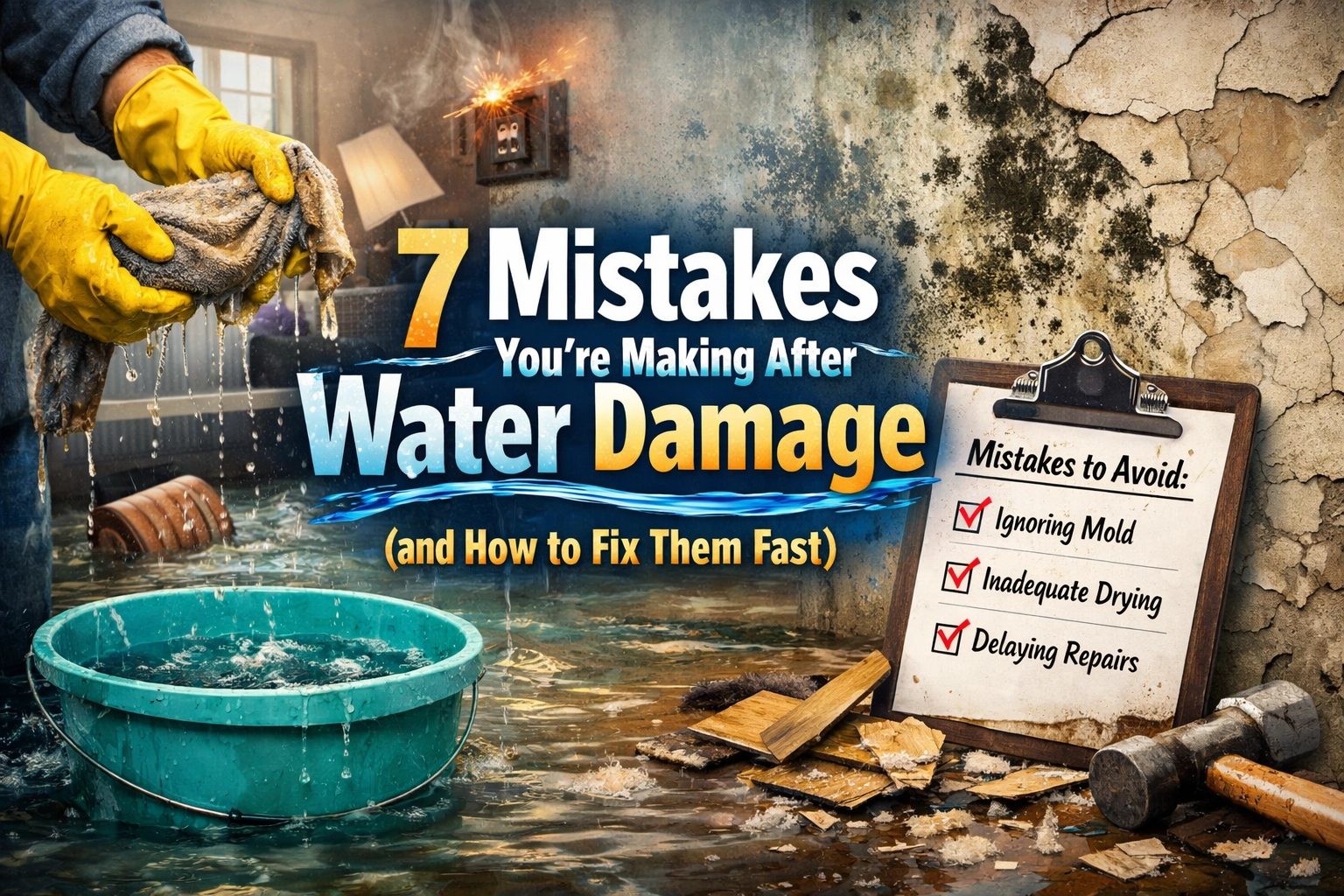
So you've got water damage. Whether it's from a burst pipe, a leaky roof, or that washing machine that decided to throw a tantrum, water damage is stressful. And when you're stressed, it's easy to make mistakes that can turn a manageable situation into a nightmare.
Here's the thing: most homeowners make the same mistakes after discovering water damage. And these mistakes can cost you thousands of dollars in additional repairs, create health hazards, and turn a simple water damage restoration job into a full-blown disaster.
Let's talk about the seven biggest mistakes people make after water damage, and how you can avoid them.
This is the big one. I get it, you're in shock, maybe you're trying to figure out your insurance situation, or maybe you're hoping it's not as bad as it looks. But here's the brutal truth: waiting even 24 hours can turn water damage into a mold problem.
Mold loves moisture, and it doesn't waste time. Within 24 to 48 hours of water exposure, mold spores can start growing in your walls, under your floors, and in your carpets. Once mold gets established, you're not just dealing with water damage restoration anymore, you're looking at mold remediation too.
The fix: Contact a professional water damage restoration company immediately. Like, right now. The faster you act, the less damage you'll have to deal with, and the lower your repair costs will be. Every hour counts.
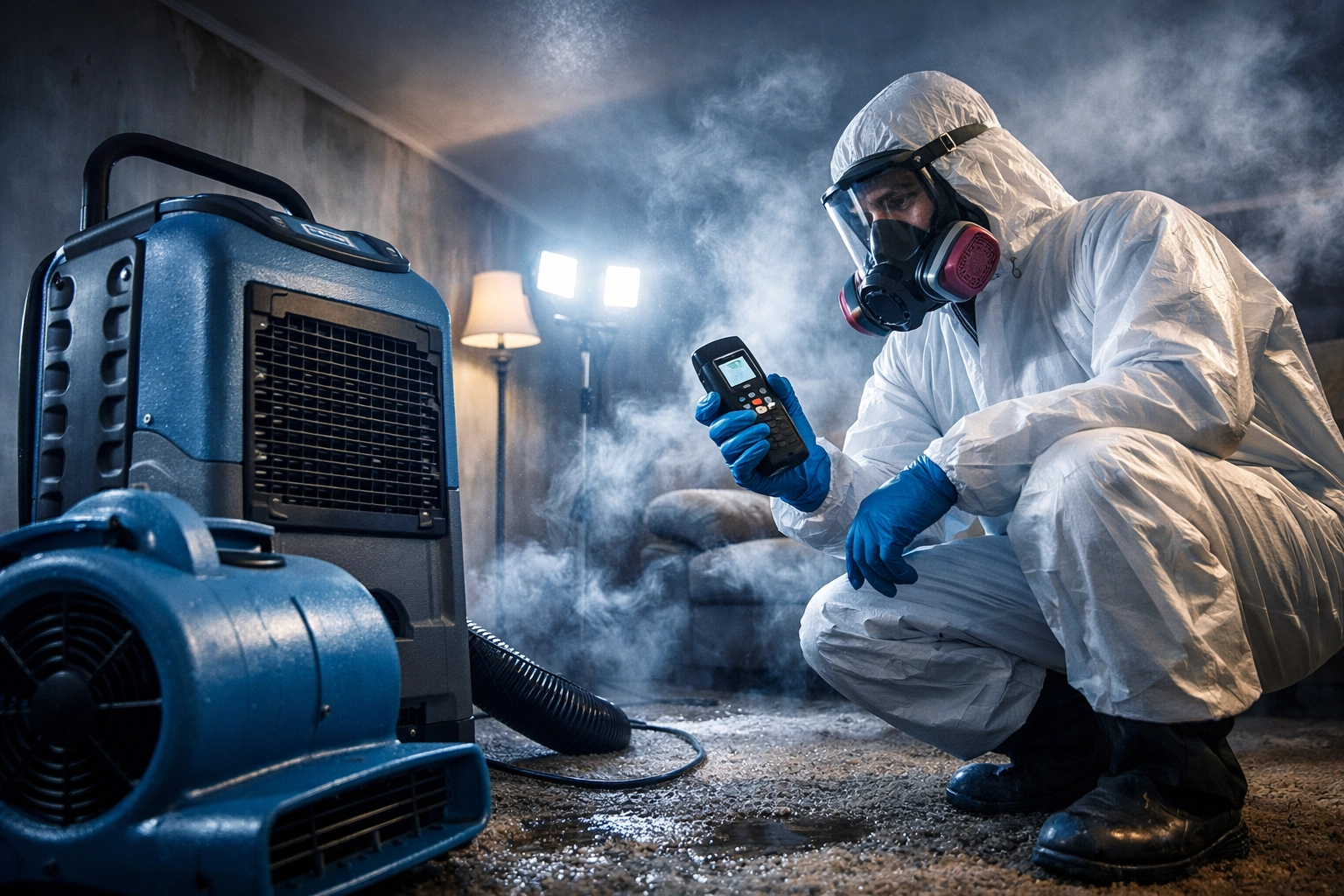
Look, I love a good DIY project as much as the next person. But water damage restoration isn't the time to channel your inner home improvement guru. Those fans you bought at the hardware store and that shop vac from your garage? They're not going to cut it.
Water doesn't just sit on surfaces, it seeps into everything. It gets into your drywall, under your flooring, behind your baseboards, and into places you can't even see. Without professional-grade equipment like industrial dehumidifiers, air movers, and moisture meters, you're basically just moving water around and hoping for the best.
The fix: Let the pros handle it. Professional water damage restoration teams have the equipment and expertise to extract water completely, measure moisture levels accurately, and ensure everything is thoroughly dried. This prevents mold growth and structural damage that could haunt you later.
Here's a mistake that actually makes things worse: using household tools on extensive water damage. Grabbing your mop and towels seems like the right move, but if you're dealing with significant water damage, you might be pushing water deeper into your carpets, padding, and subflooring.
Regular household vacuums aren't designed for water extraction. Using them on wet carpets can damage the vacuum and leave moisture trapped in the carpet fibers and padding, hello, mold and mildew!
The fix: Step away from the mop. Professional restoration companies use specialized extraction equipment designed specifically for water removal. These tools pull water out instead of pushing it around, and they're powerful enough to handle carpet cleaning and water damage restoration properly.
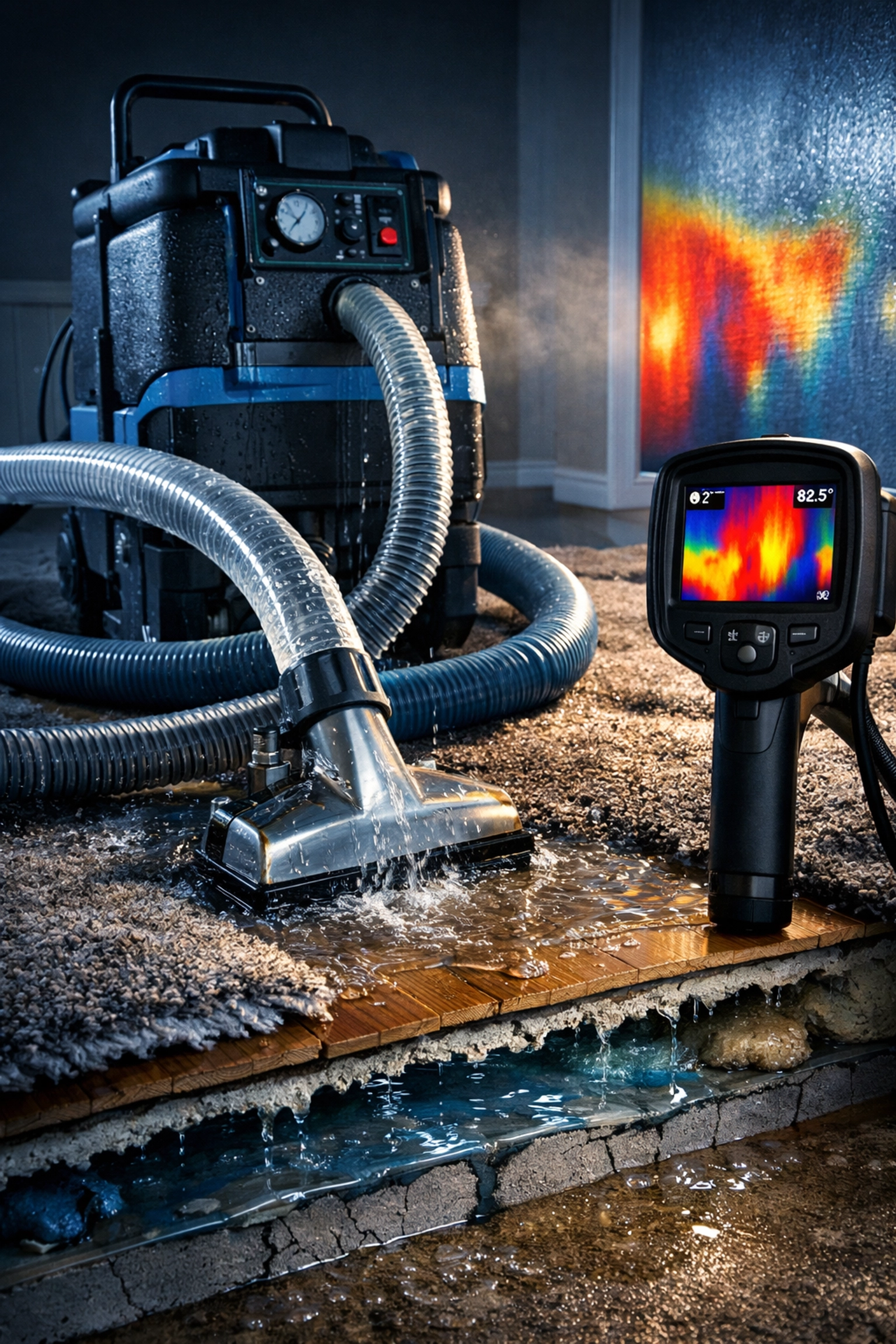
Water is sneaky. Just because you can't see it doesn't mean it's not there. The water you see on your floor might represent only a fraction of the actual problem. Water travels through walls, seeps under flooring, and hides in corners and crevices where you'd never think to look.
This hidden moisture is where the real problems start. Trapped water leads to mold growth, wood rot, and structural damage that can compromise your home's integrity. By the time you notice the symptoms (weird smells, discolored walls, warped floors), the damage is already extensive.
The fix: Get a professional inspection before you do anything else. Restoration experts use thermal imaging cameras and moisture meters to detect water in places you can't see. They'll check behind walls, under flooring, in ceiling spaces, and anywhere else water might be hiding. This comprehensive assessment ensures nothing gets missed.
Water and electricity don't mix: everyone knows that. But in the panic and stress of dealing with water damage, safety often takes a backseat. Standing water can hide electrical hazards like exposed wires or submerged outlets. One wrong step, and you're dealing with a potential electrocution situation.
Then there's the water itself. Not all water damage is "clean" water. If you're dealing with sewage backup or floodwater, you're exposed to bacteria, viruses, and other contaminants that can make you seriously sick. And don't forget those slippery surfaces: falls are one of the most common injuries during water damage situations.
The fix: Safety first, always. Turn off electricity to affected areas at the breaker box. Don't touch electrical devices or outlets while standing in water. Wear protective gear if you must enter the affected area. And if there's any chance the water is contaminated (sewage, floodwater, or water that's been standing for more than 24 hours), leave it to the professionals who have the proper equipment and training.
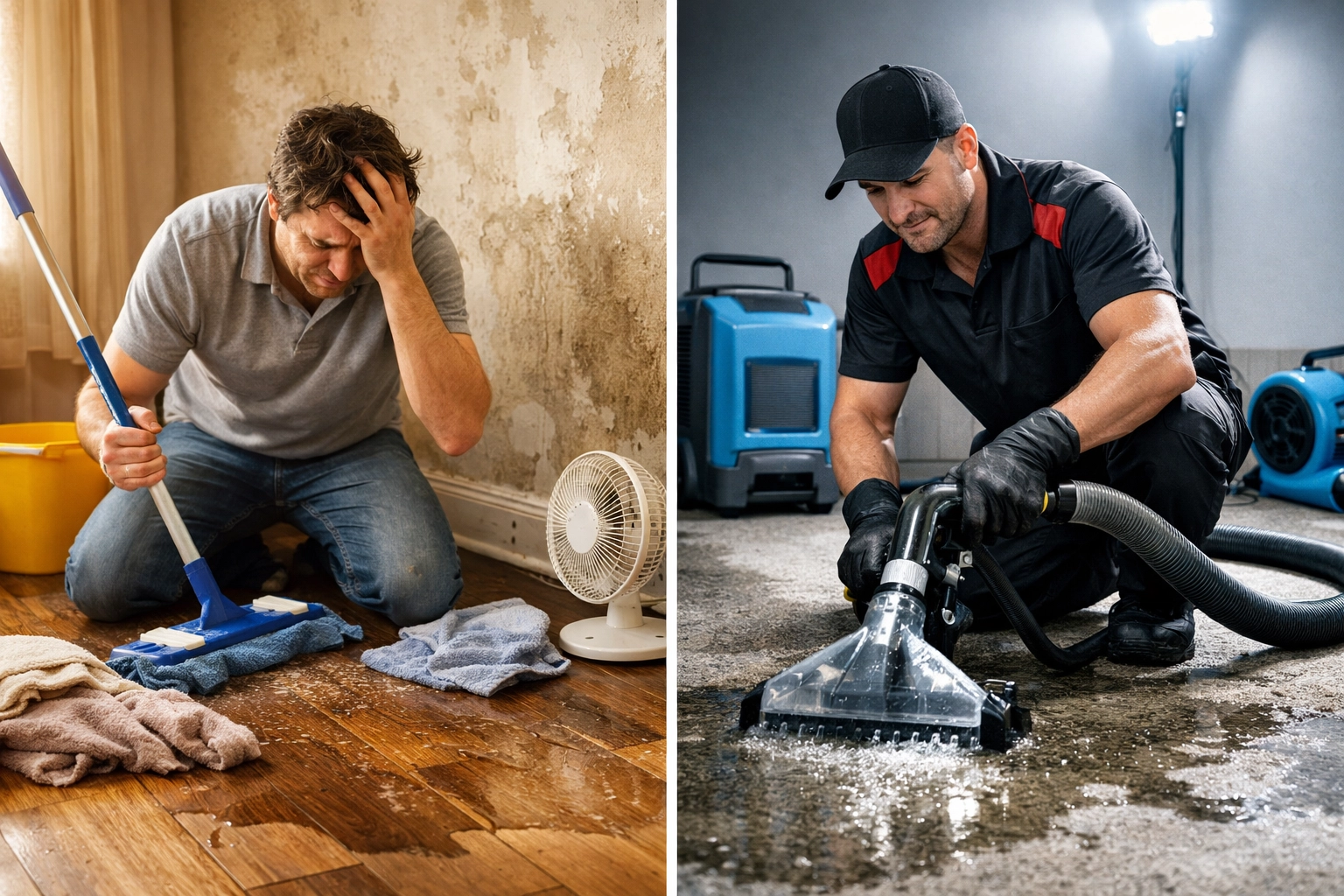
This is like putting a bandage on a wound without stopping the bleeding. You can mop up water, dry out carpets, and repaint walls all day long, but if you don't fix what caused the water damage in the first place, you're just setting yourself up for round two.
Maybe it's a leaking pipe hidden behind a wall. Maybe your roof has damage you didn't know about. Maybe your appliances are at the end of their lifespan. Whatever the cause, it needs to be identified and fixed before you start restoration work.
The fix: A professional water damage restoration team will help you identify the source of the water damage. Whether it's a plumbing issue, structural problem, or appliance failure, addressing the root cause is essential. Otherwise, you're just throwing money at a problem that's going to keep coming back.
This one's emotional. After water damage, you're faced with tough decisions about your belongings. Some homeowners try to save everything, even items that are beyond repair. This can introduce mold and bacteria into cleaned areas. Others panic and throw out things that could have been salvaged with proper treatment.
The truth is, it's hard to know what can be saved and what needs to go unless you're trained in water damage restoration. That antique dresser might be salvageable with the right equipment. That sofa probably isn't. Your carpet could be saved if it's dried within 48 hours, or it might need to be replaced if the water was contaminated.
The fix: Work with restoration professionals who can properly assess your belongings. They have specialized equipment and techniques to salvage items you might think are lost. They can also identify items that pose health risks and need to be removed. This saves you from both unnecessary losses and potential health problems.
Water damage is overwhelming, but you don't have to handle it alone. The biggest mistake of all? Thinking you can tackle it without help. Professional water damage restoration isn't just about drying things out: it's about preventing mold remediation problems down the line, protecting your home's structure, ensuring your family's safety, and getting your life back to normal as quickly as possible.
If you're dealing with water damage right now, don't wait another minute. Contact My Water Damage Hero for professional water damage restoration services. We have the equipment, expertise, and experience to handle everything from minor leaks to major flooding. And remember: the faster you act, the better the outcome.
Your home is your sanctuary. Let's get it back to being the safe, dry, comfortable space it should be.

Contact us for quick, trusted restoration.
See how we’ve turned tough situations into success stories.

